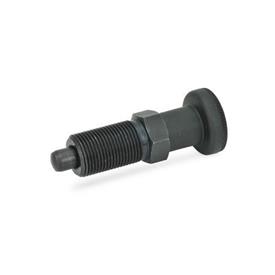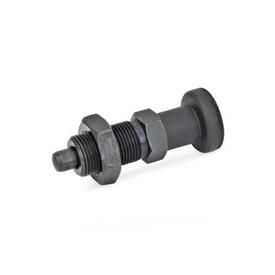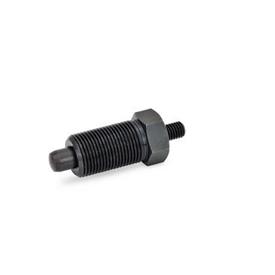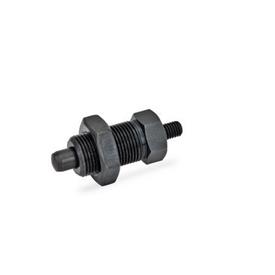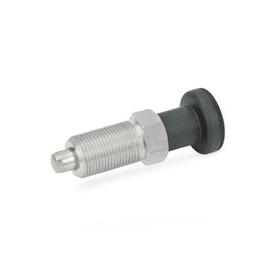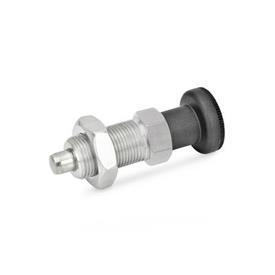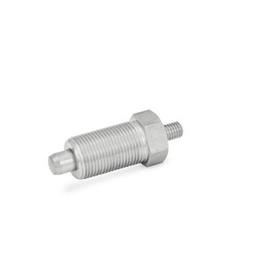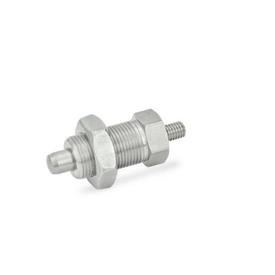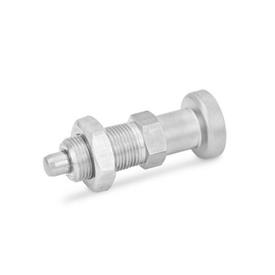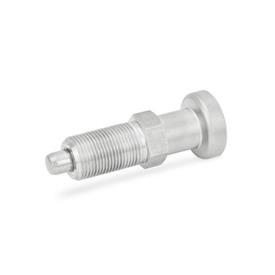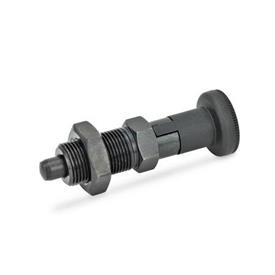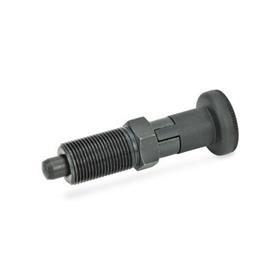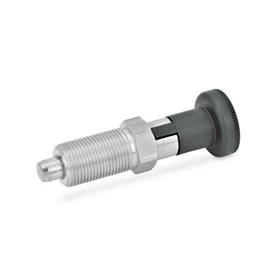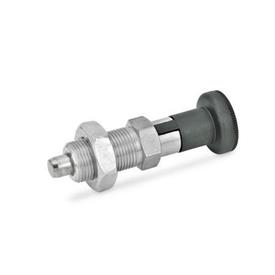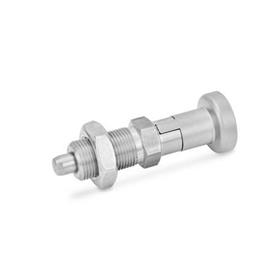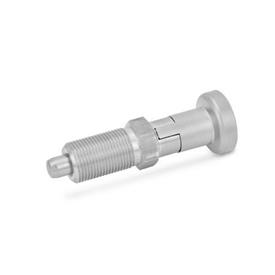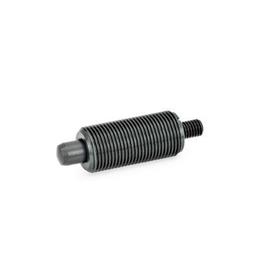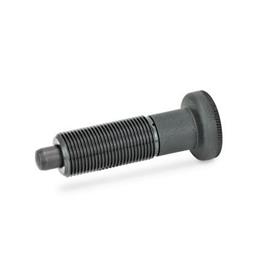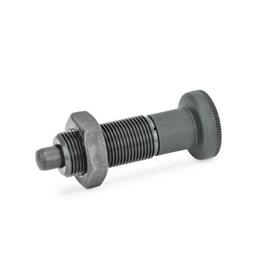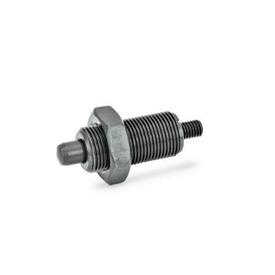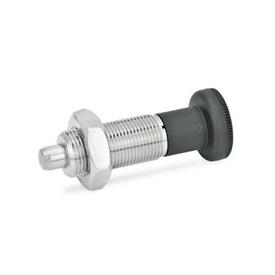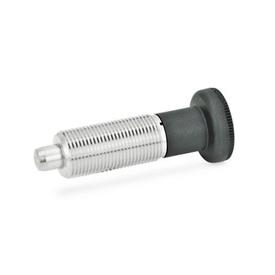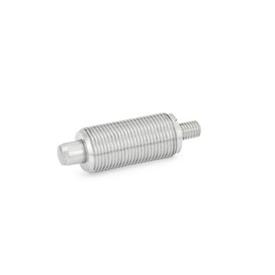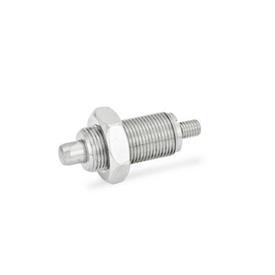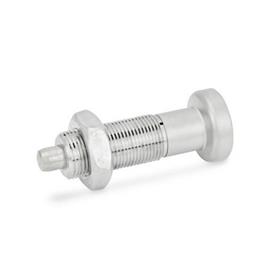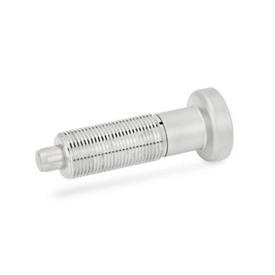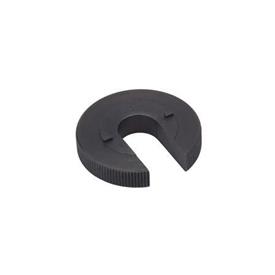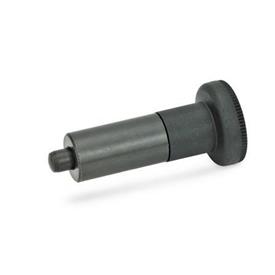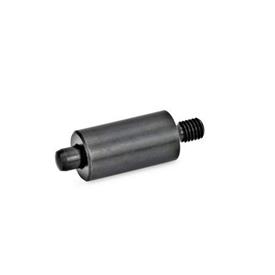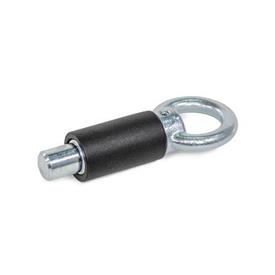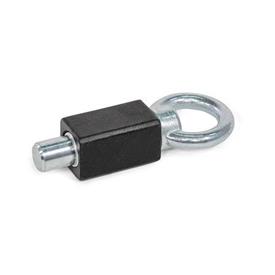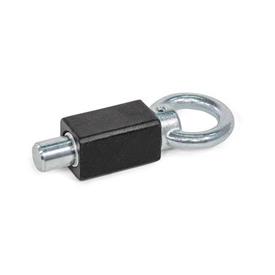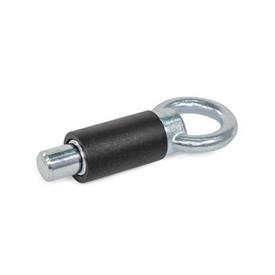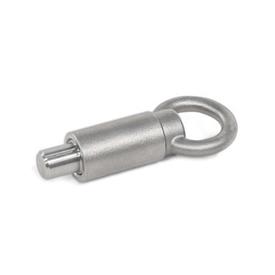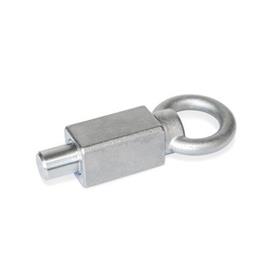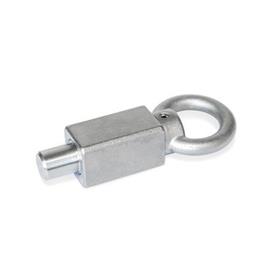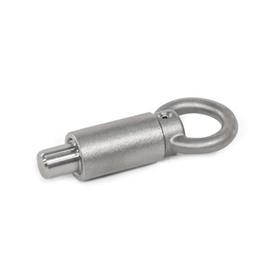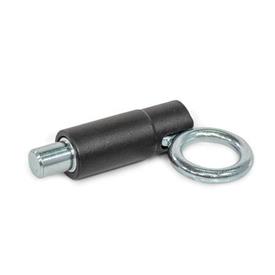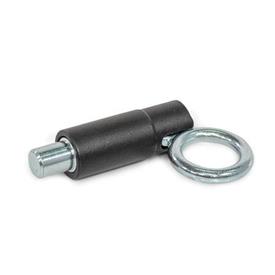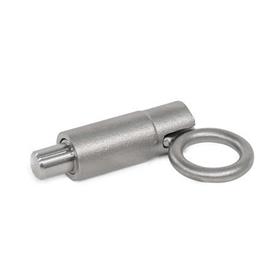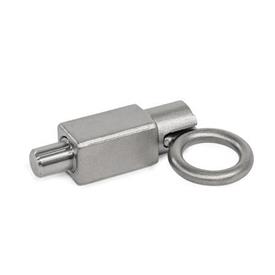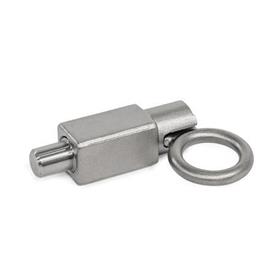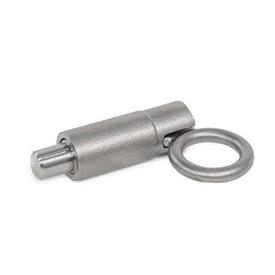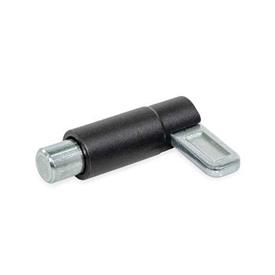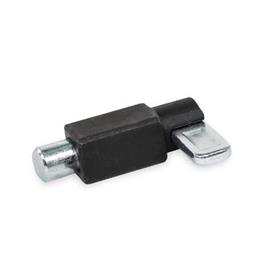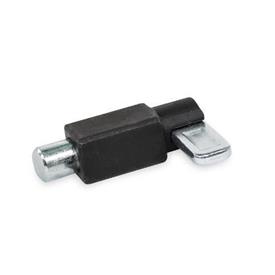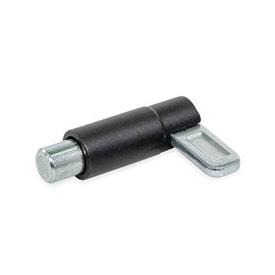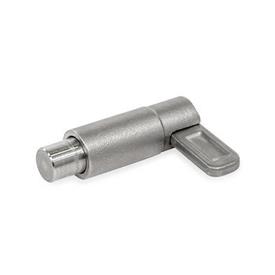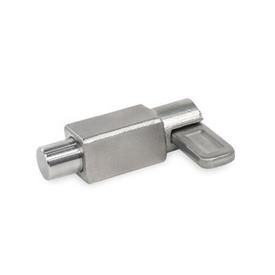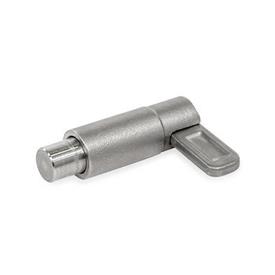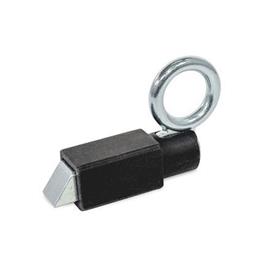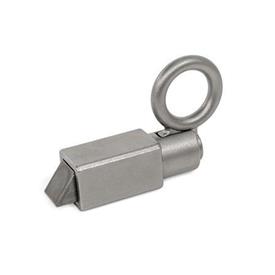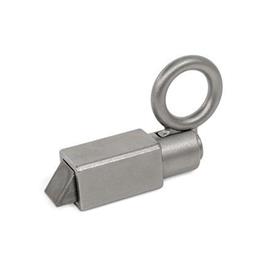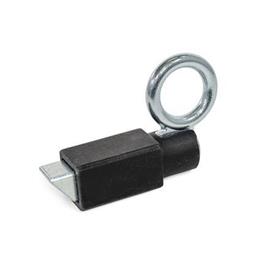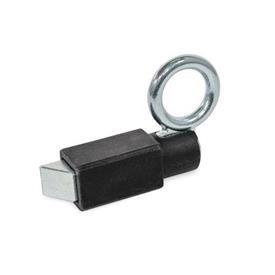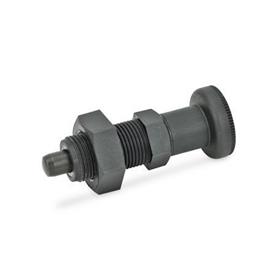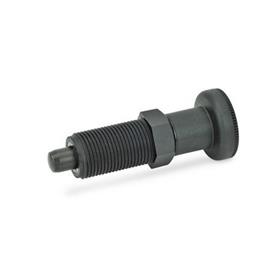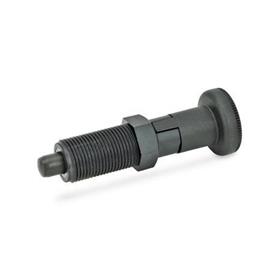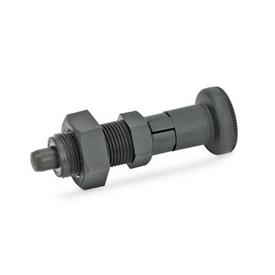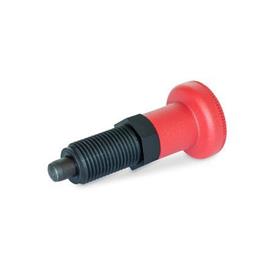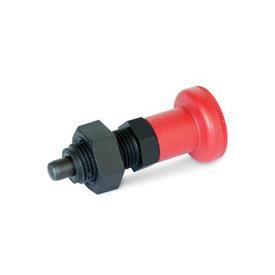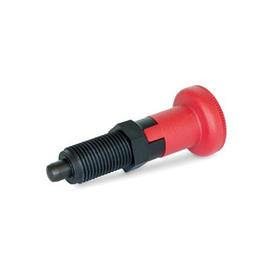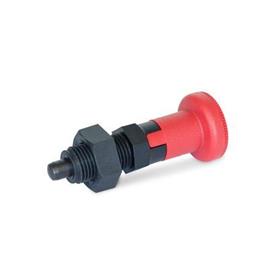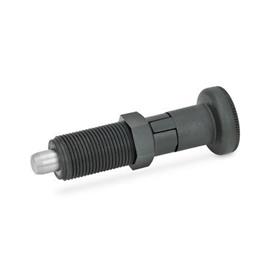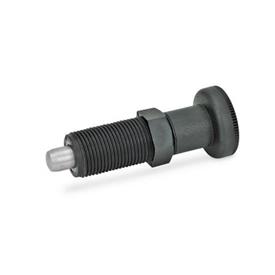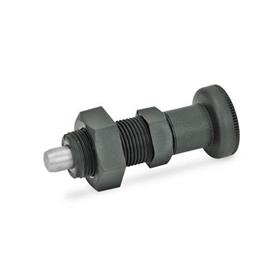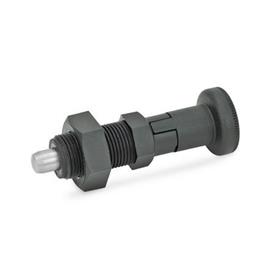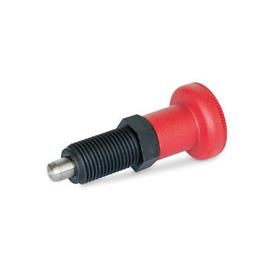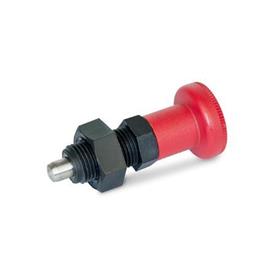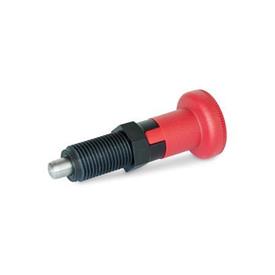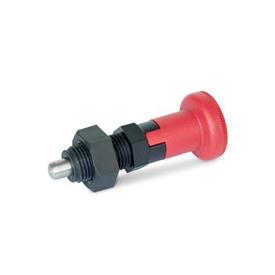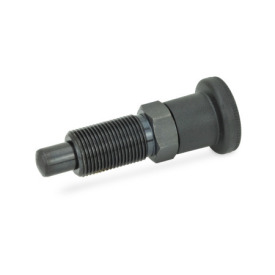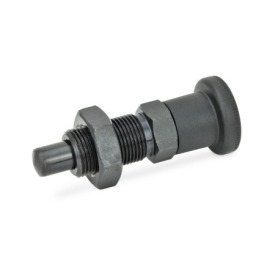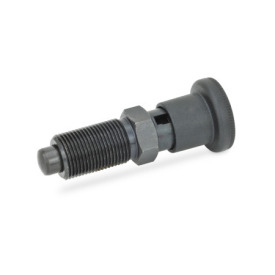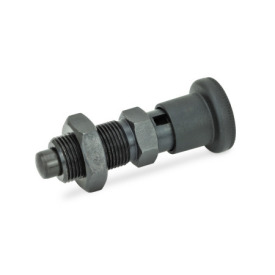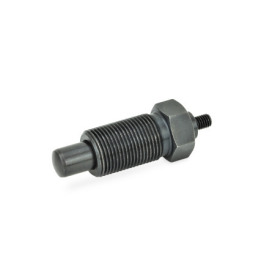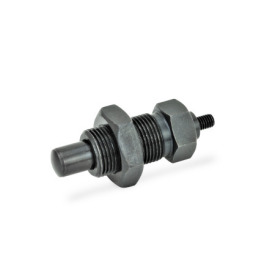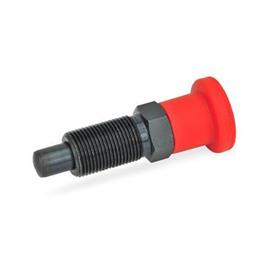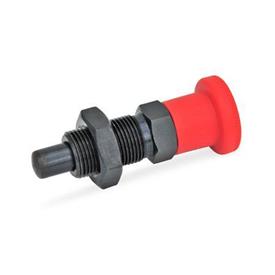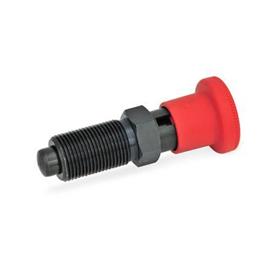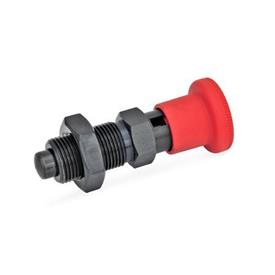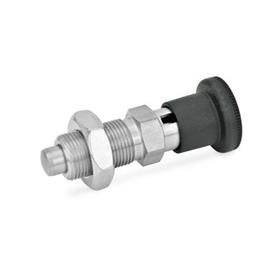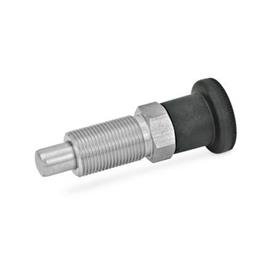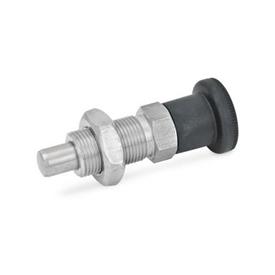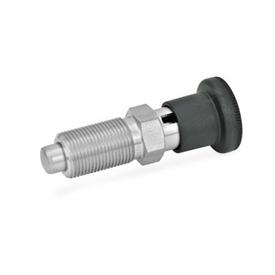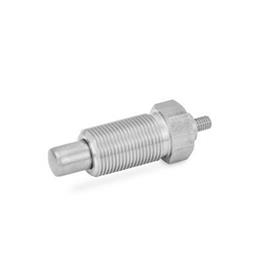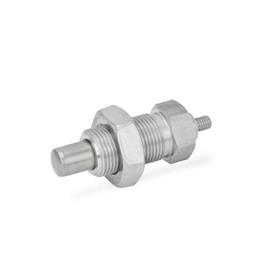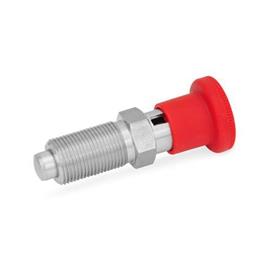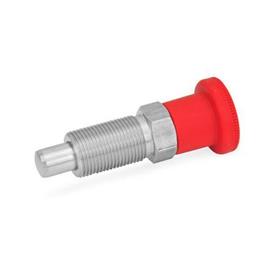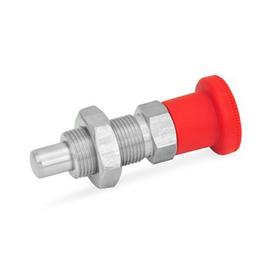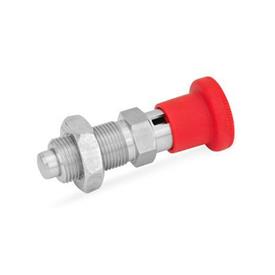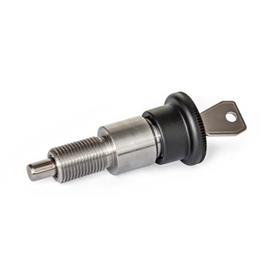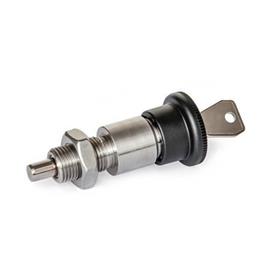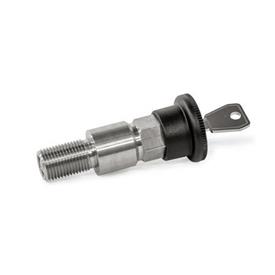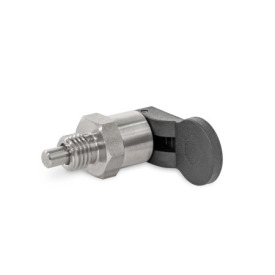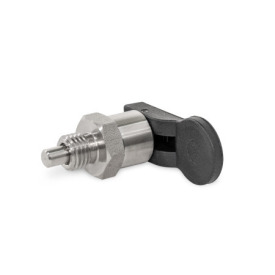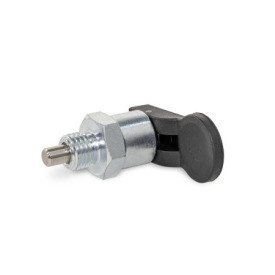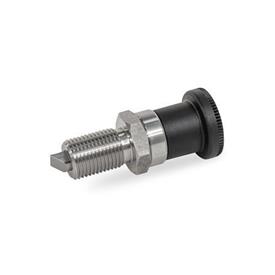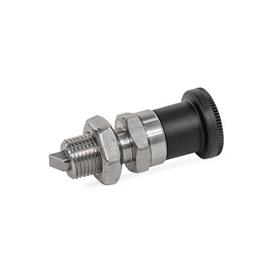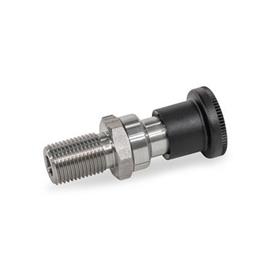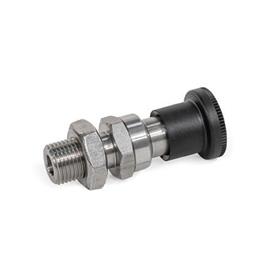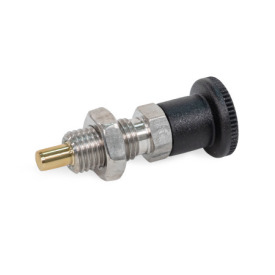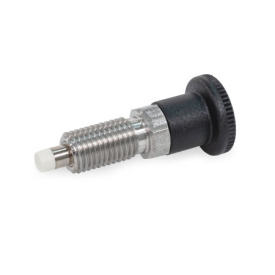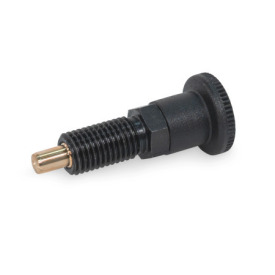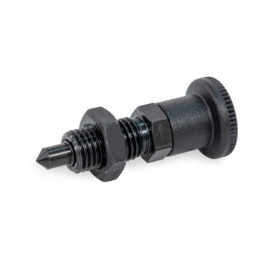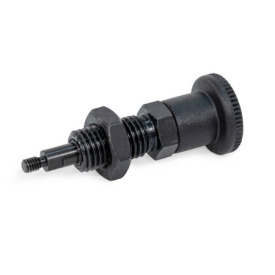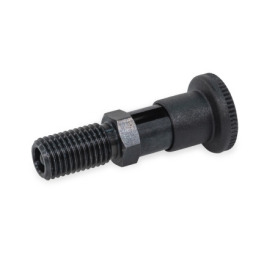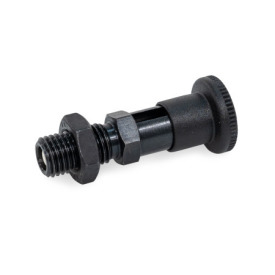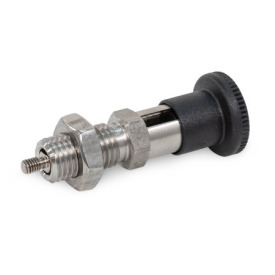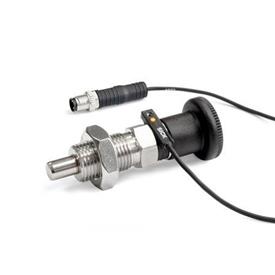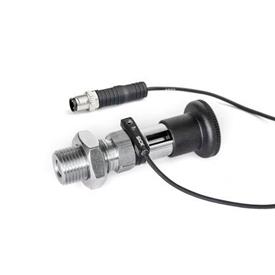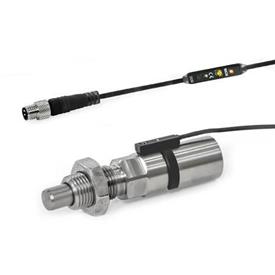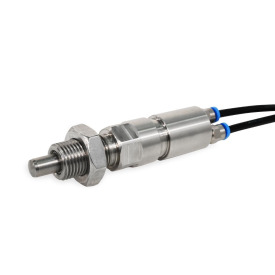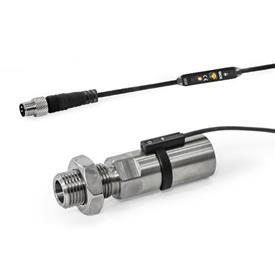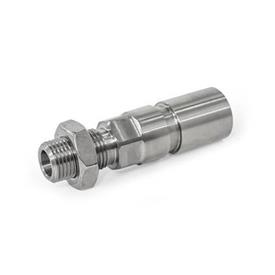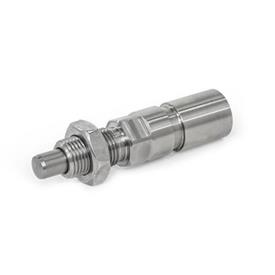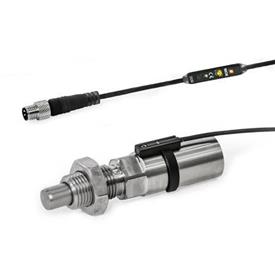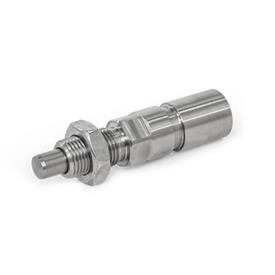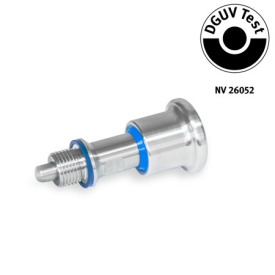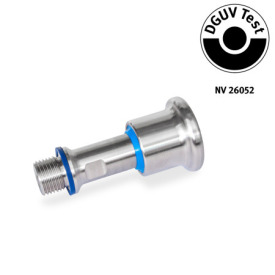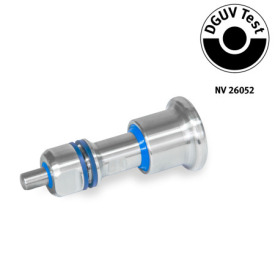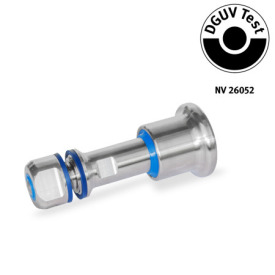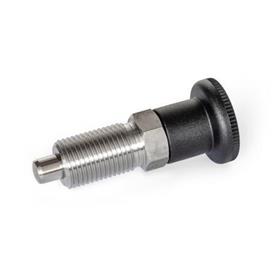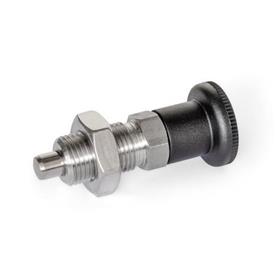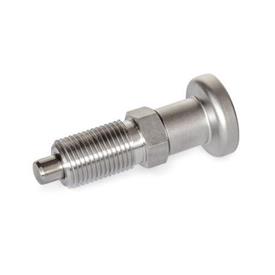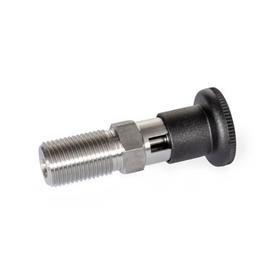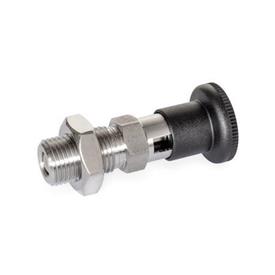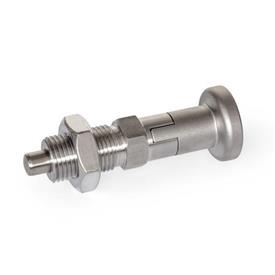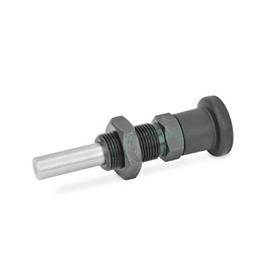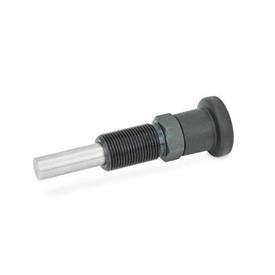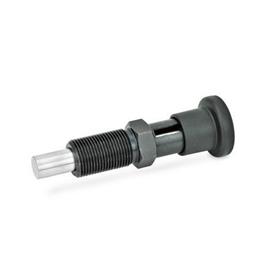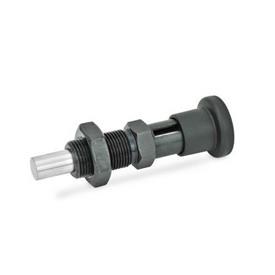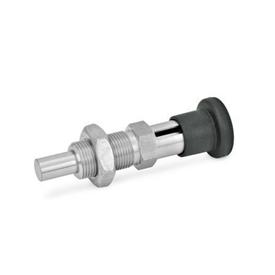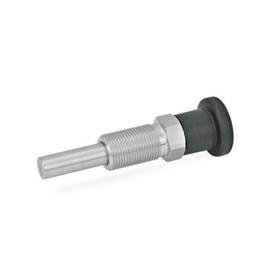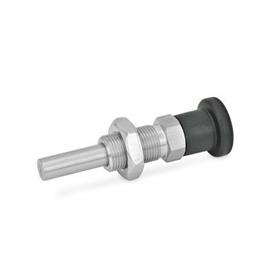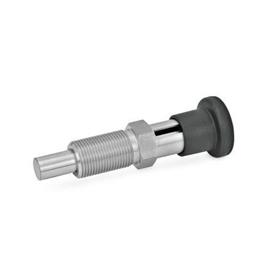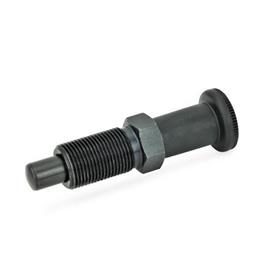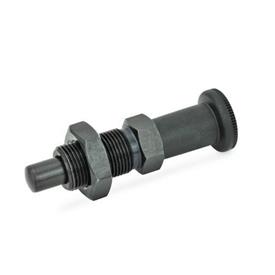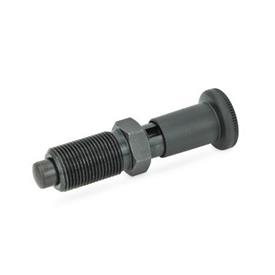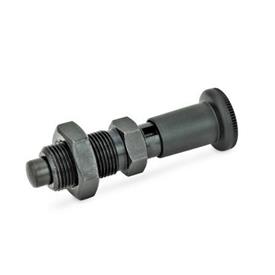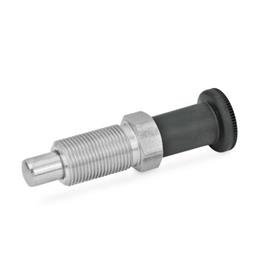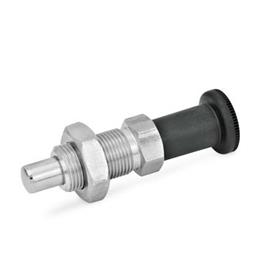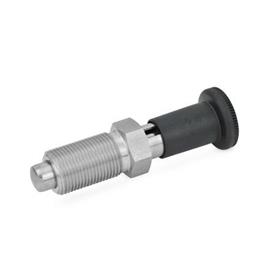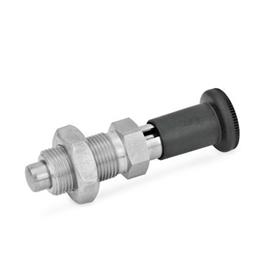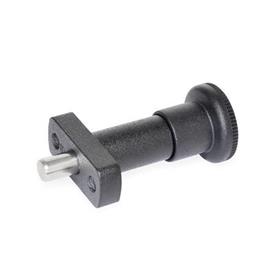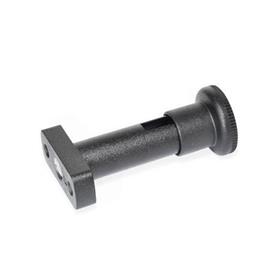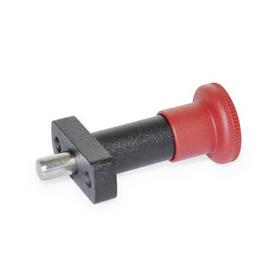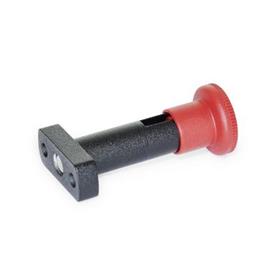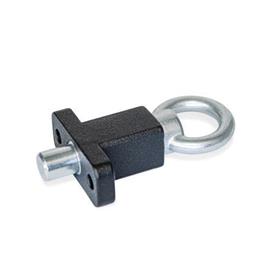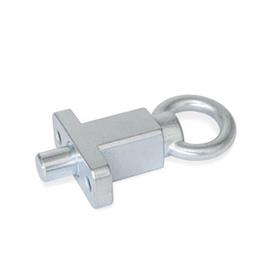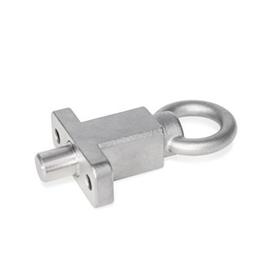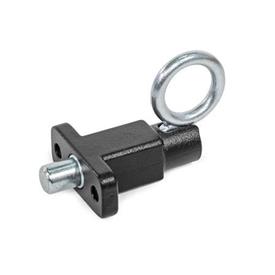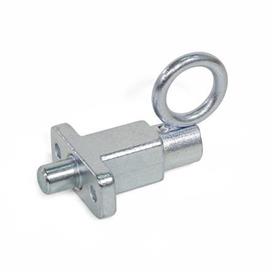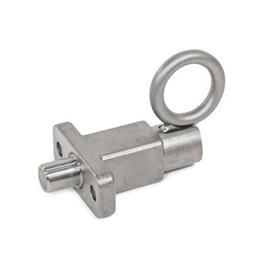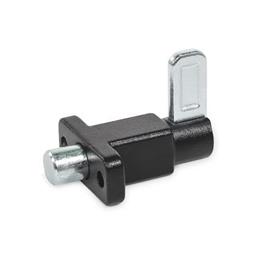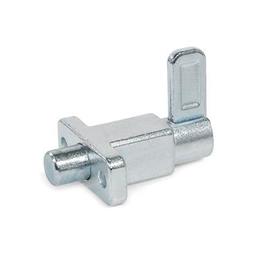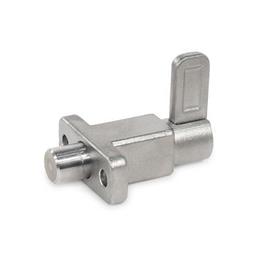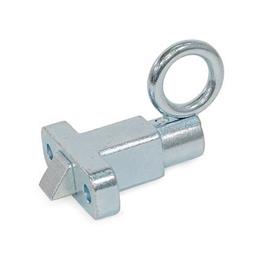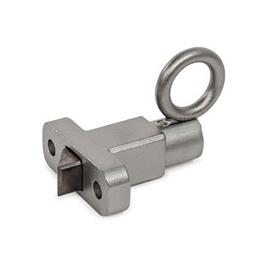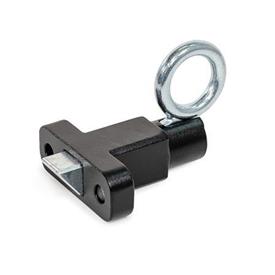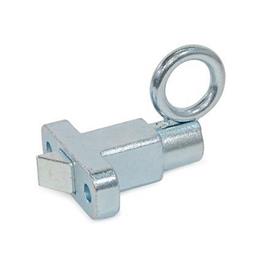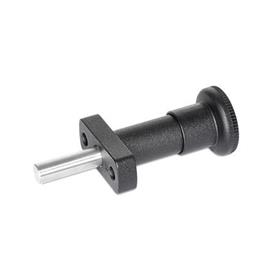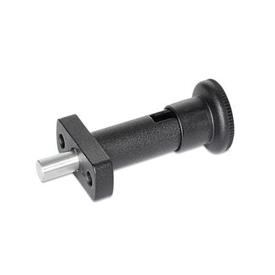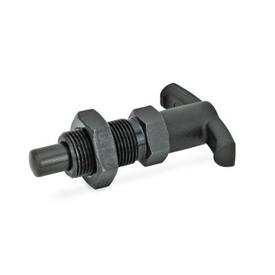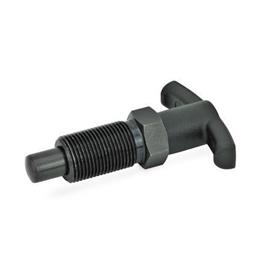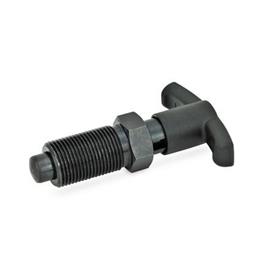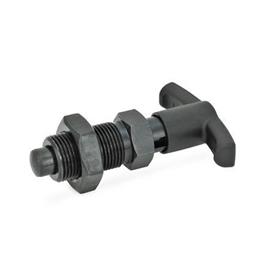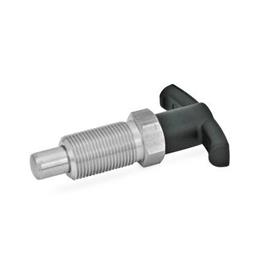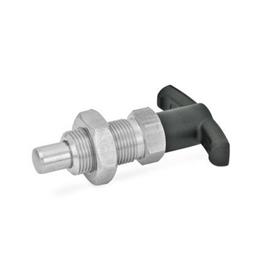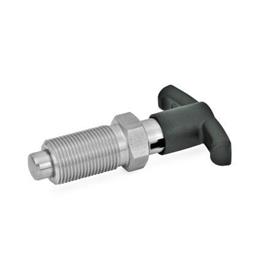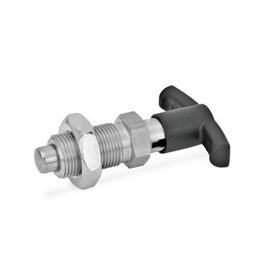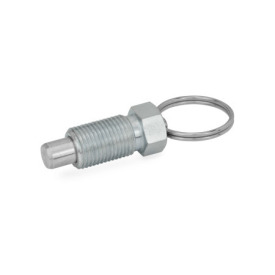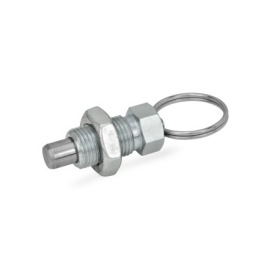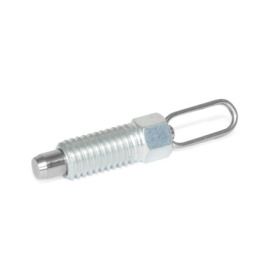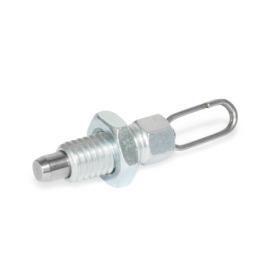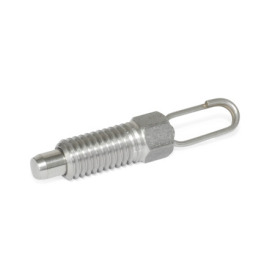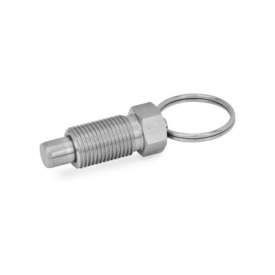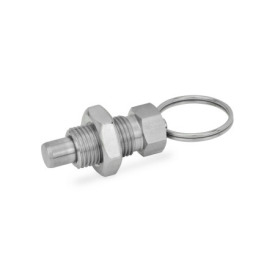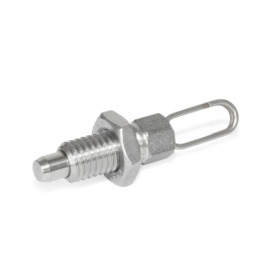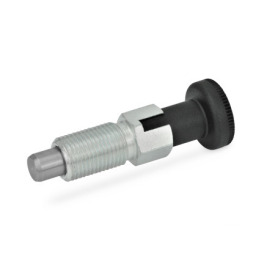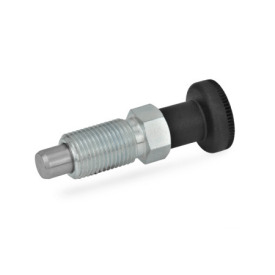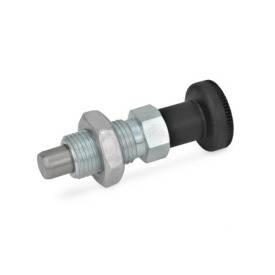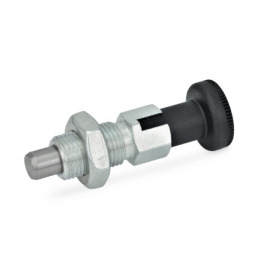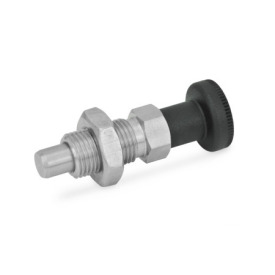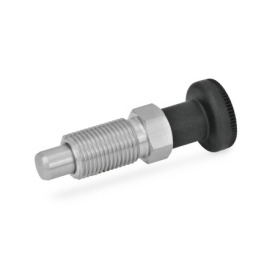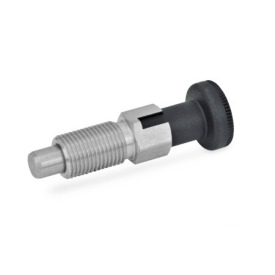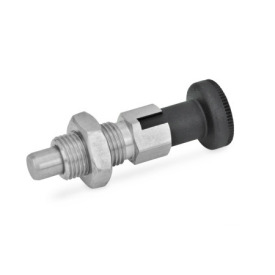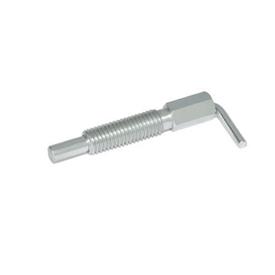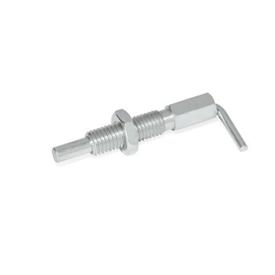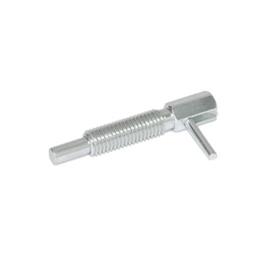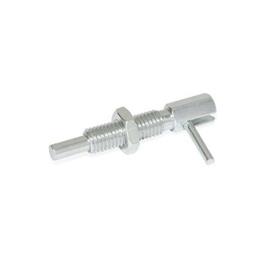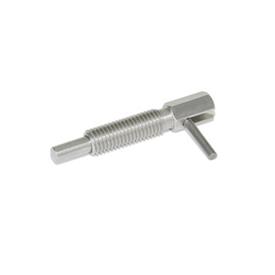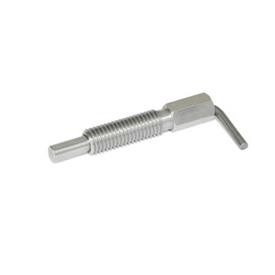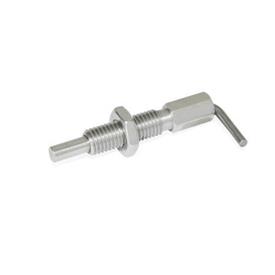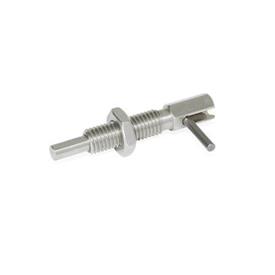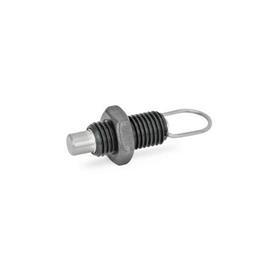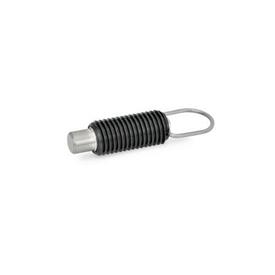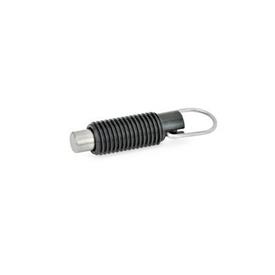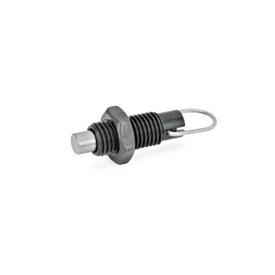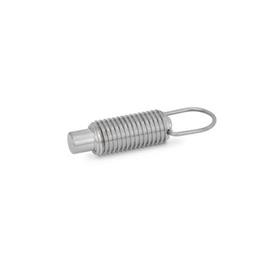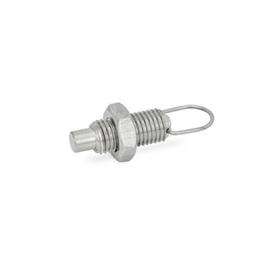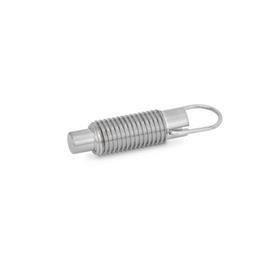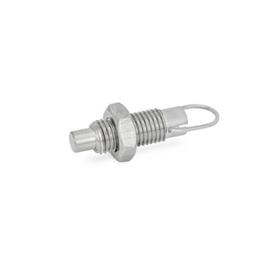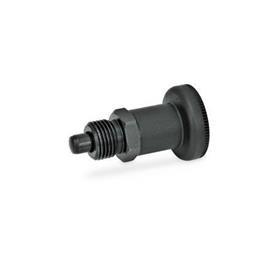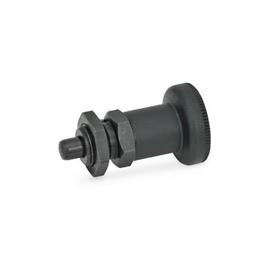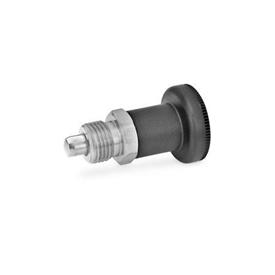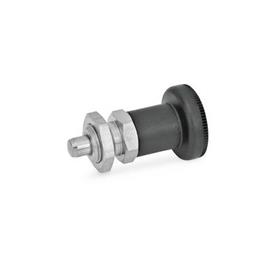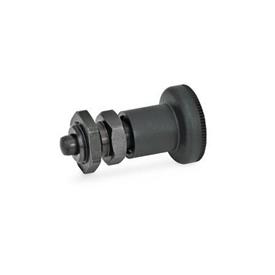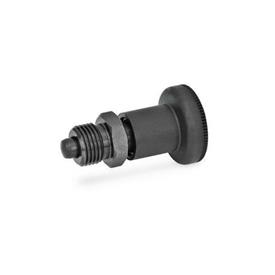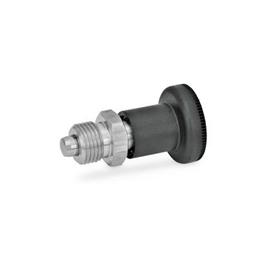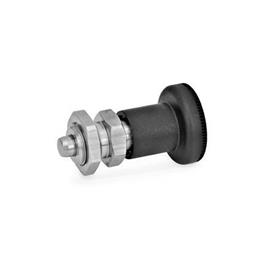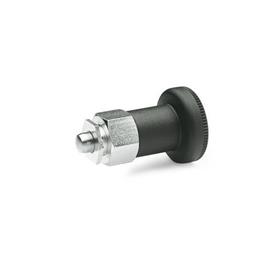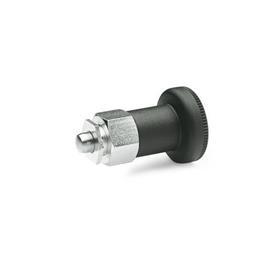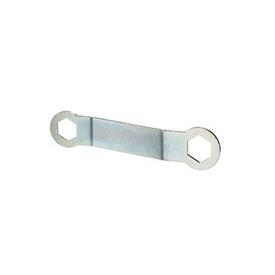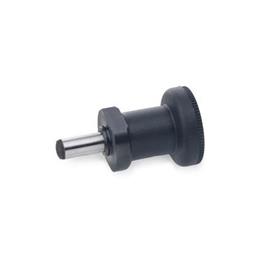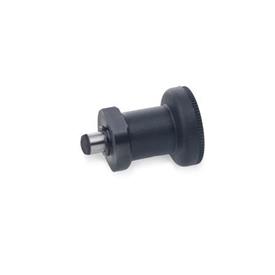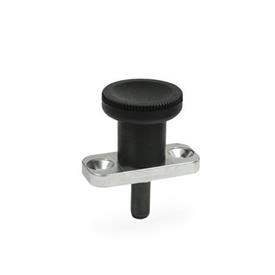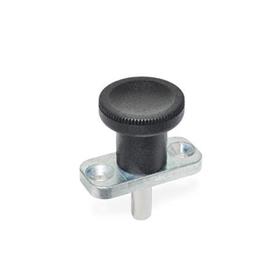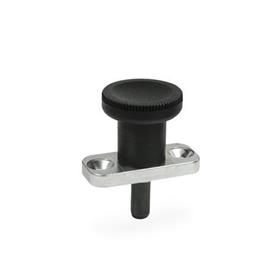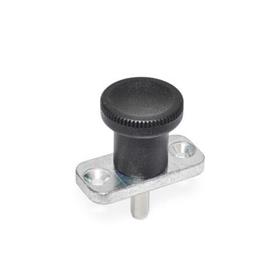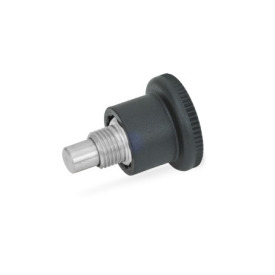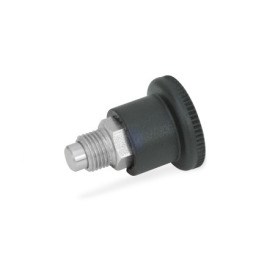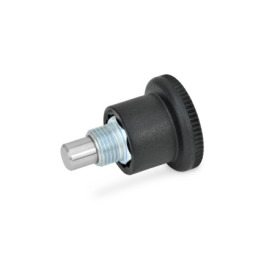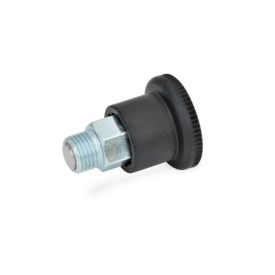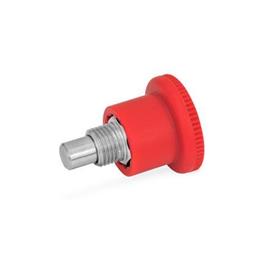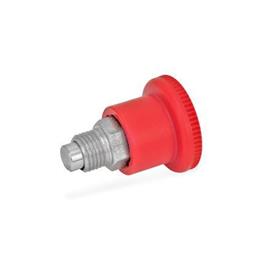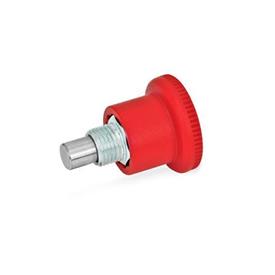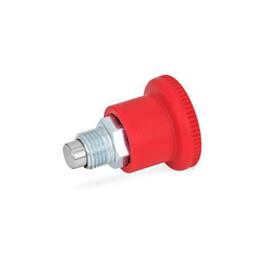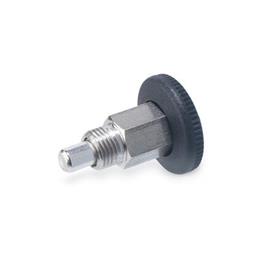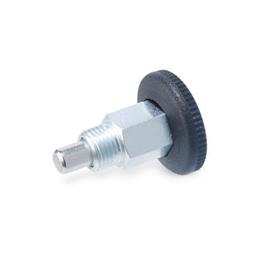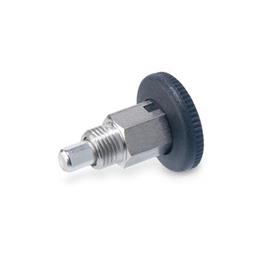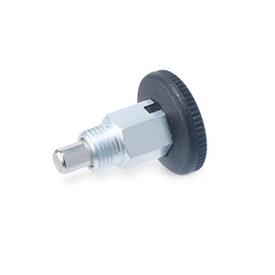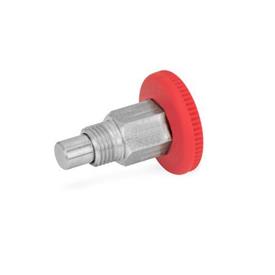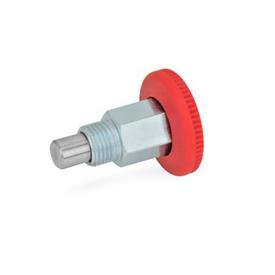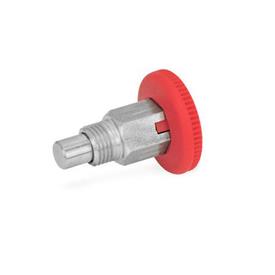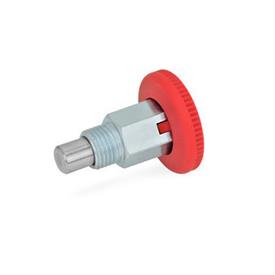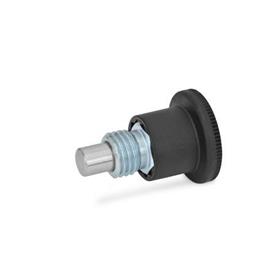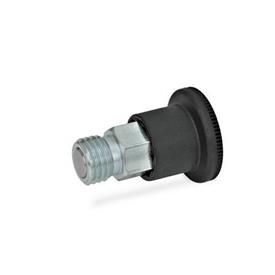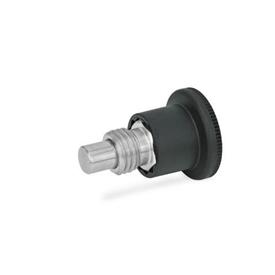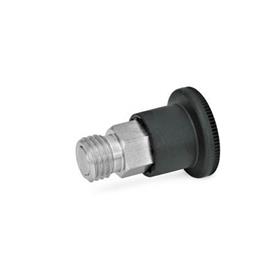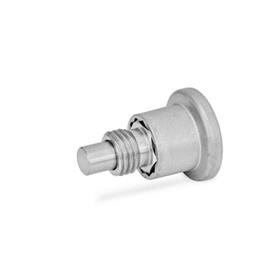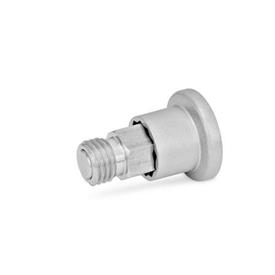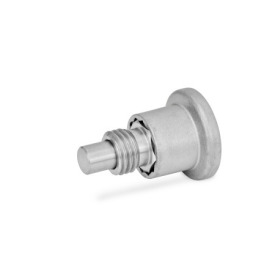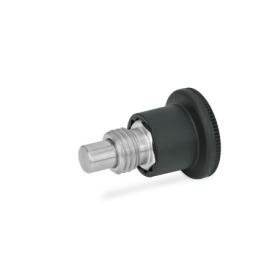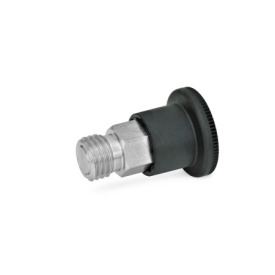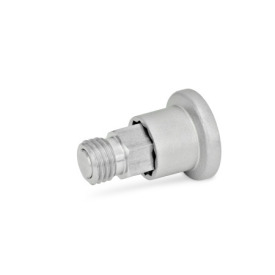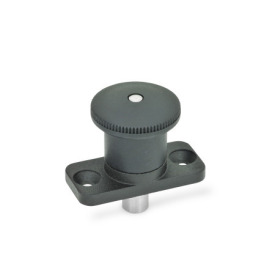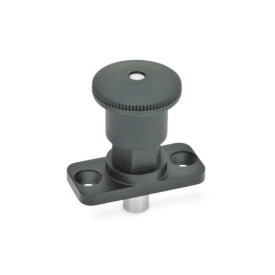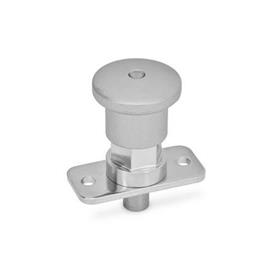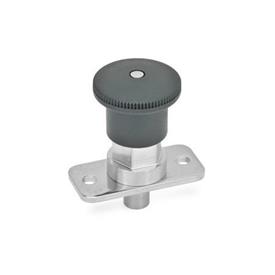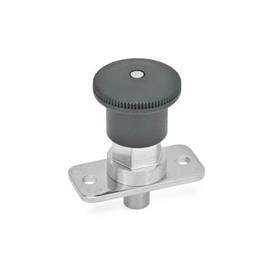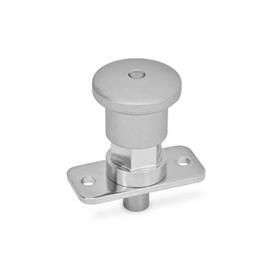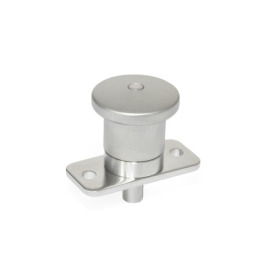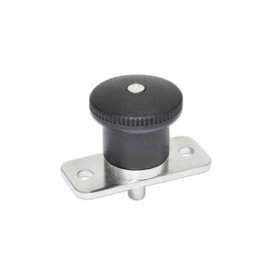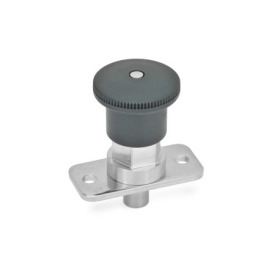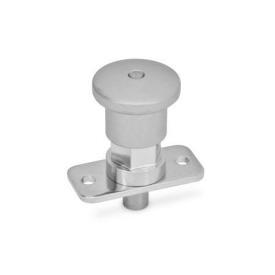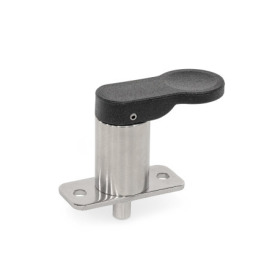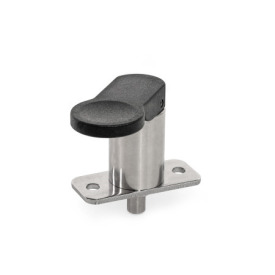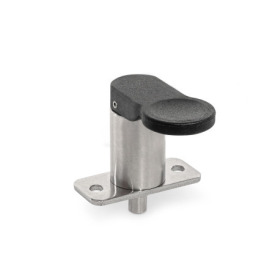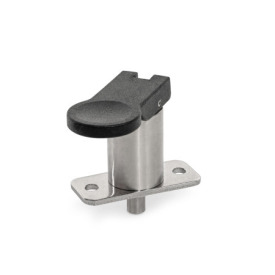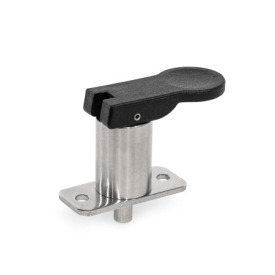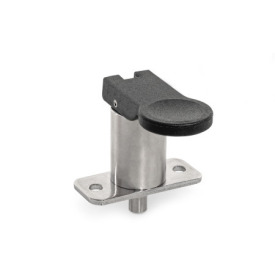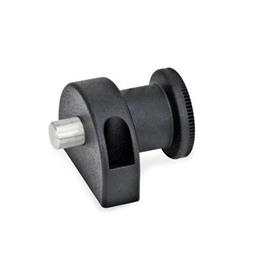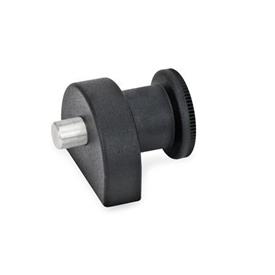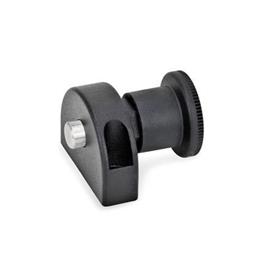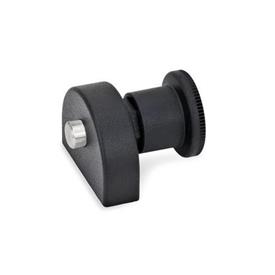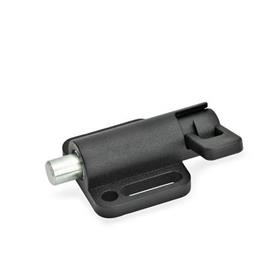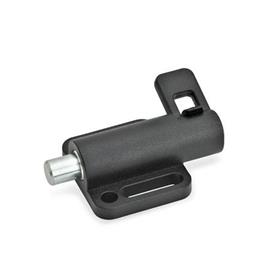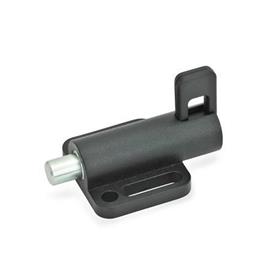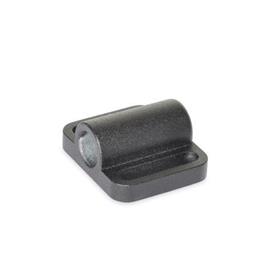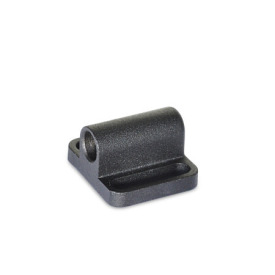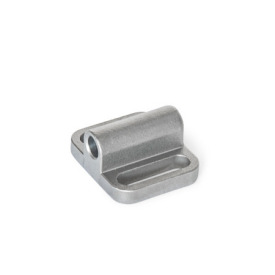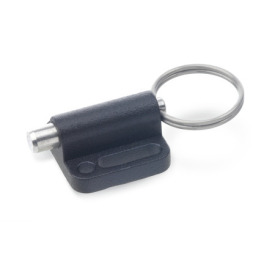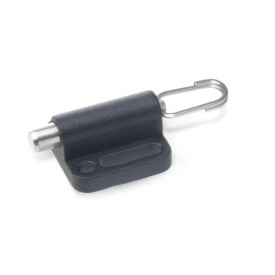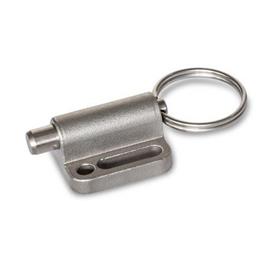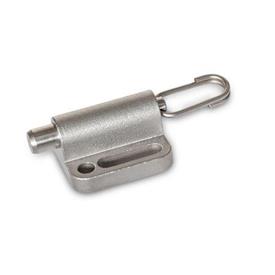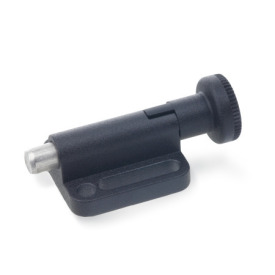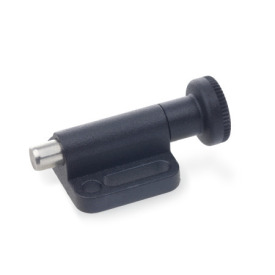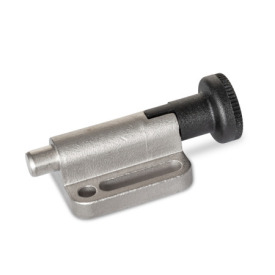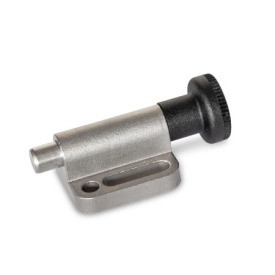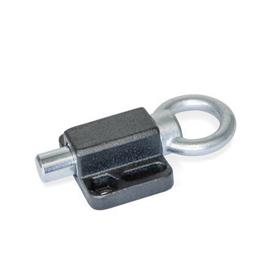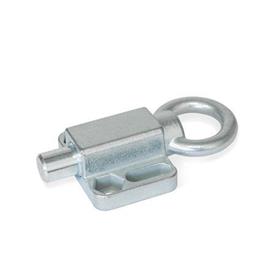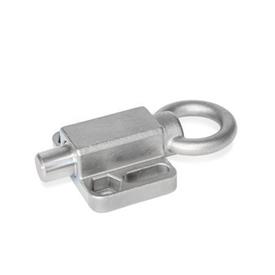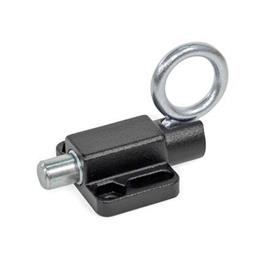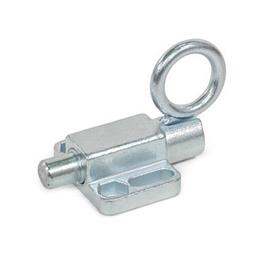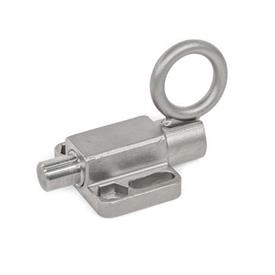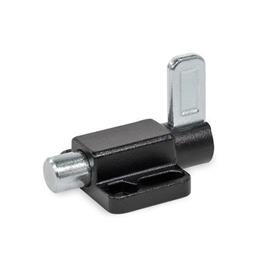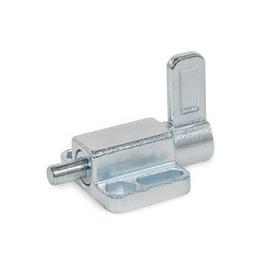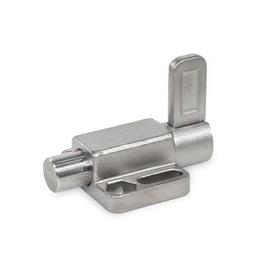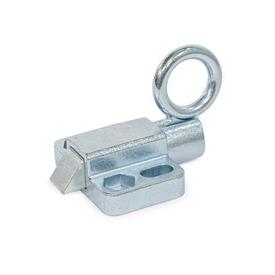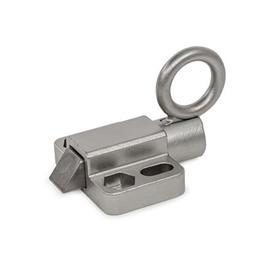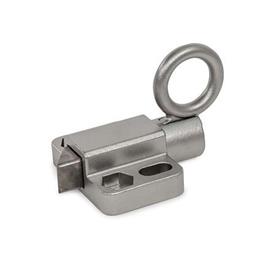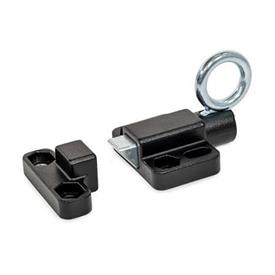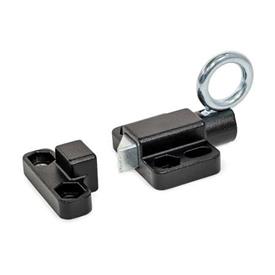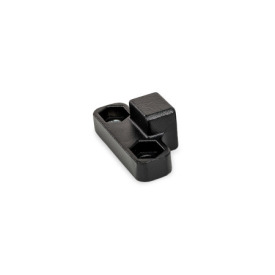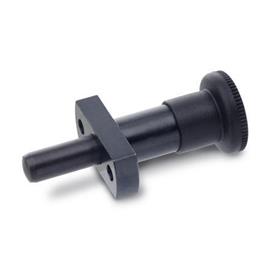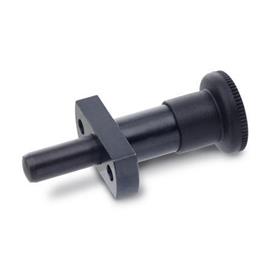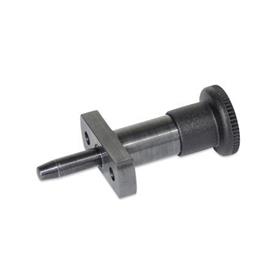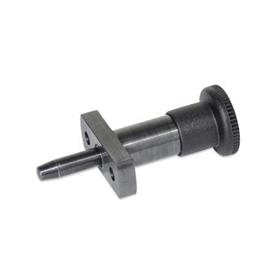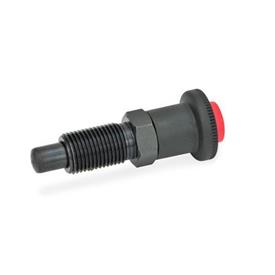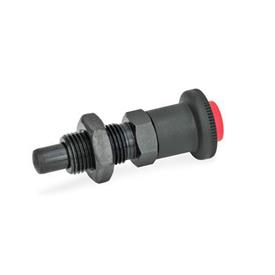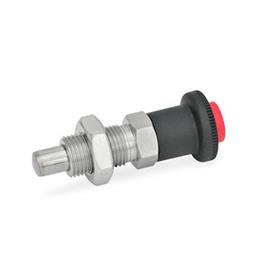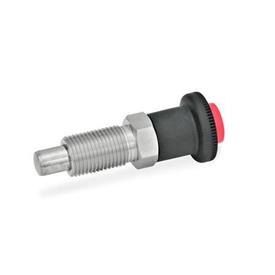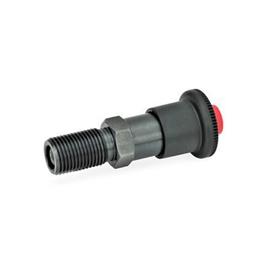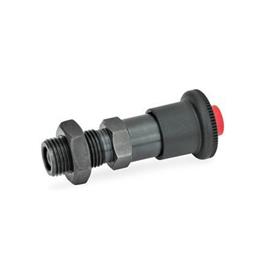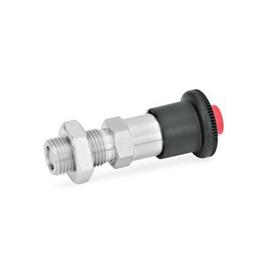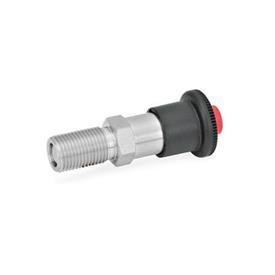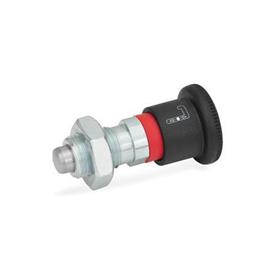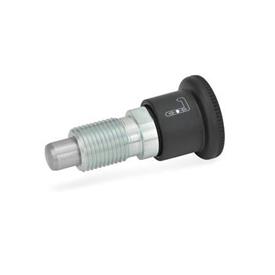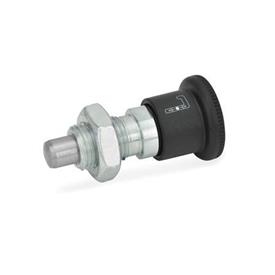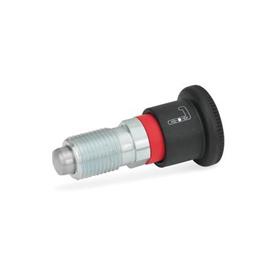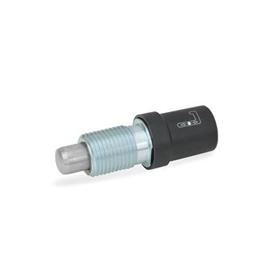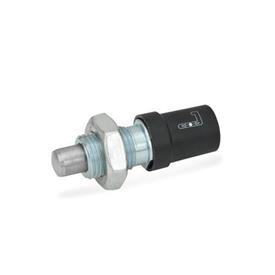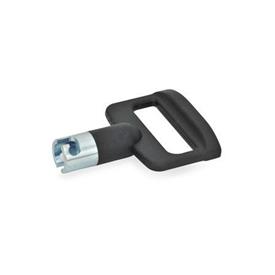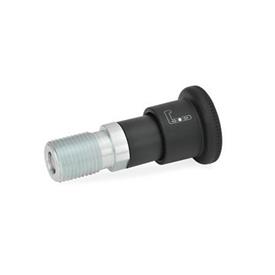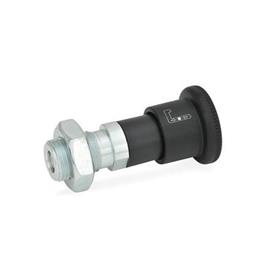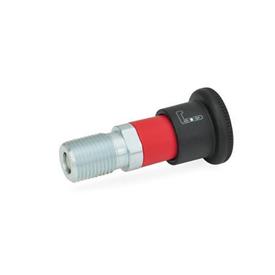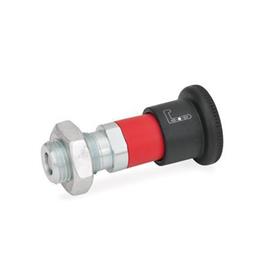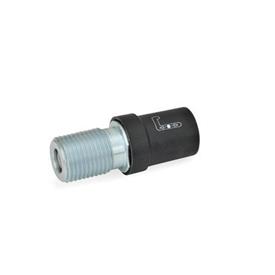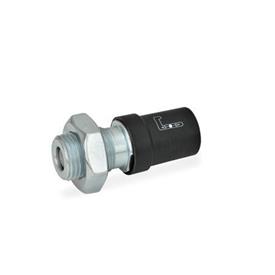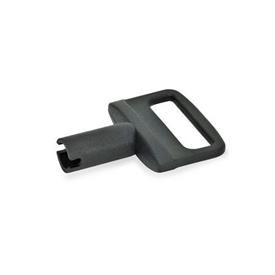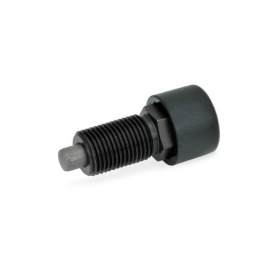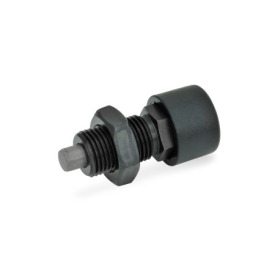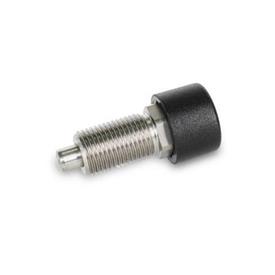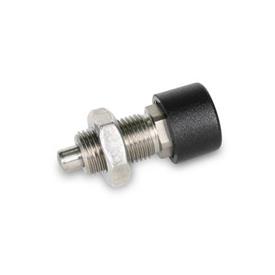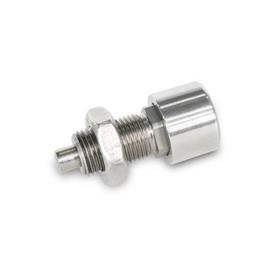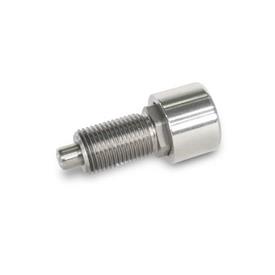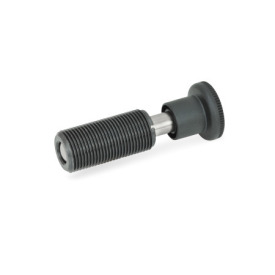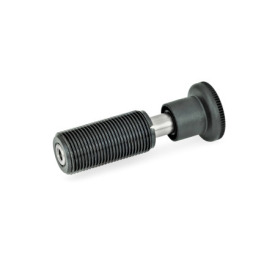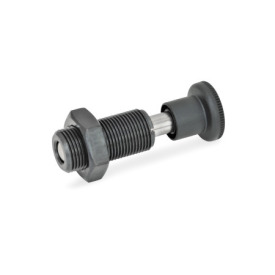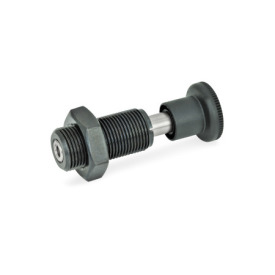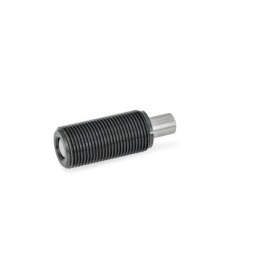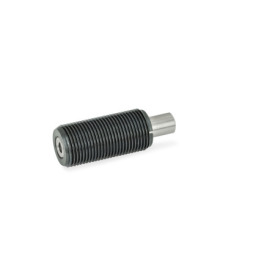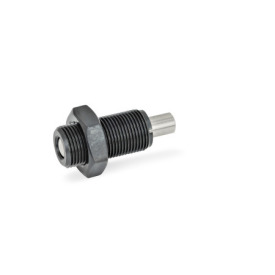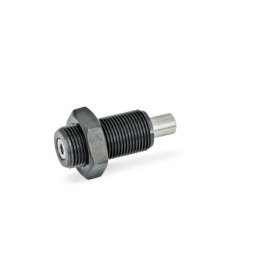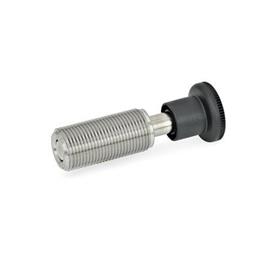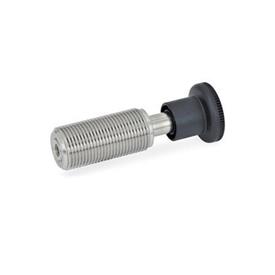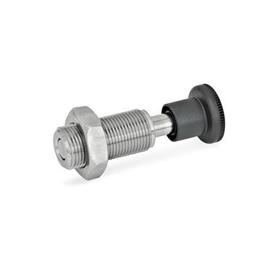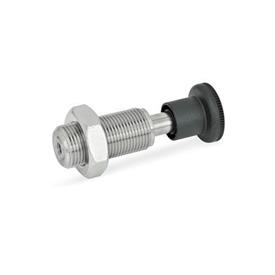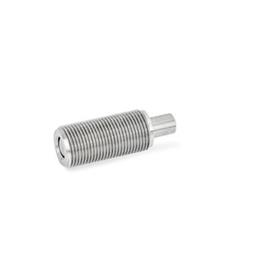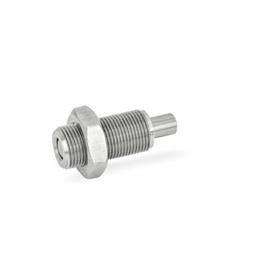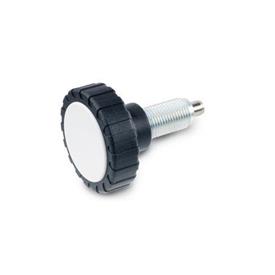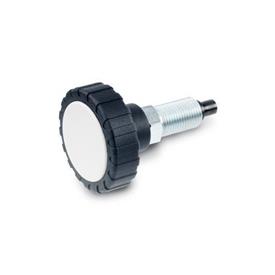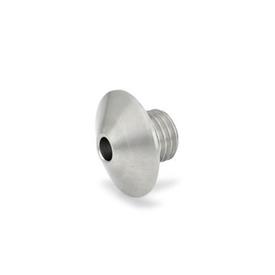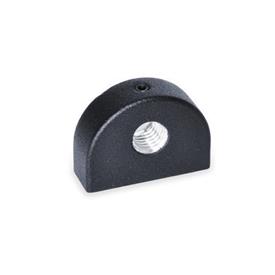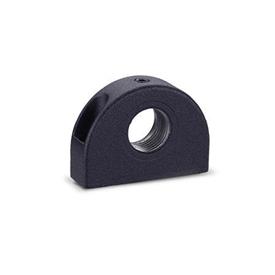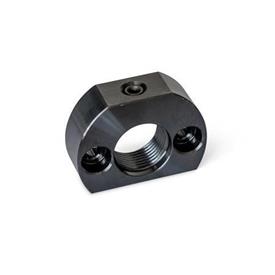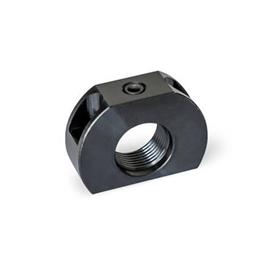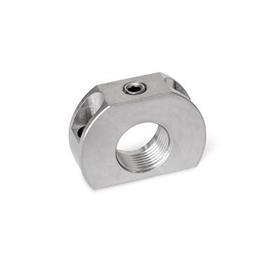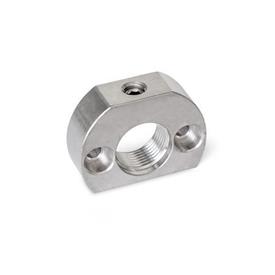
Indeksitapit ovat kineettisiä, moniosaisia standardiosia liikkuvien osien nopeaan ja luotettavaan lukitsemiseen. Niiden käytössä ei tarvita työkaluja. Pidätintapeilla, joita myös indeksitapeiksi kutsutaan, varmistetaan suuret pitovoimat ja turvallinen kiinnitys sekä helppo käsittely.
Näin varmistetaan yksinkertainen ja samalla turvallinen prosessi.
Indeksitappi muodostaa suoran, irrotettavan kytkennän kiinteän osan ja liikkuvan komponentin välille. Indeksitapissa on ohjain sekä sisäinen pidätintappi tai pultti. Kun vetopainiketta vedetään, pidätintappi siirtyy ohjaimeen ja tekee aiemmin kiinteästä komponentista liikutettavan. Sen jälkeen, kun komponentti on saavuttanut halutun sijainnin, käyttäjä työntää tapin uudelleen kiinteän komponentin reikään lukituksen kytkemiseksi.
Lukitustapin leikkauslujuus on ratkaisevat tekijä, kun määritellään lukituslaitteen lujuutta. Indeksitapin tyypistä riippuen käyttäjä voi valita erilaisista käyttöelementeistä. Ganter toimittaa pidätintappeja tai indeksitappeja, jotka on valmistettu teräksestä tai korroosiota kestävästä ruostumattomasta teräksestä, käyttötarkoituksesta riippuen.
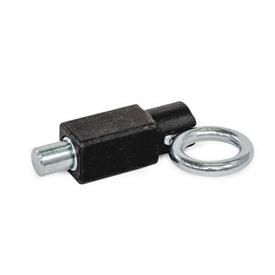
Ganter Norm (GN) -standardin mukaan valmistettuja indeksitappeja on saatavissa useita eri malleja ja erilaisilla ominaisuuksilla. Näin ollen saatavilla on optimaaliset pidätintapit kaikkiin käyttötarkoituksiin:
Ganterilta on saatavissa indeksitappeja | pidätintappeja eri kokoja, muotoja ja materiaaleja. Näille Ganterin standardiosille on tyypillistä korkea laatu ja pitkäikäinen toimivuus. Toimitamme indeksitapit kaikissa toimituserissä, myös yksittäisinä kappaleina, 24 tunnin sisällä. Suunnittelijat voivat ladata jokaisen Ganterin pidätintapin 3D-tiedoston ilmaiseksi. Ganter valmistaa tilauksesta indeksitappeja myös asiakkaan vaatimusten mukaisesti.
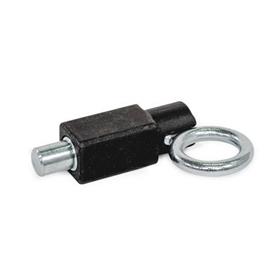
Indexing plungers and detent pins are mechanical connecting elements that reliably position, lock or secure parts. They prevent accidental releasing or slipping of moving components. These terms are often used interchangeably in everyday technical language.
With all indexing plungers and detent pins from Ganter, a spring generally ensures that a pin engages in a hole or mating part. The pin can only be removed again with an intentional operation (e.g. pulling or pressing). Reliable positioning and releasing of moving parts is therefore possible at any time. This is especially useful for setup changes on machines or to handle variable production tasks.
If you need a reliable pin for securing, positioning or locking, you can search the Ganter selection for “indexing plunger” or “detent pin” – you will always find elements with identical core functionality. To realize your application, you therefore need to make a selection primarily based on design, material and any required special function (e.g. with/without rest position). This allows you to flexibly address your specific use case and improve the ease-of-use and reliability of your machines and plants.
Indexing plungers and detent pins are ideal solutions when moving machine parts must be securely positioned or temporarily secured – especially in situations where accidental movement must be prevented. Typical areas of application are found in general machine and plant construction, jig construction, automation systems and all areas in which parts must be quickly and reproducibly repositioned or locked. For example, you can conveniently secure stops, guides, workpiece holders or adjustable columns, securing them in exactly the desired position at any time.
With Ganter indexing plungers, you can ensure that moving parts can be reproducibly and safely positioned at any time. This reduces setup times, prevents operating errors and increases the process reliability of your systems. Thanks to a wide range of variants – from stainless steel versions for hygiene applications to compact mini indexing models – you will easily find the right product for your individual use.
Indexing plungers, also called detent pins, lock and position moving parts quickly, precisely and reliably. A spring-loaded plunger pin can be pulled or pushed by hand. When released, it snaps back into a defined hole or recess in the mating part. This creates a positive locking connection that can be repeatably engaged. For example, this makes it possible to conveniently secure swiveling or sliding elements and release them again quickly when needed.
For versions with rest position (e.g. GN 617.1, GN 722.4 with rest position), the plunger pin remains retracted until intentionally disengaged. This allows you to respond more flexibly, such as when it is necessary to pass over multiple positions or tools.
Securing with indexing plungers provides noticeably greater ease-of-use and reliability. The operating forces and adjusting effort are lower because the part is secured automatically. The user only needs to pull the indexing plunger and then release it again. The parts are reliably secured practically at the push of a button. This is ideal for variable setup tasks or repeatable positioning, such as on changeover tables, guide units or front-mounted indexing plates in machine construction.
This allows you to easily select the right indexing plunger for any application, ensuring reliable, flexible and convenient securing of parts in daily operations for a long time to come.
One typical use is for setup changes on workpiece carriers in production lines: With a GN 617 detent pin, you can unlock the part with one hand, reposition it and then release the knob, causing the pin to securely reengage. This allows you to respond flexibly to changing requirements and provide a secure connection without tools. The reliable locking protects against accidental repositioning and improves user-friendliness over the long term.
Summary: The simple disengaging and reengaging of Ganter’s indexing plungers and detent pins ensures convenient, reliable and efficient operation of your mechanisms – in both manual and automated applications.
Indexing plungers from Ganter are available in the materials of steel, stainless steel and plastic. Depending on the product design, the parts are made entirely of one of these materials or use a combination of materials. This means that the right material combination is always available to satisfy diverse requirements in machine and plant construction, in automation and for applications in damp, corrosive or hygienically sensitive environments.
The various material versions of indexing plungers ensure that you can find the right standard part for precisely your application. This allows you to flexibly respond to environmental conditions and make assembly processes both safe and convenient.
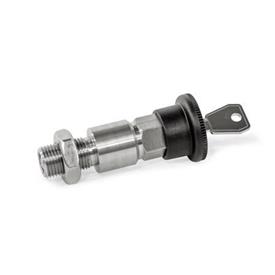
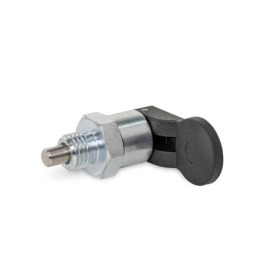
You can always identify the material version in the respective product description here in the shop and on the standard sheet available for downloading. For applications with special requirements, such as welding, indexing plungers for welding are also available in steel or stainless steel. This means you will find the right indexing plunger for any application – for quick, accurate and reliable operation.
Indexing plungers and detent pins are available in numerous designs. Ganter offers a large selection to satisfy various requirements in machine construction, plant construction and automation technology. The most important differences lie in the type of operation, the installation principle, the presence of a rest position and the material used. This allows you to find the right solution for any application, including in challenging automation environments, whether you need standard, hygienic or welded mounting.
The wide range of available designs enables you to directly address the requirements of your application. For example, a pneumatic variant simplifies integration into automated processes, while lockable versions or versions equipped with a rest position offer maximum security against operating errors or manipulation. Numerous options for diameter, length, material and additional functions allows you to specifically select the optimal indexing plungers or detent pins. This can reduce assembly times, accelerate setup changes and increase operating reliability.
Indexing plungers and detent pins from Ganter are available in special designs for extreme environmental conditions. Thanks to the range of different materials and geometries, you can select the specific products you need for use in environments exposed to moisture or chemicals or in hygienically sensitive areas. This allows you to conveniently safeguard the reliability of your systems or machines even in difficult environments.
The wide range of materials and variants for indexing plungers and detent pins ensures that you will find the right standard part for almost any environmental conditions. When making your selection, pay attention to the material of the pin and the surface as well as the corresponding safety features (e.g. hygienic design, rest position). This allows you to respond flexibly to changing or extreme requirements and improve the reliability of your application over the long term.
For use cases subject to special stresses – such as environments with high cleanliness requirements or exposure to moisture or corrosive chemicals – always select a stainless steel version or a special hygienic design part. If you have further questions regarding the optimal design for your area of use, we recommend you consult with the Ganter support team.
This allows you to fully meet all requirements in machine construction, plant engineering or automation with a long-lasting solution – no matter how challenging the environmental conditions are.
Indexing plungers and detent pins generally permit simple and secure mounting. Correct mounting ensures precise positioning and prevents parts from shifting accidentally. Always pay close attention to the selected design, the mounting principle (screwing in, bolting on, welding) and any necessary accessories. This will ensure a secure and long-lasting retaining or positioning function.
Machine components can be positioned or secured conveniently, reliably and repeatably by carefully selecting and properly installing indexing plungers and detent pins. This can reduce downtimes, accelerate setup changes and prevent operating errors. Ideal for changing operating conditions or where highly precise repeatability is called for, such as in positioning, transport or swapping equipment.