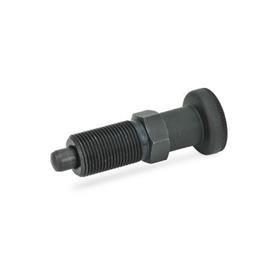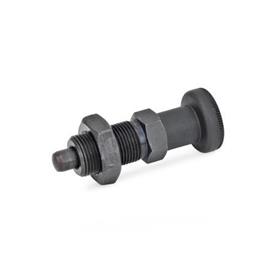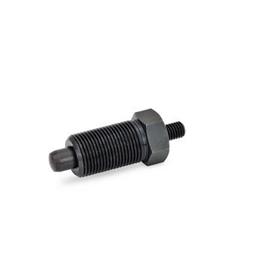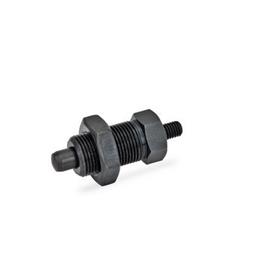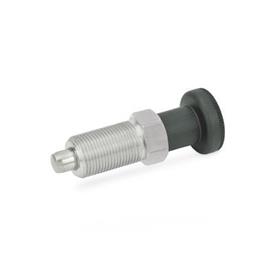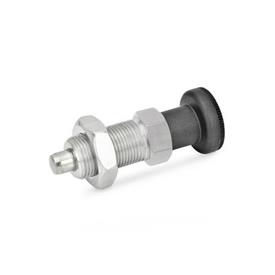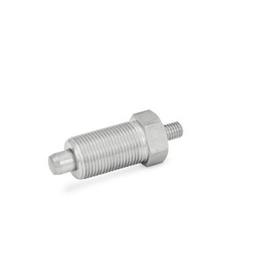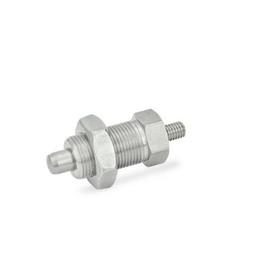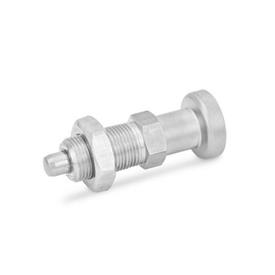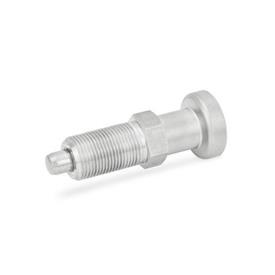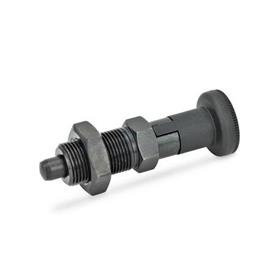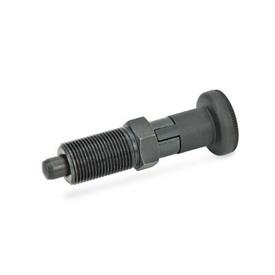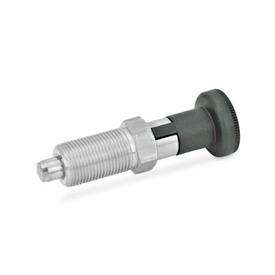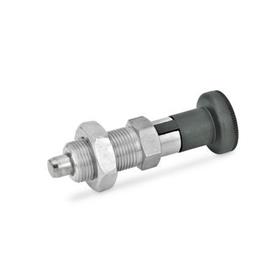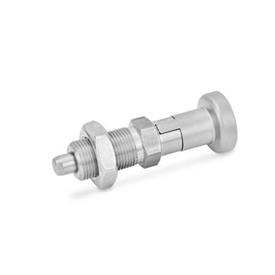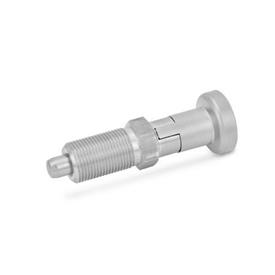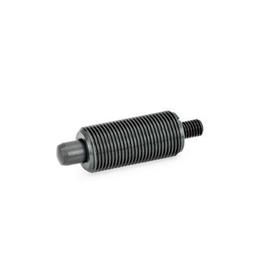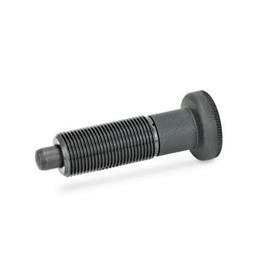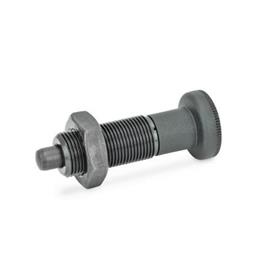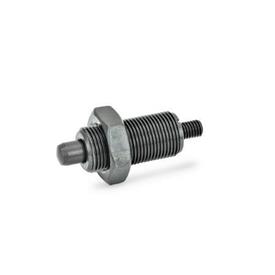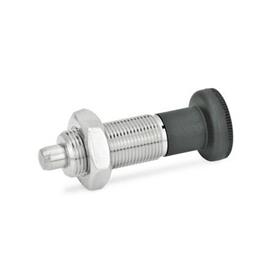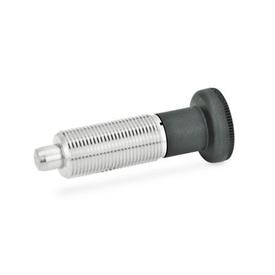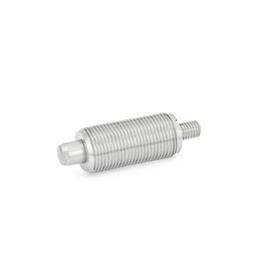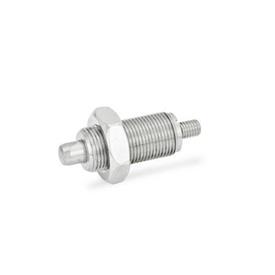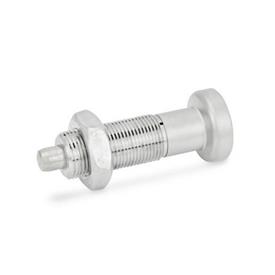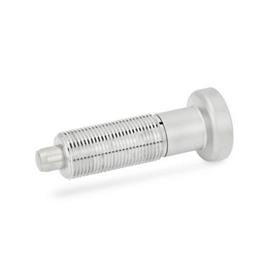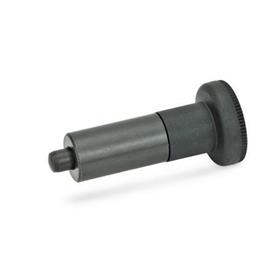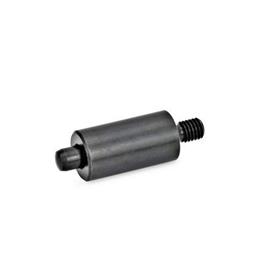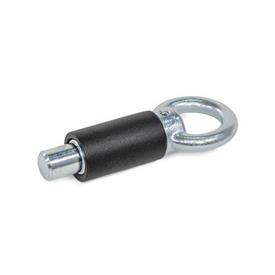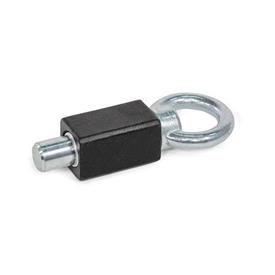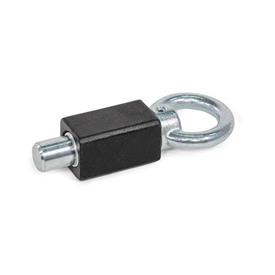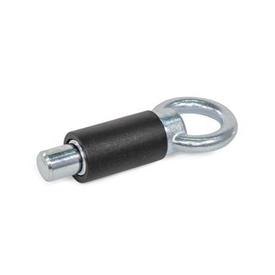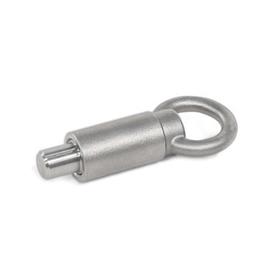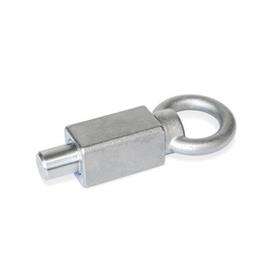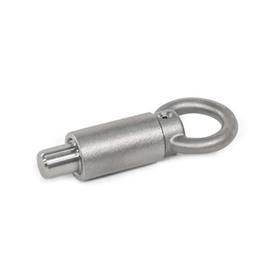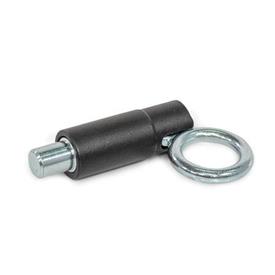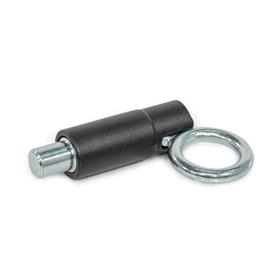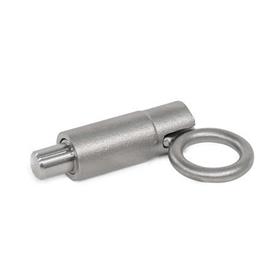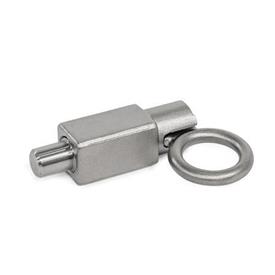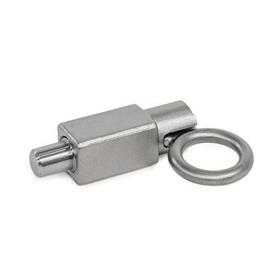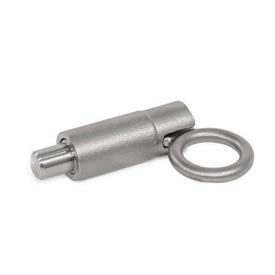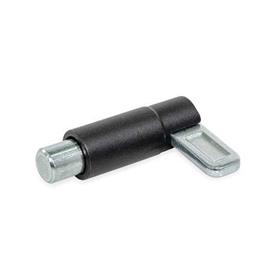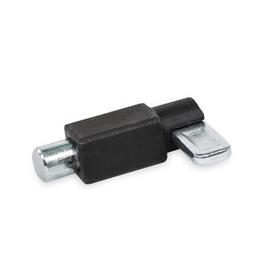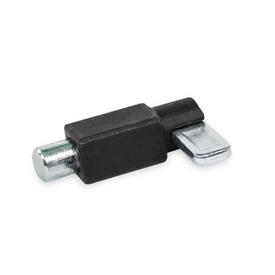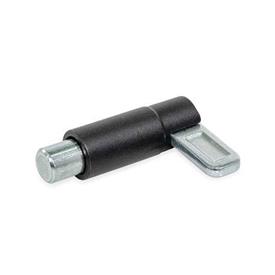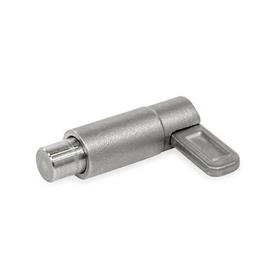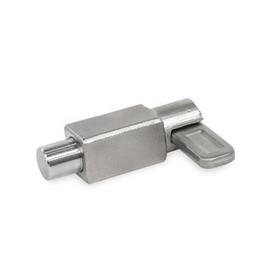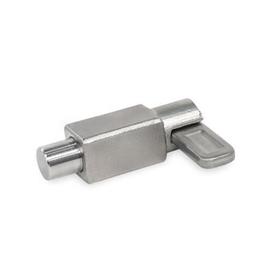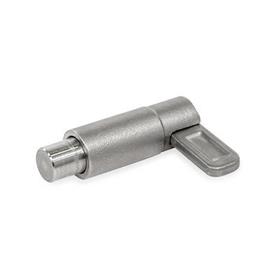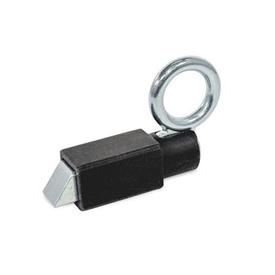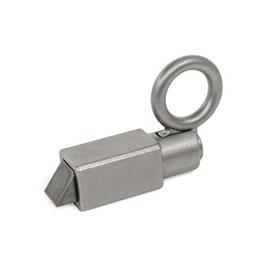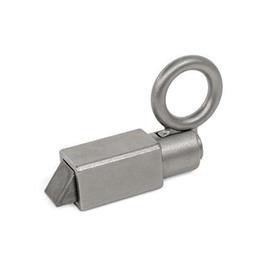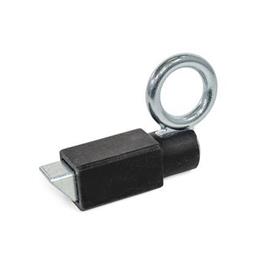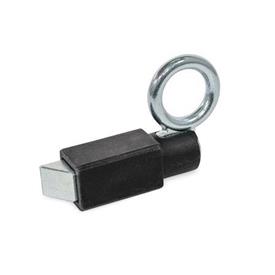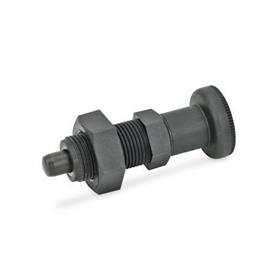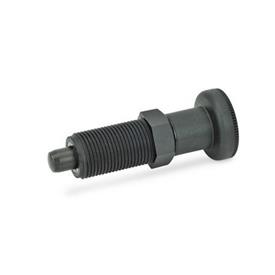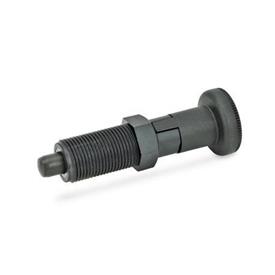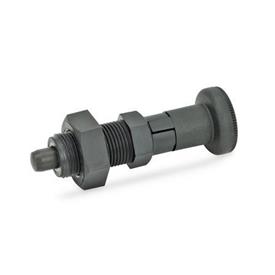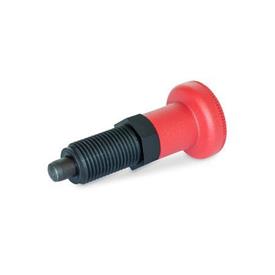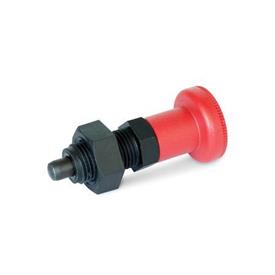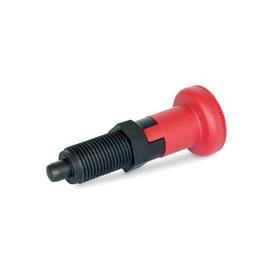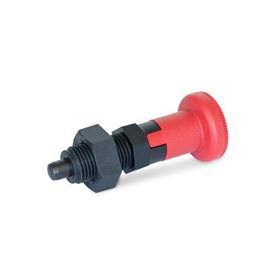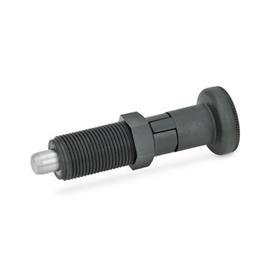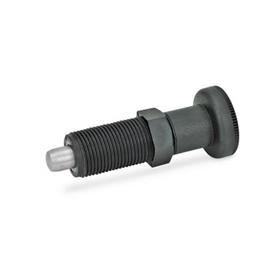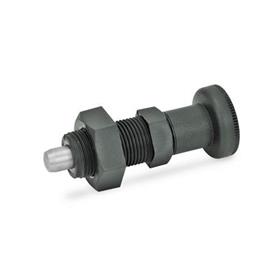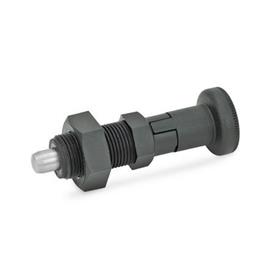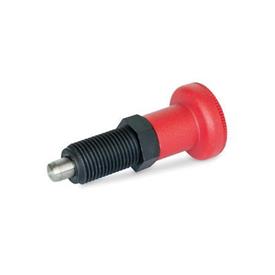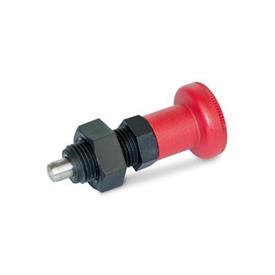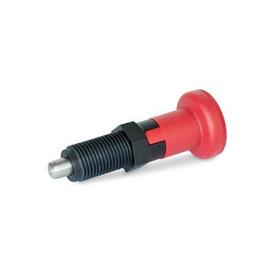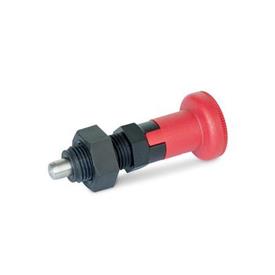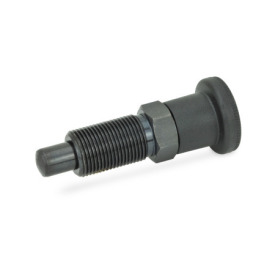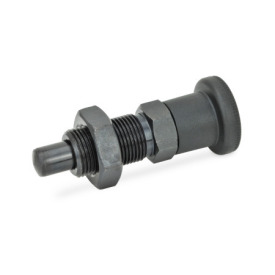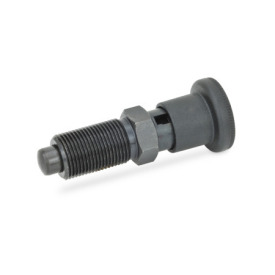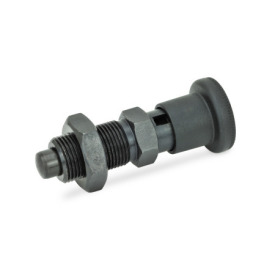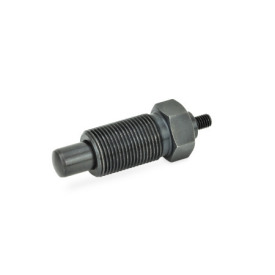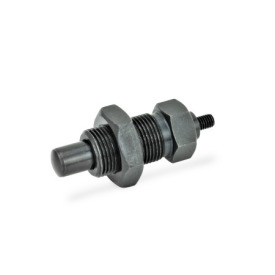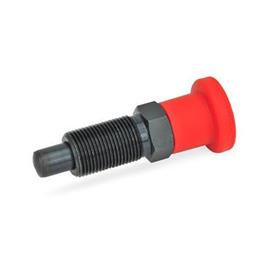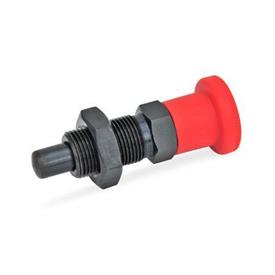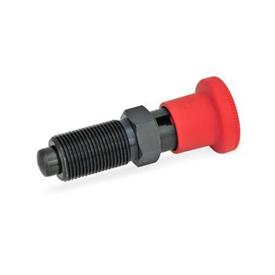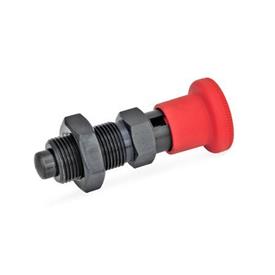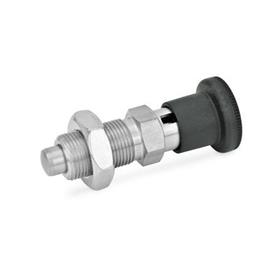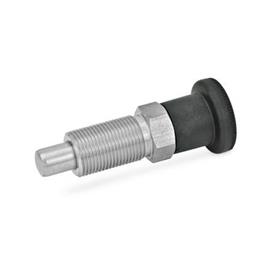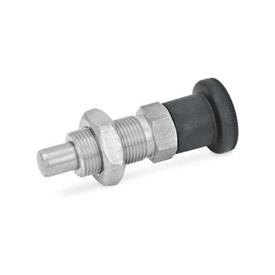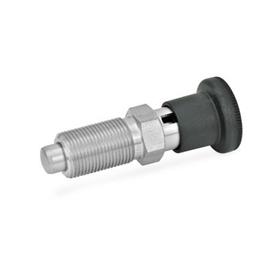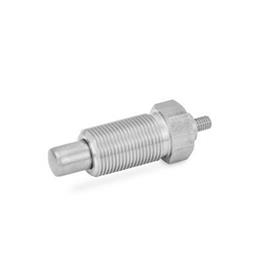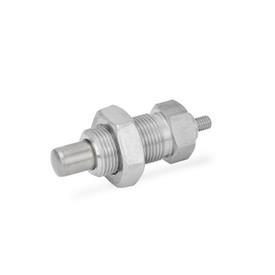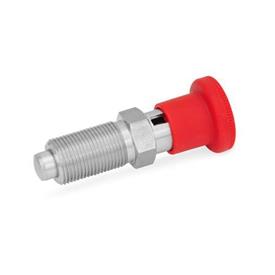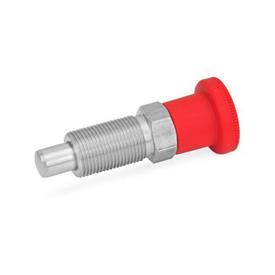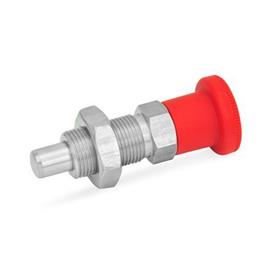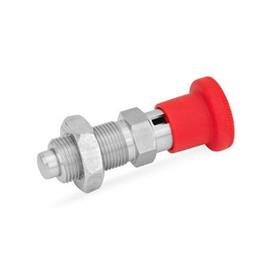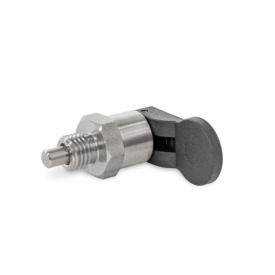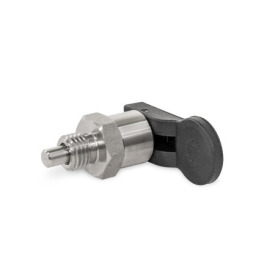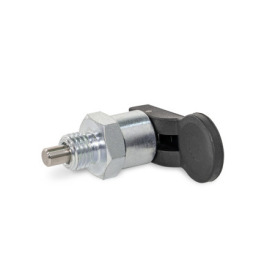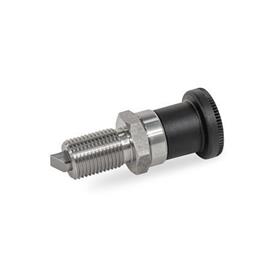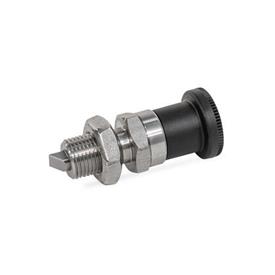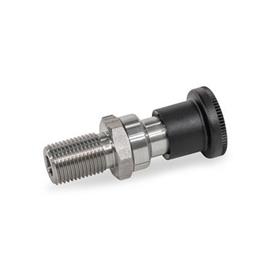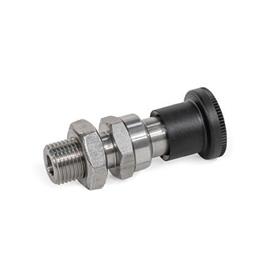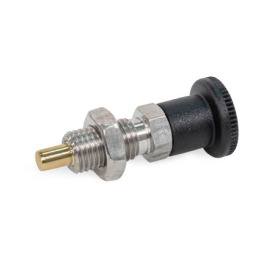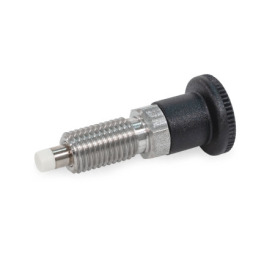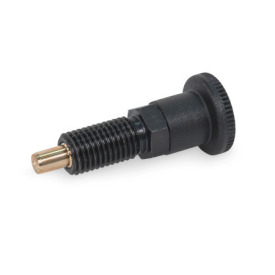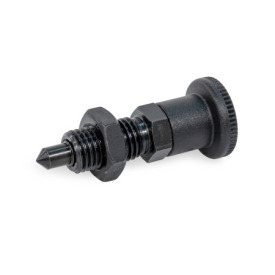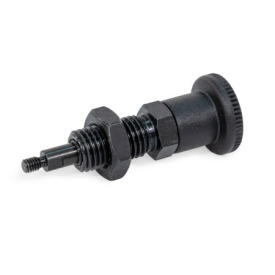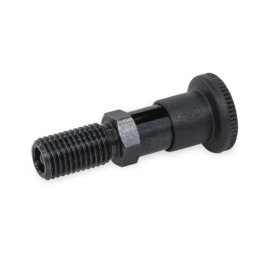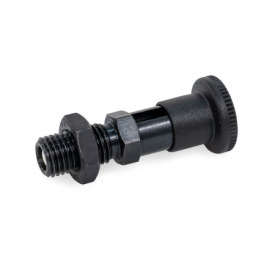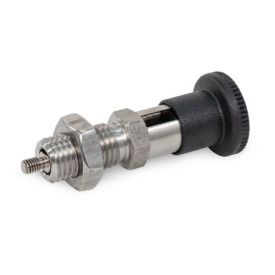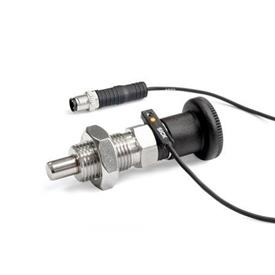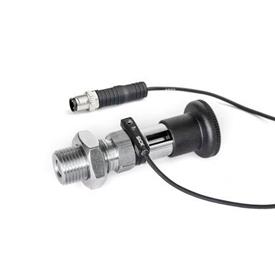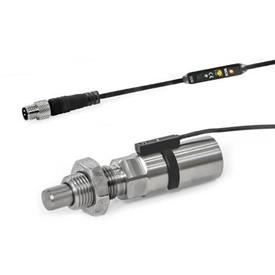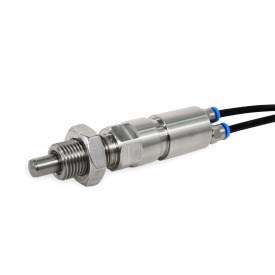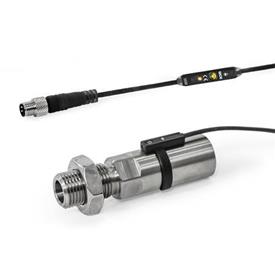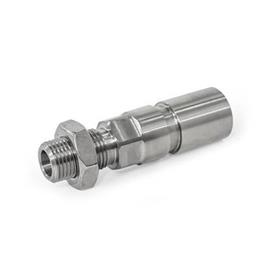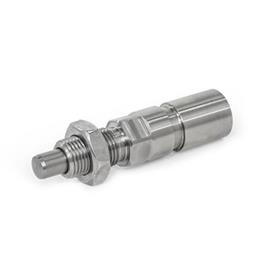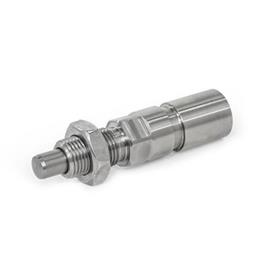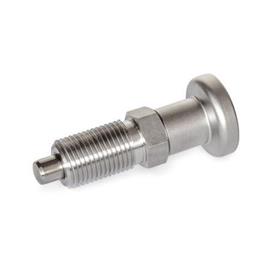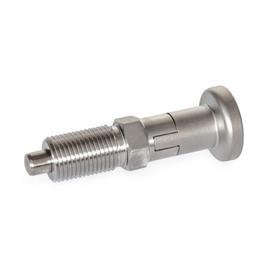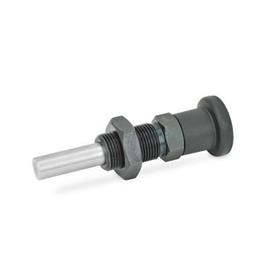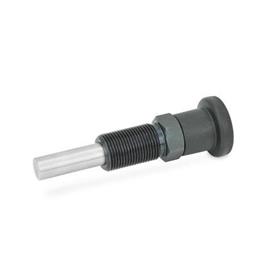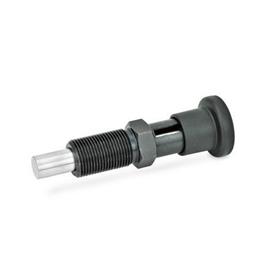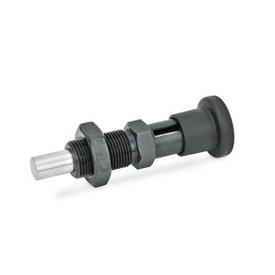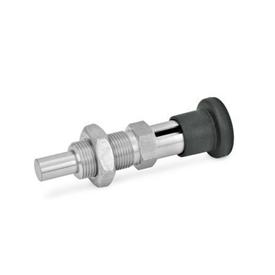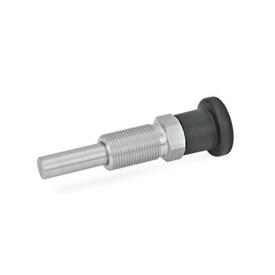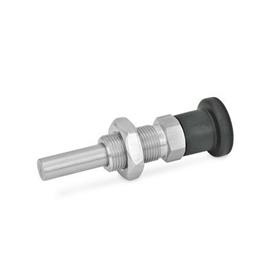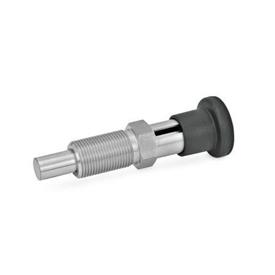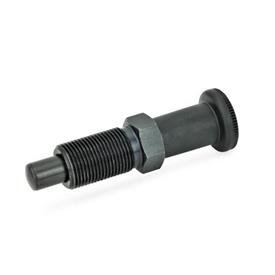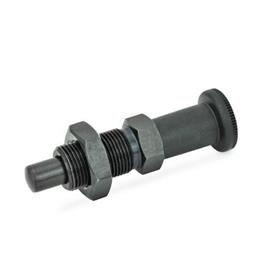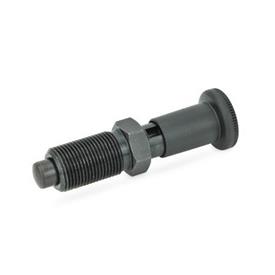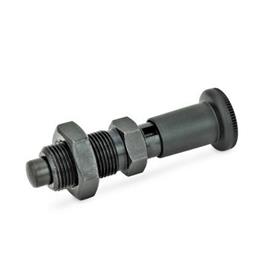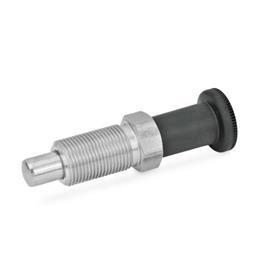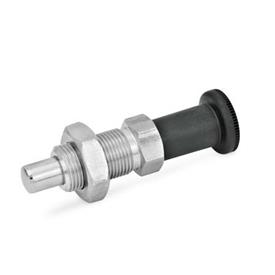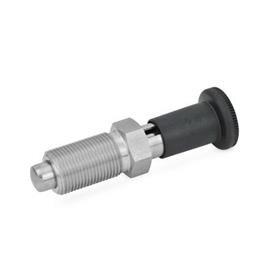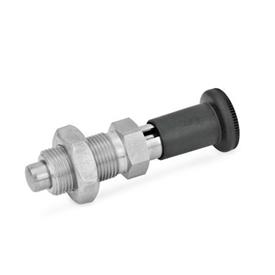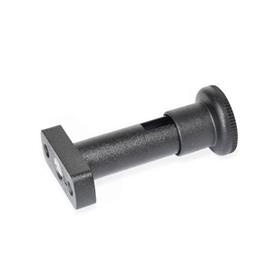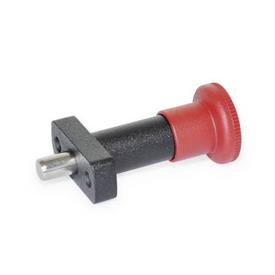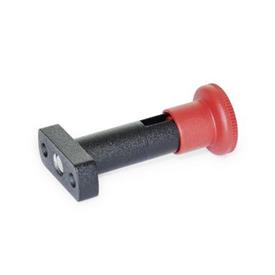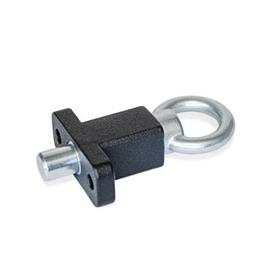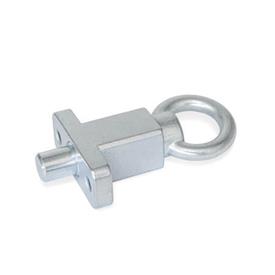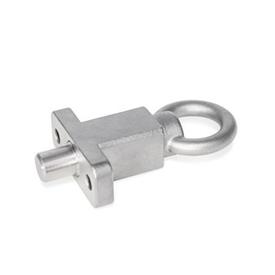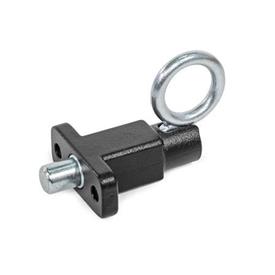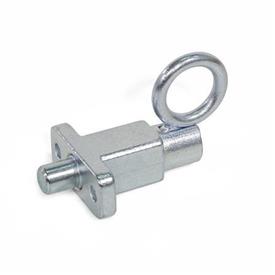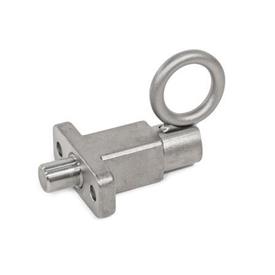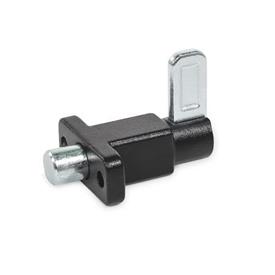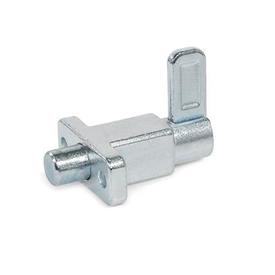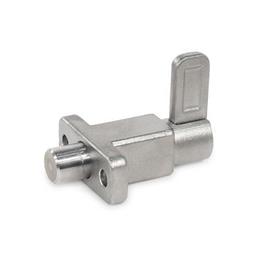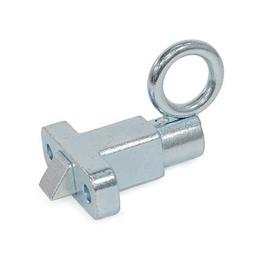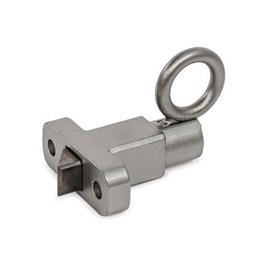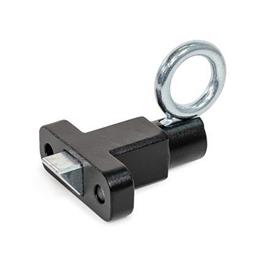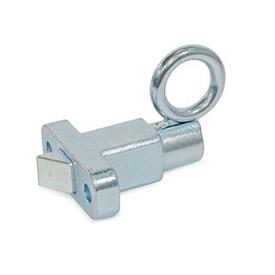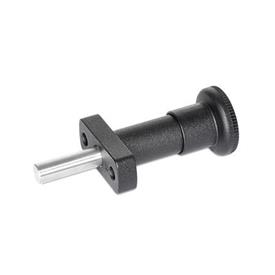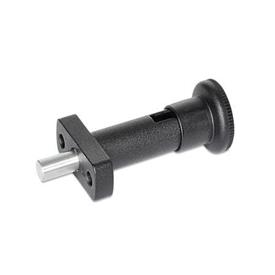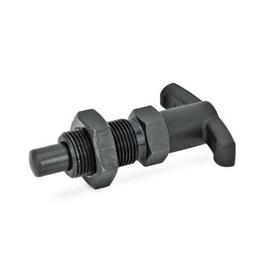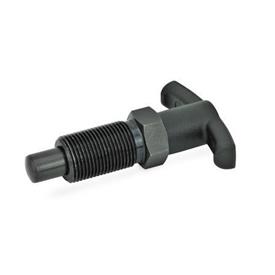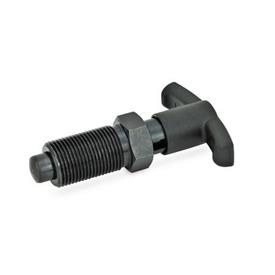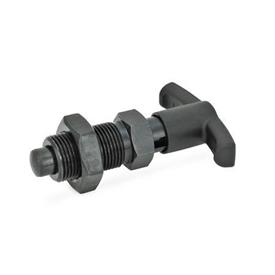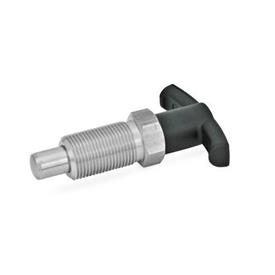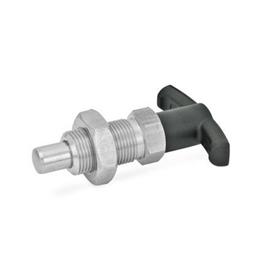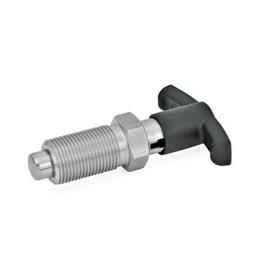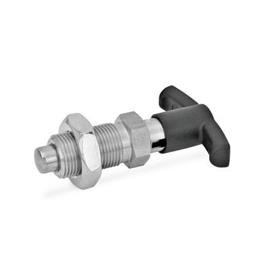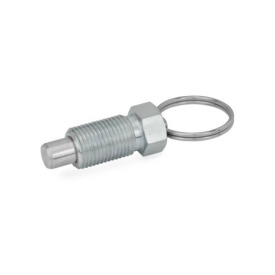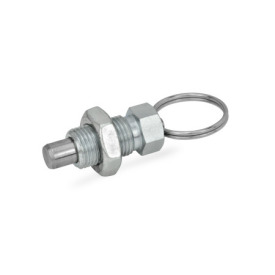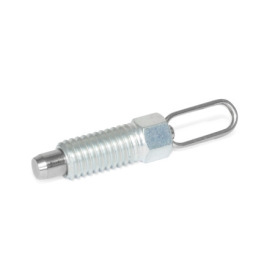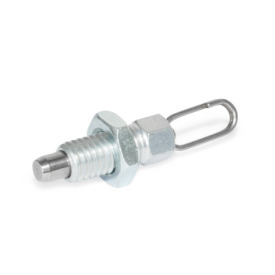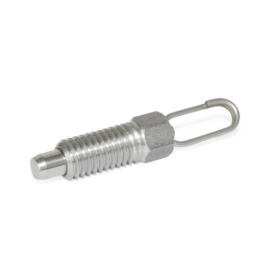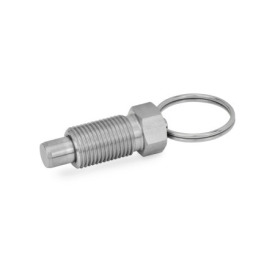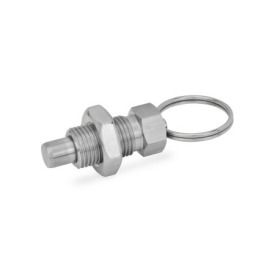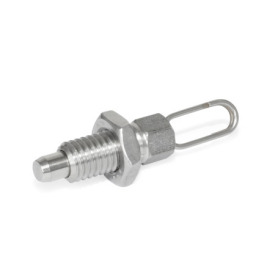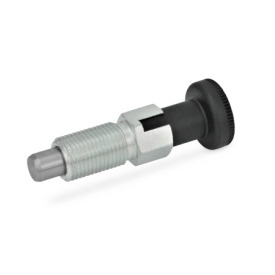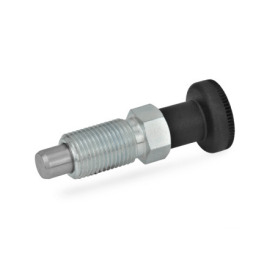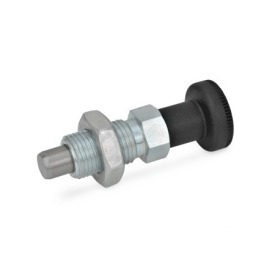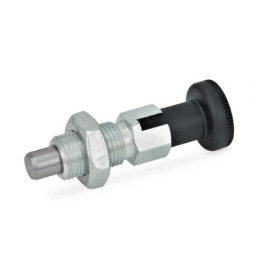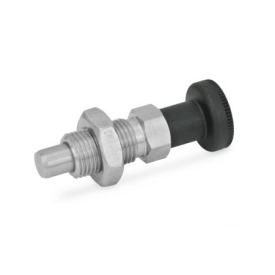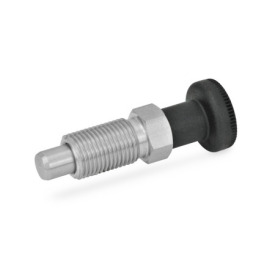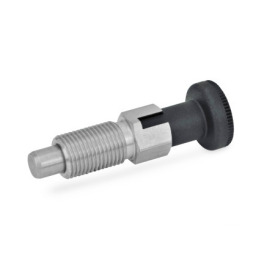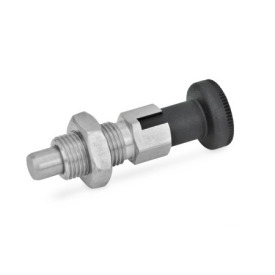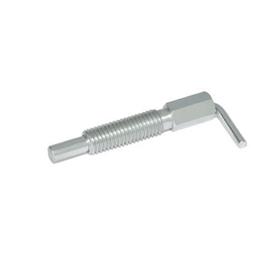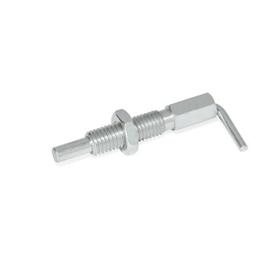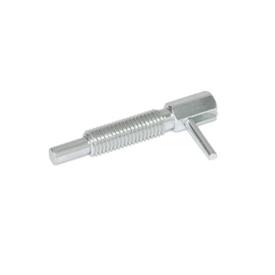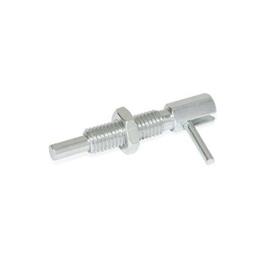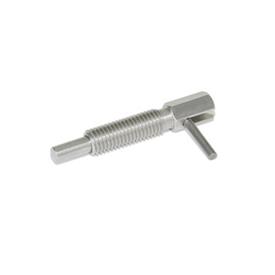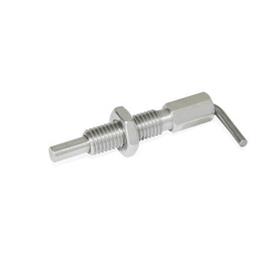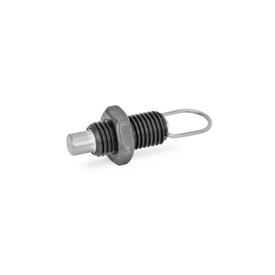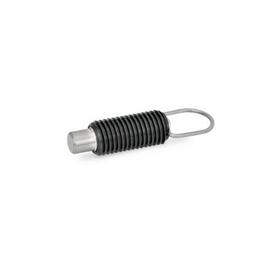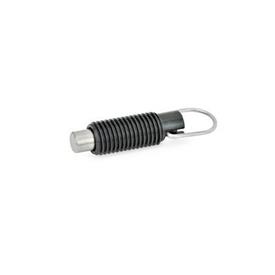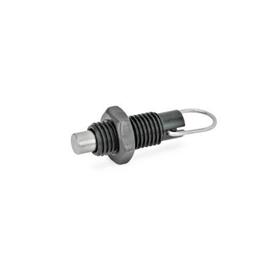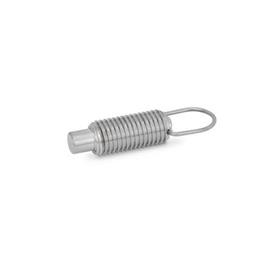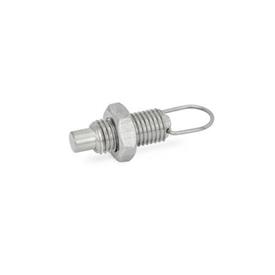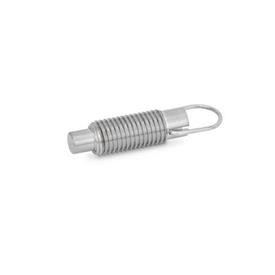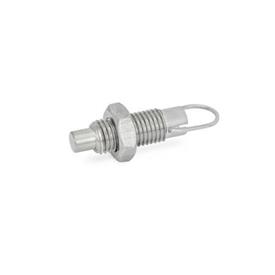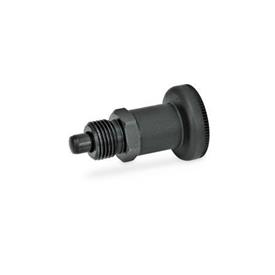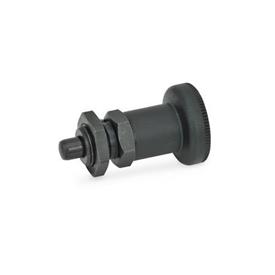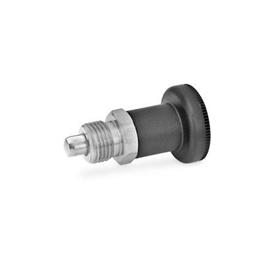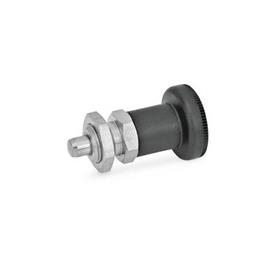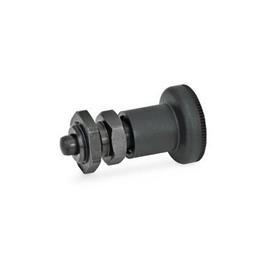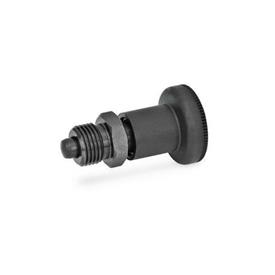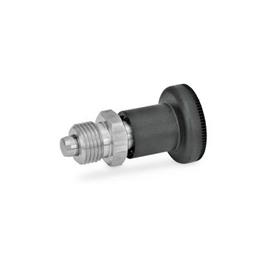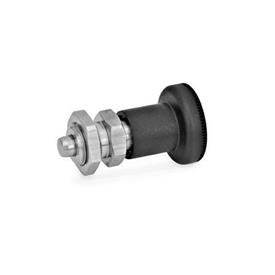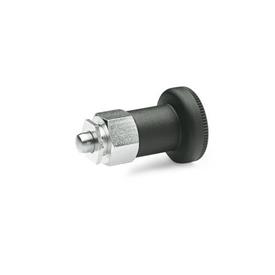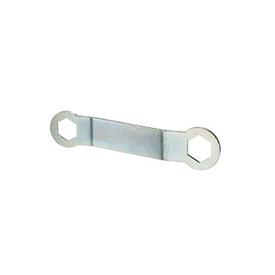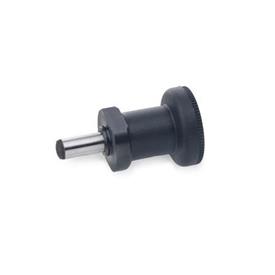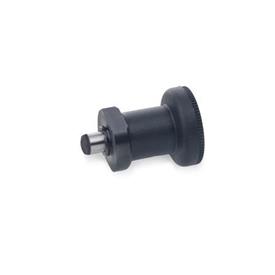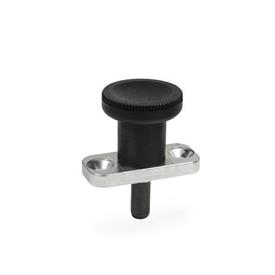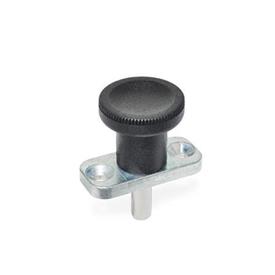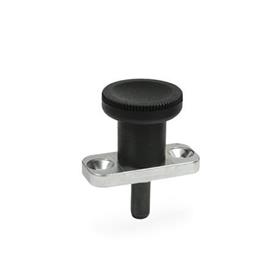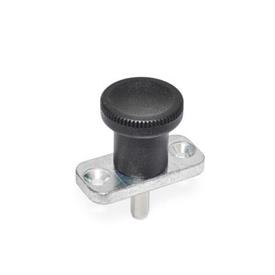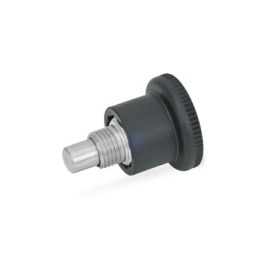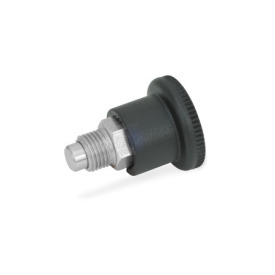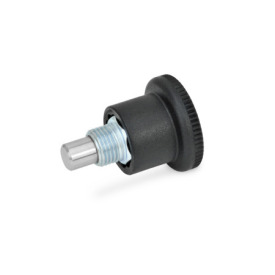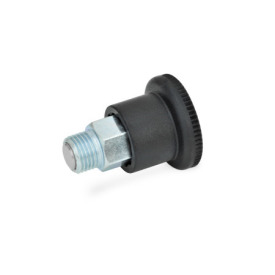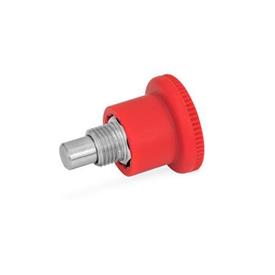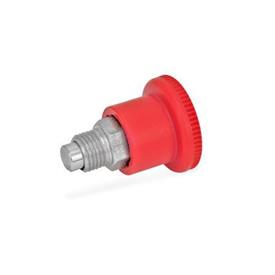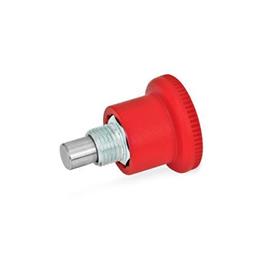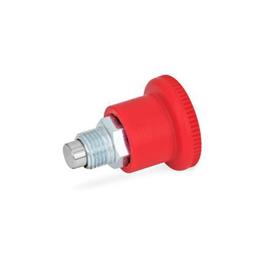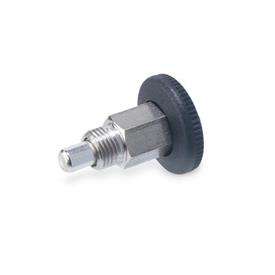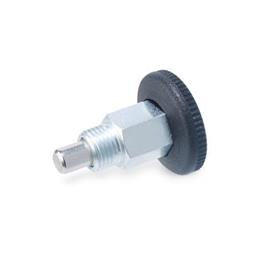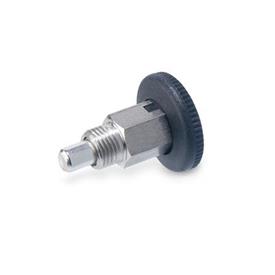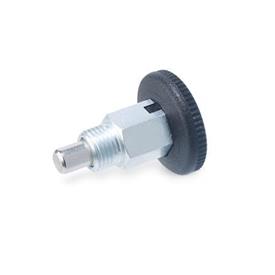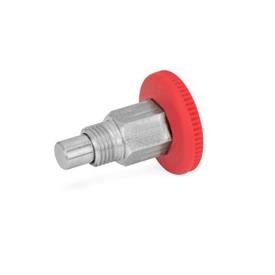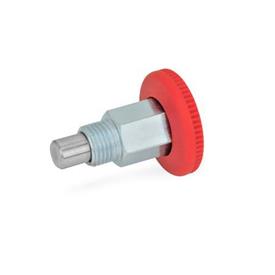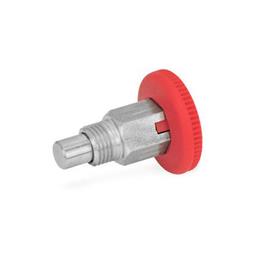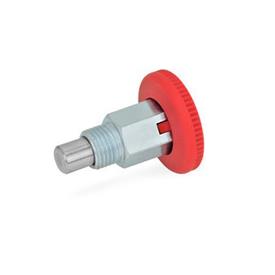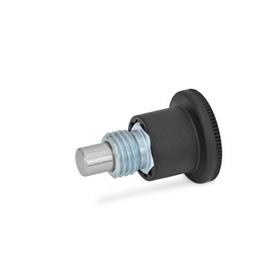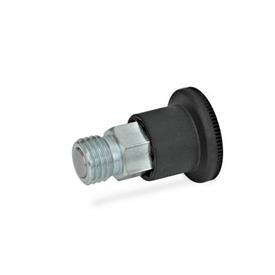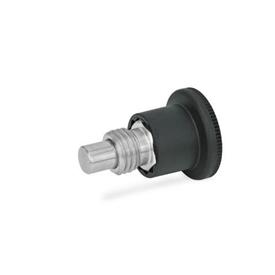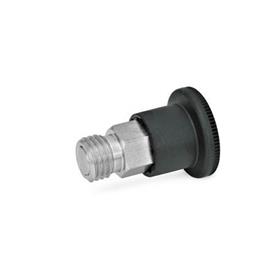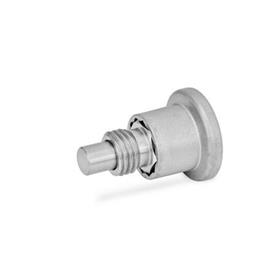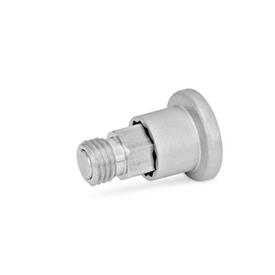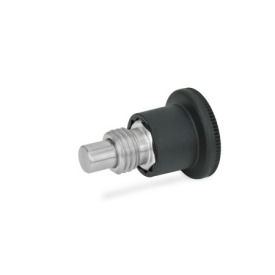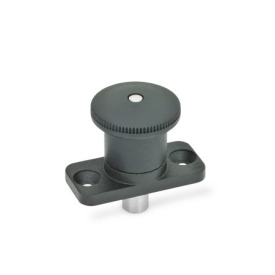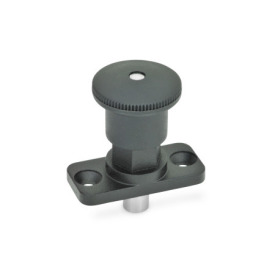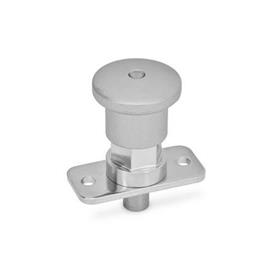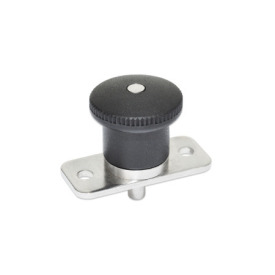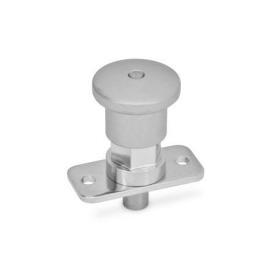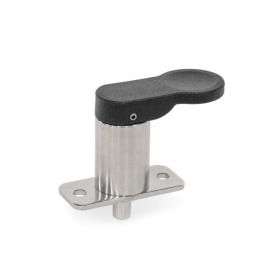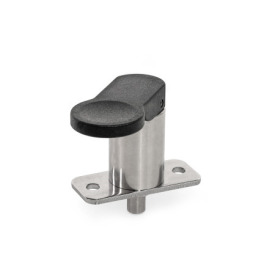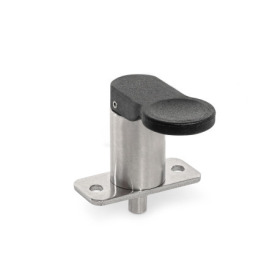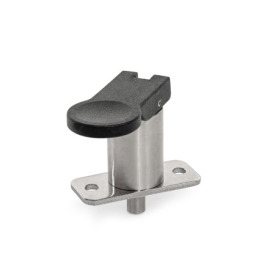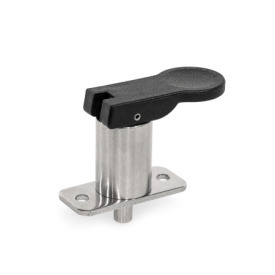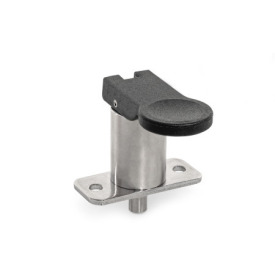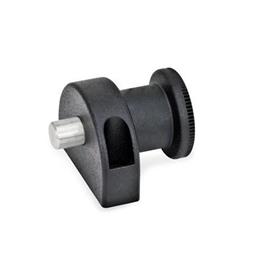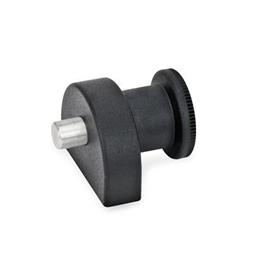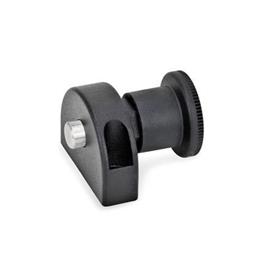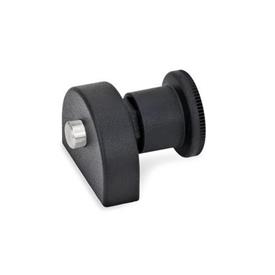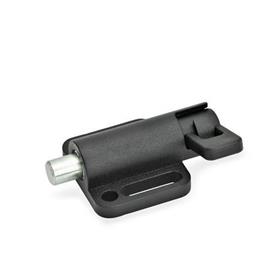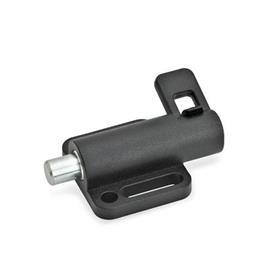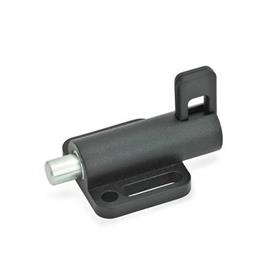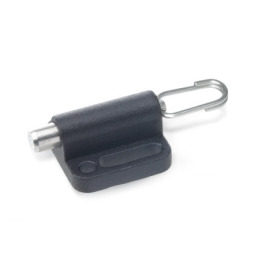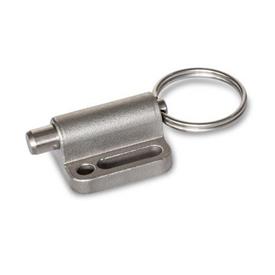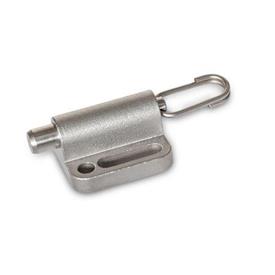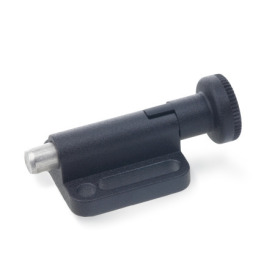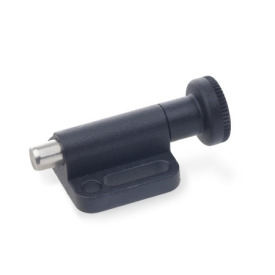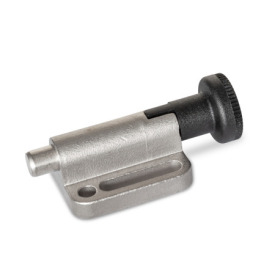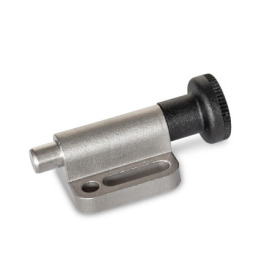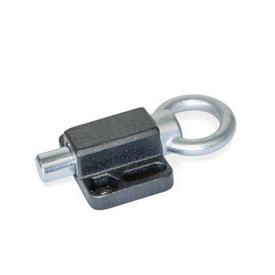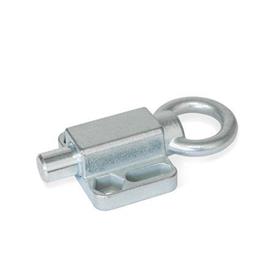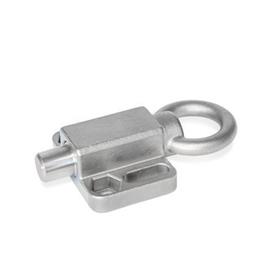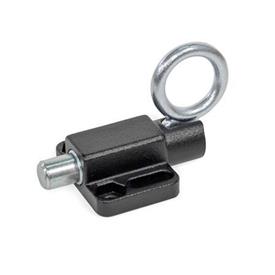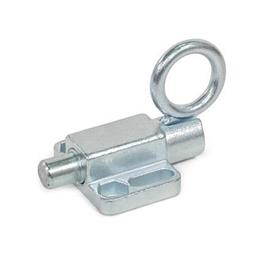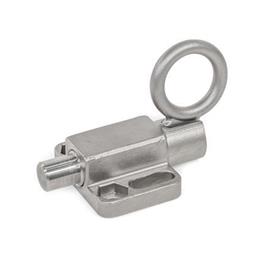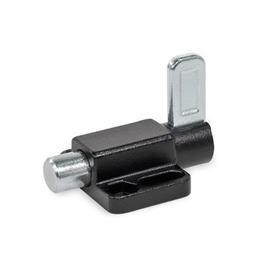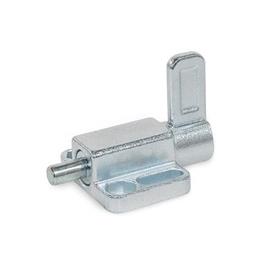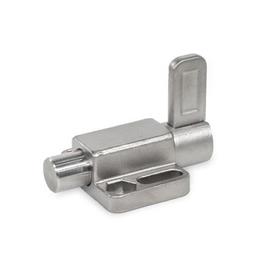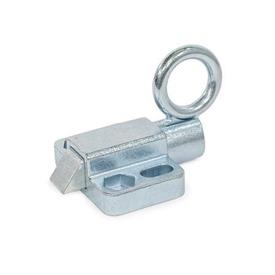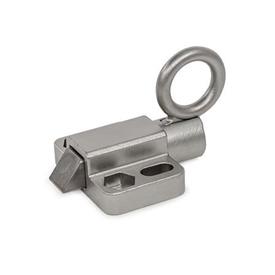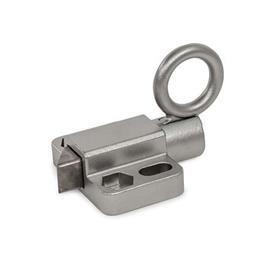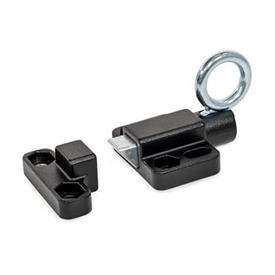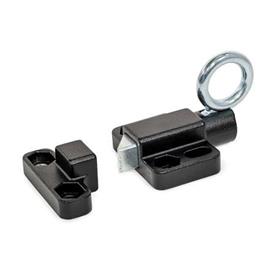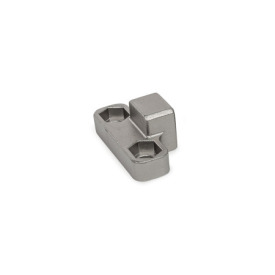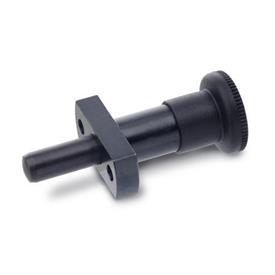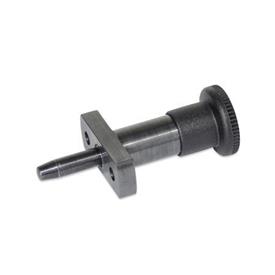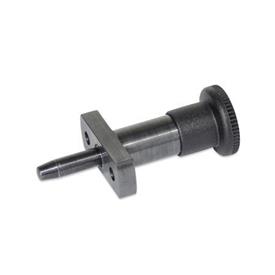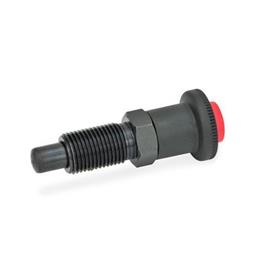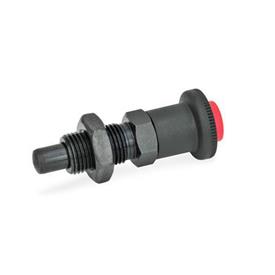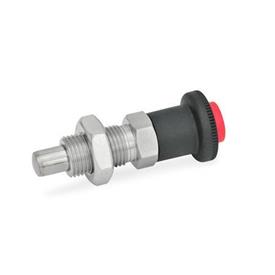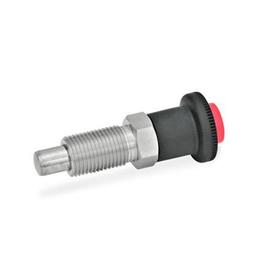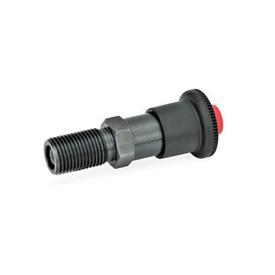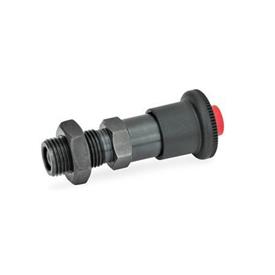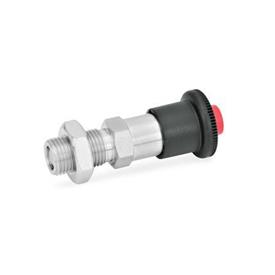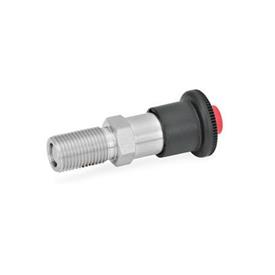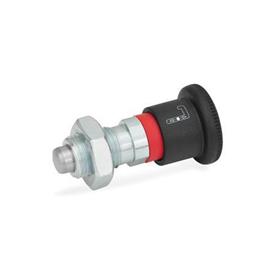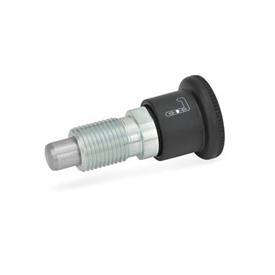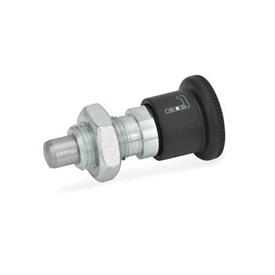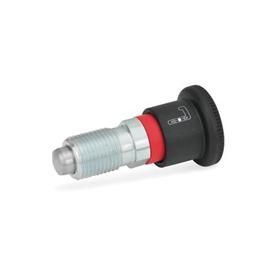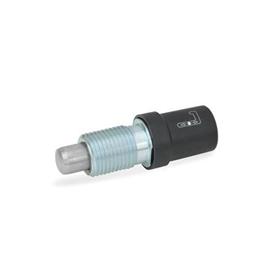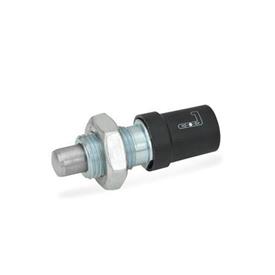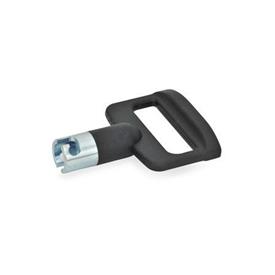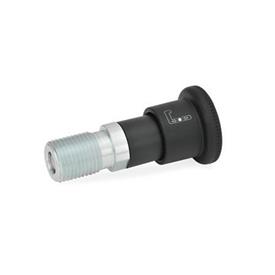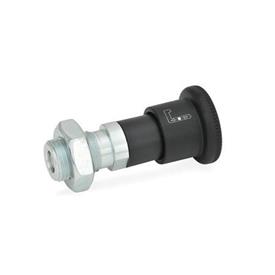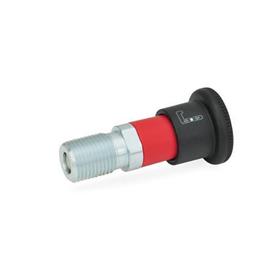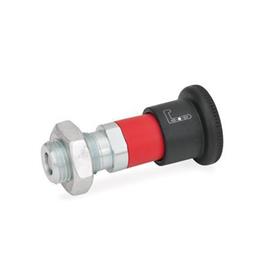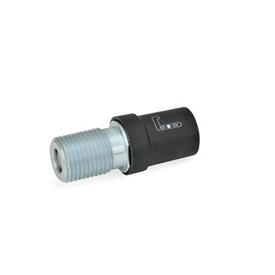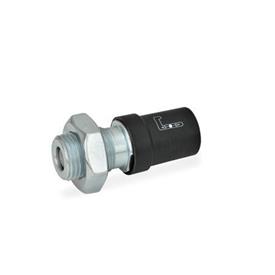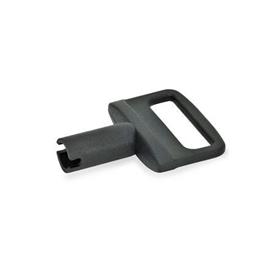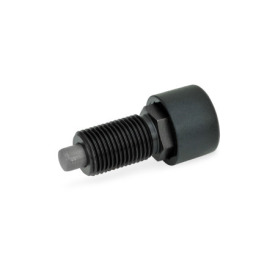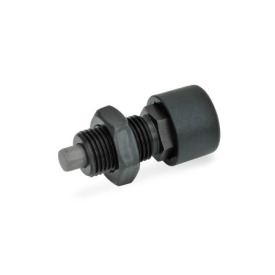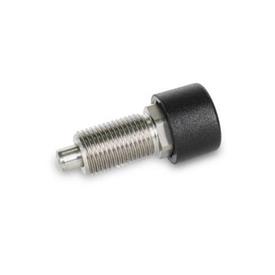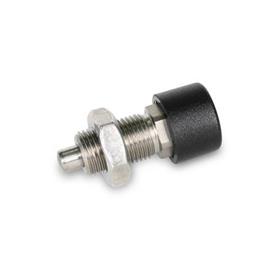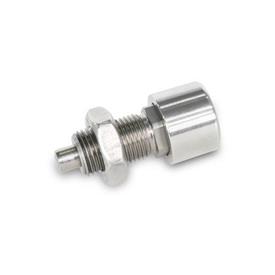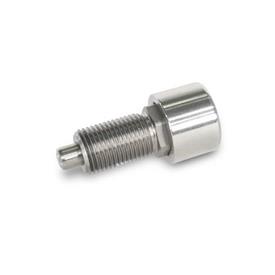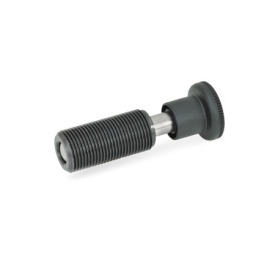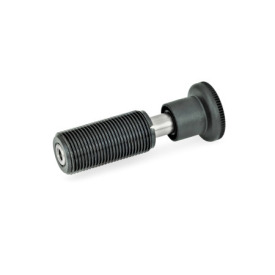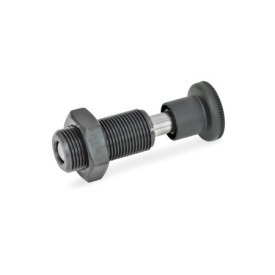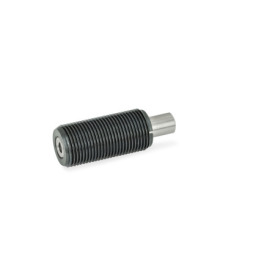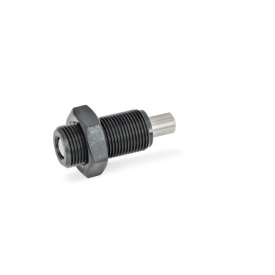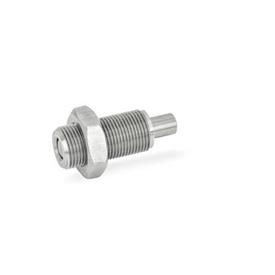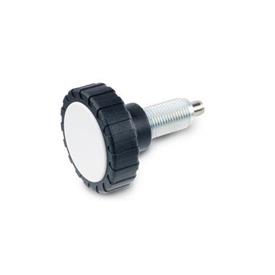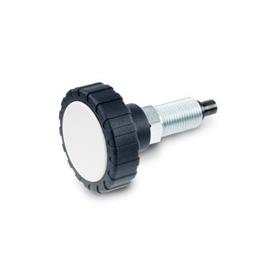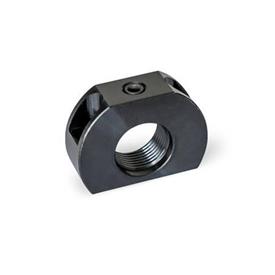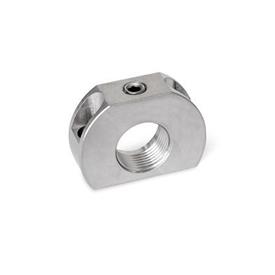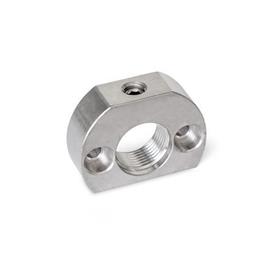
Indexing plungers from Ganter for demanding development tasks

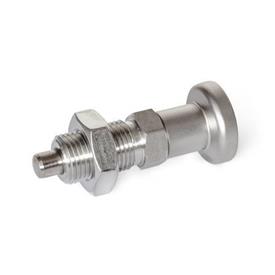
Indexing plungers are kinetic, multi-part standard parts for fast, reliable locking of moving parts. No tools are required to operate them. Detent pins, also called indexing plungers, guarantee high holding forces and secure fixation in combination with simple handling.

This ensures a simple and at the same time secure process.

Mode of operation of indexing plungers

An indexing plunger creates a positive, detachable connection between one stationary and one moving component. It consists of a guide with an internal detent pin or bolt. When the pull button is pulled, the detent pin moves into the guide and makes the previously fixed component movable. After the component has reached its desired position, the user reinserts the pin into a hole in the stationary component to engage the lock.

The shear strength of the locking pin is decisive in determining the strength of the locking device. Depending on the type of the indexing plunger, the user can choose between various operating elements. Ganter supplies detent pins or indexing plungers made of steel or corrosion-resistant stainless steel, depending on the application.

Areas of application of the indexing plunger

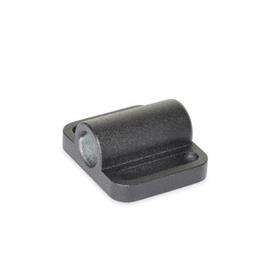
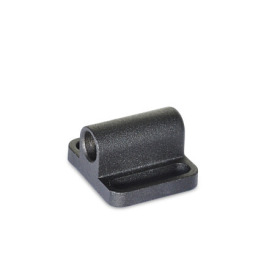
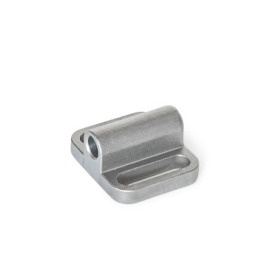
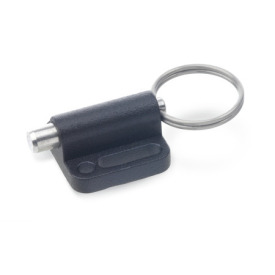
The indexing plungers manufactured in accordance with the Ganter Norm (GN) are available in a variety of designs and with various features. The optimal detent pin is thus available for every application:

Buy indexing plungers from Ganter online

You can get indexing plungers | detent pins from Ganter in various sizes, shapes and materials. These Ganter standard parts are characterized by high quality and long-lasting functionality. We deliver our indexing plunger range in any quantity, even single units, within 24 hours. Designers can download a 3D file free of charge for each Ganter detent pin. On request, Ganter also produces indexing plungers according to customer requirements.

FAQ - Frequently Asked Questions

Filter products
New Products
Material
Bolt diameter (from - to) Bolt diameter
Thread (from - to) Thread
Fixing method
Version
Product Family

Nothing found? Special requests

FAQ - Frequently Asked Questions

What is the difference between an indexing plunger and a detent pin?

Indexing plungers and detent pins are mechanical connecting elements that reliably position, lock or secure parts. They prevent accidental releasing or slipping of moving components. These terms are often used interchangeably in everyday technical language.

Shared functioning principle

With all indexing plungers and detent pins from Ganter, a spring generally ensures that a pin engages in a hole or mating part. The pin can only be removed again with an intentional operation (e.g. pulling or pressing). Reliable positioning and releasing of moving parts is therefore possible at any time. This is especially useful for setup changes on machines or to handle variable production tasks.

What does this mean in practice?

If you need a reliable pin for securing, positioning or locking, you can search the Ganter selection for “indexing plunger” or “detent pin” – you will always find elements with identical core functionality. To realize your application, you therefore need to make a selection primarily based on design, material and any required special function (e.g. with/without rest position). This allows you to flexibly address your specific use case and improve the ease-of-use and reliability of your machines and plants.

Overview of the advantages of indexing plungers and detent pins

  • Secure positioning and reliable securing of moving parts
  • Convenient engaging and disengaging, no tool required
  • Compact designs and various materials for diverse uses
  • Ideal for machine construction, jigs, manual setup changes or safety applications

Which applications are indexing plungers and detent pins especially well suited for?

Indexing plungers and detent pins are ideal solutions when moving machine parts must be securely positioned or temporarily secured – especially in situations where accidental movement must be prevented. Typical areas of application are found in general machine and plant construction, jig construction, automation systems and all areas in which parts must be quickly and reproducibly repositioned or locked. For example, you can conveniently secure stops, guides, workpiece holders or adjustable columns, securing them in exactly the desired position at any time.

Areas of application for indexing plungers and detent pins

  • Positioning of parts on workbenches, templates or jigs, allowing you to improve the repeatable precision of manufacturing processes.
  • Locking of machine covers, panels, flaps or swivel arms to ensure smooth and safe operation.
  • Quick and tool-free changing of indexing positions on telescoping frames or guide mechanisms.
  • Securing and releasing in modular manufacturing environments, such as for setup changes or flexible assembly stations, allowing you to flexibly respond to changing requirements.
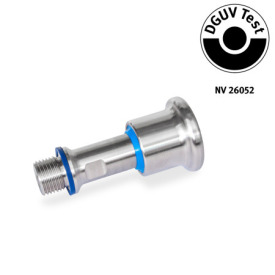
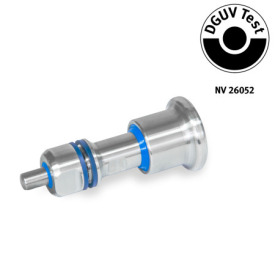
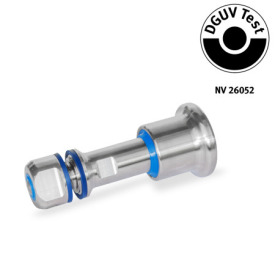
  • Use in hygienically sensitive areas, such as in the food and packaging industry thanks to models such as GN 8170 made of stainless steel A4 in hygienic design.
  • Use in damp or chemically exposed environments (V4A versions such as GN 722.5, GN 818, GN 822.10) to ensure corrosion resistance and reliability.
  • Detent pins are also used in fitness equipment

Practical advantages of Ganter indexing plungers

  • Increased operating convenience thanks to various operating methods – e.g. knob, T-handle or pull ring – adapted to your handling situation (see GN 817.4 or GN 717).
  • Compact shapes (such as GN 822 or GN 822.12) enable mounting even where space is limited.
  • Quick release locking devices with rest position (e.g. GN 617.1, GN 722.5) prevent the pin from accidentally springing back and offer additional safety in applications involving dynamic loads.
  • Models with chamfered pin, such as GN 724.4 or GN 824, simplify the engagement process – ideal for frequently changing positions.
  • Pneumatically operated versions (e.g. GN 817.7) allow automatic positioning in automated systems.

What does this mean in practice?

With Ganter indexing plungers, you can ensure that moving parts can be reproducibly and safely positioned at any time. This reduces setup times, prevents operating errors and increases the process reliability of your systems. Thanks to a wide range of variants – from stainless steel versions for hygiene applications to compact mini indexing models – you will easily find the right product for your individual use.

How does the securing function of an indexing plunger work?

Indexing plungers, also called detent pins, lock and position moving parts quickly, precisely and reliably. A spring-loaded plunger pin can be pulled or pushed by hand. When released, it snaps back into a defined hole or recess in the mating part. This creates a positive locking connection that can be repeatably engaged. For example, this makes it possible to conveniently secure swiveling or sliding elements and release them again quickly when needed.

Locking principle and process with an indexing plunger

  • The operator pulls on the knob, pull ring or lever, which lifts the spring-loaded plunger pin out of its position.
  • The part to be secured can now be repositioned or swiveled.
  • Upon release, the plunger pin automatically slides into the next positioning hole, driven by the spring.
  • The pin secures the part with a positive connection and prevents accidental repositioning.
For versions with rest position (e.g. GN 617.1, GN 722.4 with rest position), the plunger pin remains retracted until intentionally disengaged. This allows you to respond more flexibly, such as when it is necessary to pass over multiple positions or tools.

Practical benefits of securing with indexing plungers

Securing with indexing plungers provides noticeably greater ease-of-use and reliability. The operating forces and adjusting effort are lower because the part is secured automatically. The user only needs to pull the indexing plunger and then release it again. The parts are reliably secured practically at the push of a button. This is ideal for variable setup tasks or repeatable positioning, such as on changeover tables, guide units or front-mounted indexing plates in machine construction.

Overview: Advantages and selection criteria for indexing plungers

  • Positive locking connection (no slipping or unintentional releasing of the connection)
  • Quick and tool-free operation
  • Available for many materials: steel, stainless steel, plastic
  • Special designs for particular requirements, such as chamfered pins (GN 724.4, GN 824), compact designs (GN 822), lockable versions (GN 814), with position querying (GN 817.6), pneumatically operated (GN 817.7) or hygienic versions (GN 8170)
  • Available with or without rest position – entirely according to the specific use case
This allows you to easily select the right indexing plunger for any application, ensuring reliable, flexible and convenient securing of parts in daily operations for a long time to come.

Which types of operation are offered for indexing plungers?

  • The GN 617, GN 613 and GN 817 series have an operating knob (plastic or metal), that is simply pulled or pressed. This allows you to conveniently engage or disengage the plunger pin with a single hand.
  • Other variants, such as GN 717 or GN 417, are disengaged with a pull ring or wire loop – which is ideal when the pin is installed in a hard-to-reach location.
  • Models with T-handle, such as GN 817.4, offer an ergonomic alternative to a pull knob when it is necessary to exert more force.
  • Pneumatically operated solutions like GN 817.7 allow for remote-controlled, contact-free releasing and reengaging – this improves the reliability of automated processes in particular.

Practical example and typical benefits

One typical use is for setup changes on workpiece carriers in production lines: With a GN 617 detent pin, you can unlock the part with one hand, reposition it and then release the knob, causing the pin to securely reengage. This allows you to respond flexibly to changing requirements and provide a secure connection without tools. The reliable locking protects against accidental repositioning and improves user-friendliness over the long term.Summary: The simple disengaging and reengaging of Ganter’s indexing plungers and detent pins ensures convenient, reliable and efficient operation of your mechanisms – in both manual and automated applications.

What is a rest position?

Rest position: Temporary blocking of the plunger pin

  • Detent pins with rest position, such as the series GN 617.1 or GN 818 with rest position, have a mechanism with which the plunger pin can be held in the retracted (disengaged) position after it has been pulled out. A rotational movement or the click of a button causes the pin to remain disengaged. Only after turning it back or releasing it again is the plunger pin pushed forward by the spring to engage again.
  • This can be used to quickly and reliably deactivate the securing function for frequent setup changes without the need for the operatory to continuously hold the pin, for example.

What materials are indexing plungers available in?

Indexing plungers from Ganter are available in the materials of steel, stainless steel and plastic. Depending on the product design, the parts are made entirely of one of these materials or use a combination of materials. This means that the right material combination is always available to satisfy diverse requirements in machine and plant construction, in automation and for applications in damp, corrosive or hygienically sensitive environments.

Overview of indexing plunger materials

  • Steel: Proven in general applications with high strength requirements. Steel indexing plungers are broadly suitable for most situations and offer economical solutions for standard applications.
  • Stainless steel: Optimal for the use of indexing plungers in damp, chemically exposed or hygienically sensitive environments, such as in the food industry or medical equipment. Stainless steel provides lasting protection against corrosion.
  • Plastic: Generally used for knobs, guide sleeves or handles. Plastic components reduce the weight of indexing plungers and offer improved ergonomics for frequent operation.

Practical significance for making your selection

The various material versions of indexing plungers ensure that you can find the right standard part for precisely your application. This allows you to flexibly respond to environmental conditions and make assembly processes both safe and convenient.
  • Steel indexing plungers such as GN 617 are ideal for standard environments.
  • Stainless steel versions such as GN 818 or GN 8170 ensure long-lasting functionality in corrosive or hygienically sensitive situations.
  • Plastic components improve ease of use, such as with indexing plungers GN 613 or GN 817 with plastic knob.
You can always identify the material version in the respective product description here in the shop and on the standard sheet available for downloading. For applications with special requirements, such as welding, indexing plungers for welding are also available in steel or stainless steel. This means you will find the right indexing plunger for any application – for quick, accurate and reliable operation.

What designs are available for indexing plungers and detent pins?

Indexing plungers and detent pins are available in numerous designs. Ganter offers a large selection to satisfy various requirements in machine construction, plant construction and automation technology. The most important differences lie in the type of operation, the installation principle, the presence of a rest position and the material used. This allows you to find the right solution for any application, including in challenging automation environments, whether you need standard, hygienic or welded mounting.

Designs by type of operation and design principle

  • With rounded or mushroom-shaped knob: Simple, ergonomic operation by pulling or pushing, ideal for frequent adjustments (e.g. GN 617, GN 613, GN 817).
  • With pull ring or wire loop: For remote-controlled or hard-to-reach releasing and locking functions, offering convenience even when space is tight (e.g. GN 717, GN 417).
  • With T-handle or lever: For higher operating forces or a better grip when releasing, such as for heavy components (e.g. GN 817.4, GN 7017).
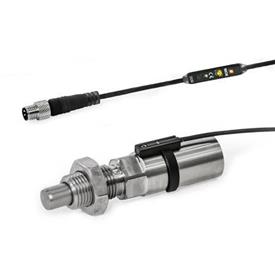
  • Pneumatic actuation / sensors: Automated processes with query or remote control function, simplifies integration into control systems (e.g. GN 817.7, GN 817.6).
  • Special operation (lockable, unlocking via push-button or cardioid curve): Additional security against unauthorized operation, ideal for sensitive applications (e.g. GN 814, GN 414, GN 514).

Designs by mounting method

  • For screwing in: Classic fastening type, can be flexibly integrated into existing components, quick mounting and replaceability.
  • With flange for surface mounting: For screwing onto a flat surface, especially well suited for tight tolerances or thin panels (e.g. GN 722.5, GN 817.1).
  • For welding: For long-lasting, robust fastening directly to the frame or machine part, also in special shapes such as with chamfered pin (e.g. GN 618, GN 722.4, GN 724.4).
  • For thin-walled parts: Special variants with short mounting length and matching fastening parts to ensure secure locking even with low material thicknesses (e.g. GN 607.2, GN 607.3).

Material selection and special designs

  • Material combinations Variants in steel, stainless steel and plastic, which can be specifically selected for standard, chemically exposed, damp or hygienic environments (e.g. GN 8170).
  • With, without or with lockable rest position: Selectable according to the requirements profile – e.g. for temporarily holding the pin open during setup changes or preventing it from shifting accidentally.
  • With chamfered pin or precision positioning: Simplifies pin insertion or enables precise positioning (e.g. GN 817.5, GN 724.4).
  • Removable designs: Enable quick maintenance or flexible replacement during ongoing operation (e.g. GN 817.8).

Practical relevance of various designs

The wide range of available designs enables you to directly address the requirements of your application. For example, a pneumatic variant simplifies integration into automated processes, while lockable versions or versions equipped with a rest position offer maximum security against operating errors or manipulation. Numerous options for diameter, length, material and additional functions allows you to specifically select the optimal indexing plungers or detent pins. This can reduce assembly times, accelerate setup changes and increase operating reliability.

Are indexing plungers und detent pins also suited for extreme environmental conditions?

Indexing plungers and detent pins from Ganter are available in special designs for extreme environmental conditions. Thanks to the range of different materials and geometries, you can select the specific products you need for use in environments exposed to moisture or chemicals or in hygienically sensitive areas. This allows you to conveniently safeguard the reliability of your systems or machines even in difficult environments.

Designs for various environmental conditions

  • For damp or corrosive environments, choose indexing plungers of stainless steel, such as GN 617 (stainless steel), GN 613 (stainless steel), GN 818 (stainless steel), GN 817.8 (stainless steel, removable) or GN 8170 (DGUV-certified, hygienic design). Stainless steel offers high corrosion protection and is ideal for applications involving regular cleaning or contact with moisture, such as in the food industry.
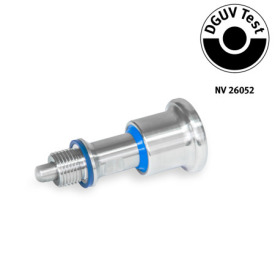
  • For areas with high hygiene requirements, such as in the pharmaceutical or food industries, special hygienic design variants are available (such as GN 8170 with front hygiene or full hygiene). These parts are designed with rounded contours and smooth surfaces to make them especially easy to clean. This allows you to design hygienically sensitive processes to be safer and simpler.
  • For chemically aggressive environments, it is recommended to use stainless steel indexing plungers since this material is resistant to many chemicals. Models such as GN 817, GN 818 and GN 814 (lockable) are available in stainless steel and thereby offer extensive flexibility for use in diverse applications.
  • For use in standard environments or with limited contact with aggressive media, you can make use of versions in steel, diecast zinc or with a plastic knob. These generally offer an economical solution as well as solid functionality.

Practical benefits and recommendations

The wide range of materials and variants for indexing plungers and detent pins ensures that you will find the right standard part for almost any environmental conditions. When making your selection, pay attention to the material of the pin and the surface as well as the corresponding safety features (e.g. hygienic design, rest position). This allows you to respond flexibly to changing or extreme requirements and improve the reliability of your application over the long term.For use cases subject to special stresses – such as environments with high cleanliness requirements or exposure to moisture or corrosive chemicals – always select a stainless steel version or a special hygienic design part. If you have further questions regarding the optimal design for your area of use, we recommend you consult with the Ganter support team.

Practical example for extreme conditions

  • In a plant built for dairy operations, GN 8170 (hygienic design, stainless steel) was used to reliably provide position locking on production lines. Due to the special manufacturing techniques employed, this indexing plunger is insensitive to moisture and cleaning chemicals, ensuring quick cleaning without residues. The production processes run reliably and efficiently as a result.

Indexing plungers and detent pins: Overview of relevant types for extreme environments

  • GN 617 (stainless steel): Standard for damp and corrosive environments
  • GN 8170 (stainless steel, hygienic design): High-hygiene applications (DGUV-certified)
  • GN 814 (stainless steel, lockable): Additional access protection for extreme requirements
  • GN 817.8 / GN 817.9 (stainless steel, removable): Flexible removal for maintenance under difficult conditions
  • GN 722.4 / GN 722.5 / GN 722.6 (stainless steel, for welding / with flange, also with rest position / latch arm): Mounting in specially customized system structures
  • GN 824 and GN 724.X (stainless steel, chamfered pin): For positioning of heavy frames, also for rough conditions
This allows you to fully meet all requirements in machine construction, plant engineering or automation with a long-lasting solution – no matter how challenging the environmental conditions are.

How do I correctly mount indexing plungers and detent pins?
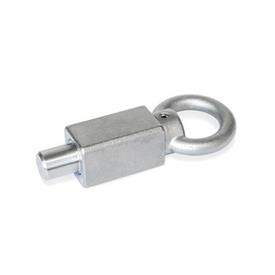
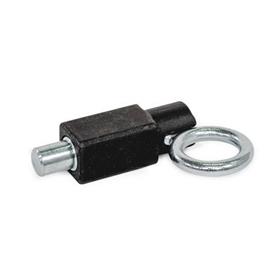
Indexing plungers and detent pins generally permit simple and secure mounting. Correct mounting ensures precise positioning and prevents parts from shifting accidentally. Always pay close attention to the selected design, the mounting principle (screwing in, bolting on, welding) and any necessary accessories. This will ensure a secure and long-lasting retaining or positioning function.
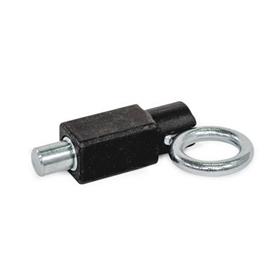
Step by step: Mounting of indexing plungers and detent pins

  • Select the model that fits your application in consideration of the mounting type:
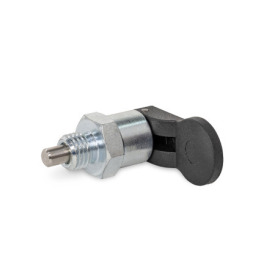
    • With thread: Screwing into a metric mating part (e.g. GN 617, GN 613, GN 817).
    • With flange for surface mounting: Fastening via through-holes on the flange (e.g. GN 817.1, GN 722.5)
    • For welding: Direct welding to the part (e.g. GN 618, GN 722.4).
  • Check the drawing or the relevant calculations to determine a secure mounting position so that the plunger pin moves accurately into the provided hole.
  • Use appropriate mounting aids, if necessary: For the GN 613 and GN 313 series, the mounting tools GN 613.1 make it easier to achieve exact positioning.
  • Fasten the plunger
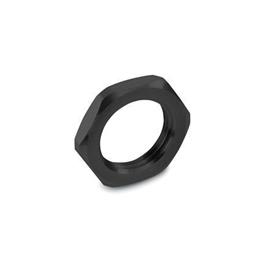
    • With thread: Insert the indexing plunger and screw this on with a suitable nut (e.g. GN 909 of steel or GN 909.5 of stainless steel) to ensure firm seating.
    • With flange: Fasten the plunger to the flange of the housing using screws. Use the drawing of the hole to ensure exact positioning.
    • For welding: Weld the indexing plunger to the part in the desired orientation.
  • Optional: For high positioning precision, you can use specially designed guide bushings (e.g. GN 412.2, GN 412.3, GN 412.4, GN 412.5) as the mating part.
  • After mounting: Test the function and engaging of the pin to ensure reliable operation.

Practical tips for secure mounting

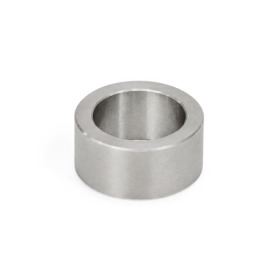
  • Use spacer bushings (e.g. GN 609.5) to compensate for any gaps or to achieve a defined installation depth.
  • Ensure that the pin is seated without tension; any snagging will cause malfunctions.
  • Follow the instructions exactly when using indexing plungers with rest position (such as GN 617.1 or GN 607.1) to ensure that the locking function works properly.

What does this mean in practice?

Machine components can be positioned or secured conveniently, reliably and repeatably by carefully selecting and properly installing indexing plungers and detent pins. This can reduce downtimes, accelerate setup changes and prevent operating errors. Ideal for changing operating conditions or where highly precise repeatability is called for, such as in positioning, transport or swapping equipment.

Your contact

You are looking for a Ganter partner near you?

Ganter-Service

Our service team is available from Monday to Friday between 7:30 AM and 5:00 PM:

Request Callback