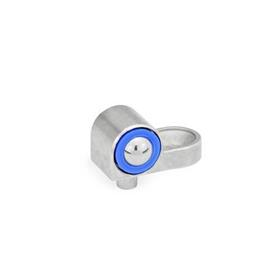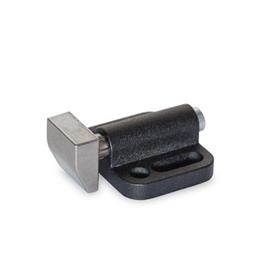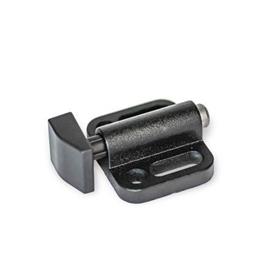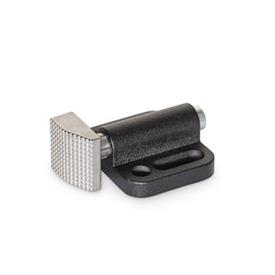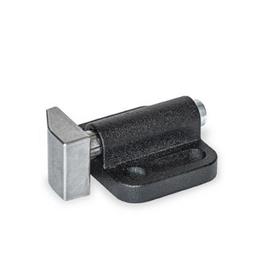
Mecanismos de cierre con posicionadores de presión

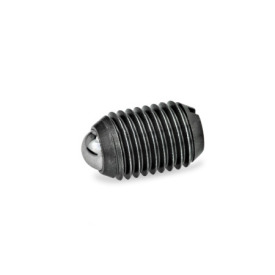
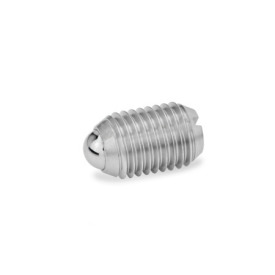
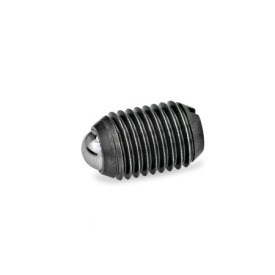
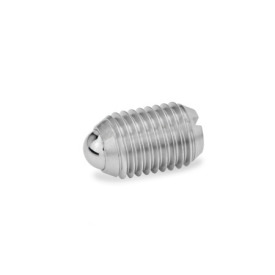
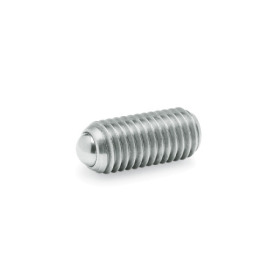
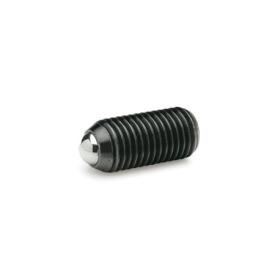
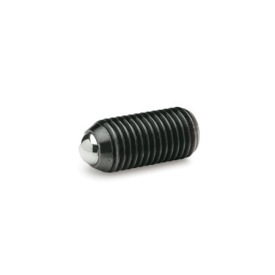
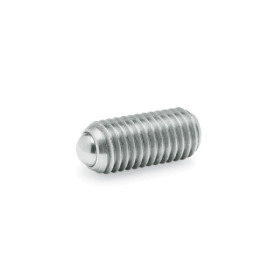
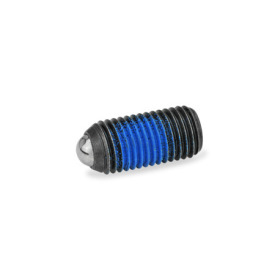
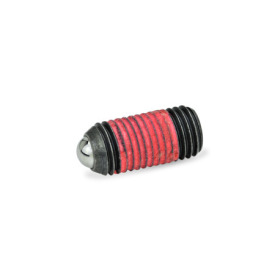
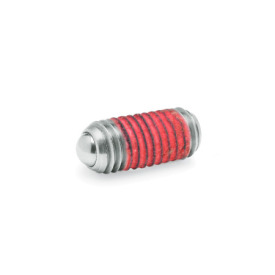
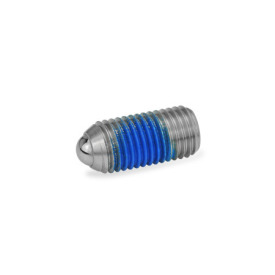
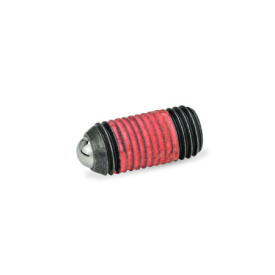
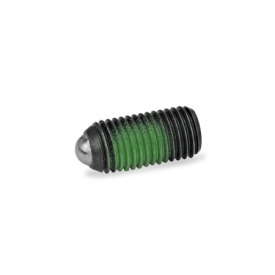
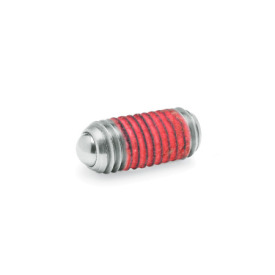
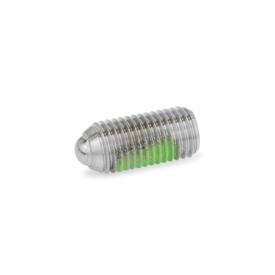
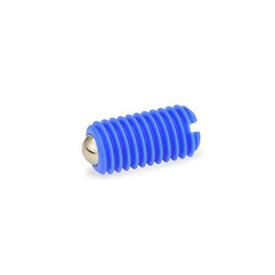
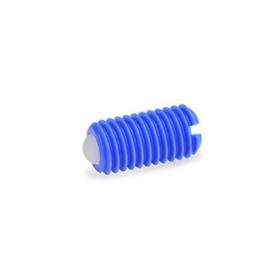
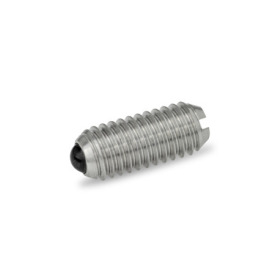
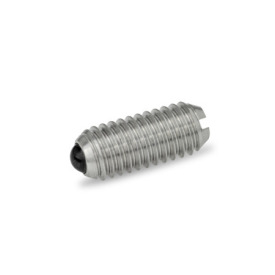
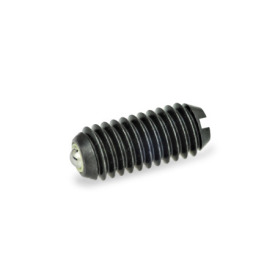
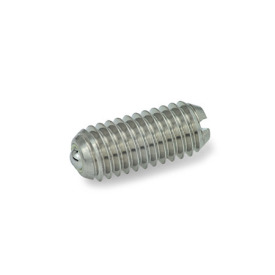
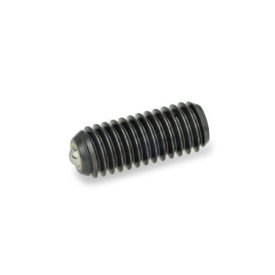
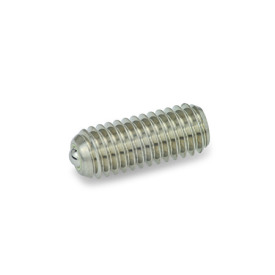
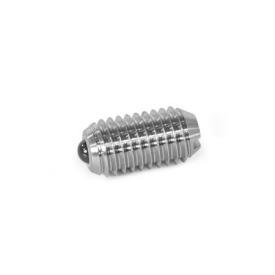
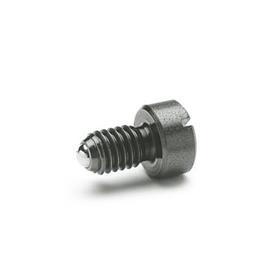
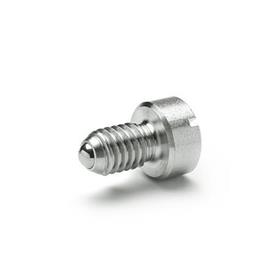
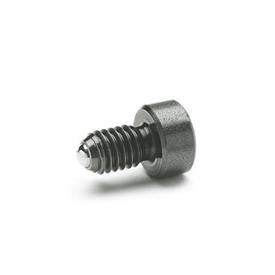
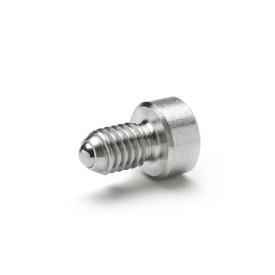
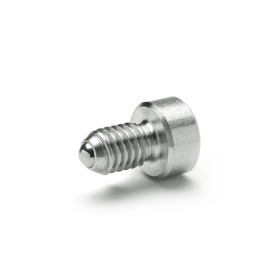
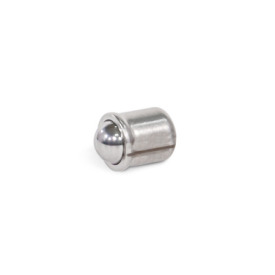
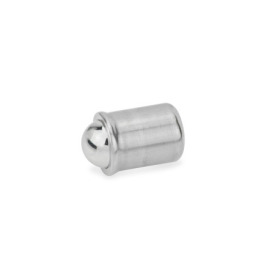
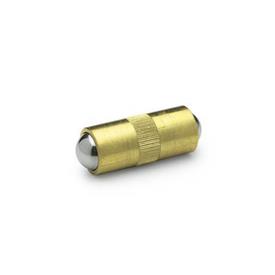
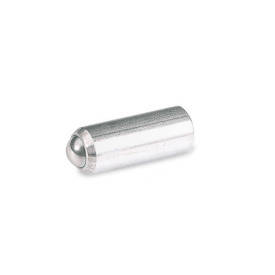
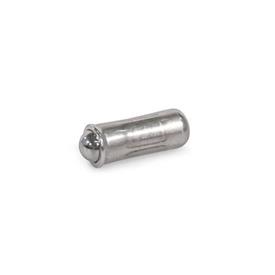
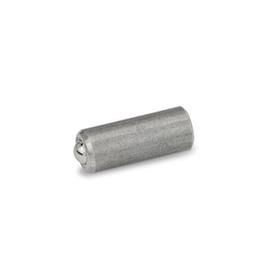
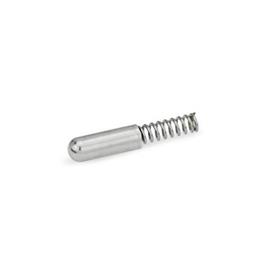
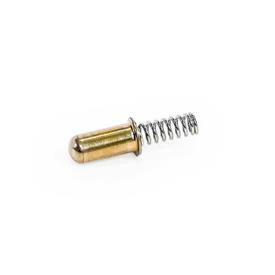
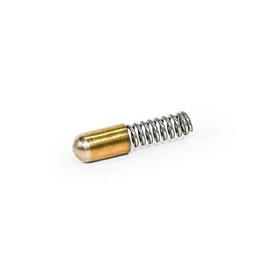
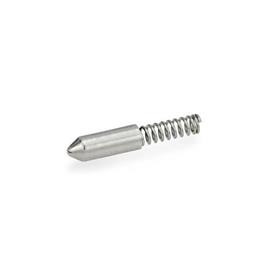
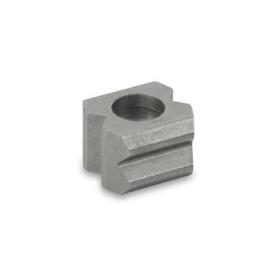
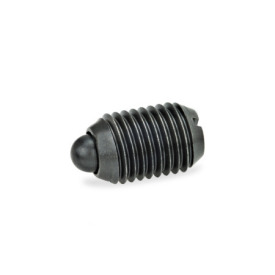
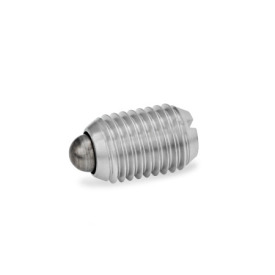
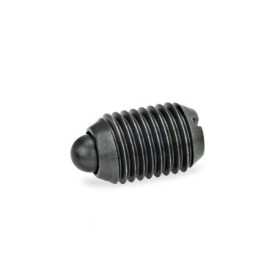
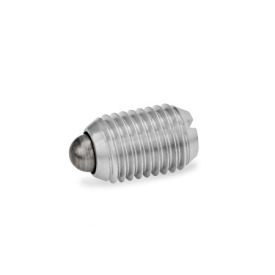
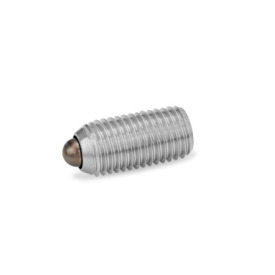
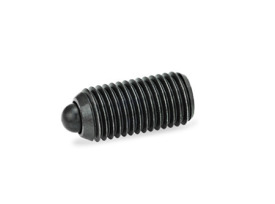
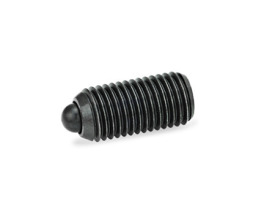
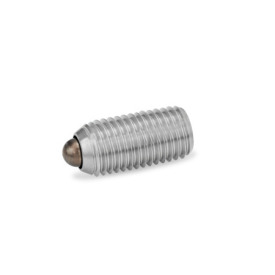
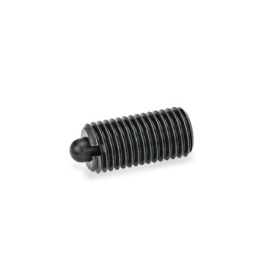
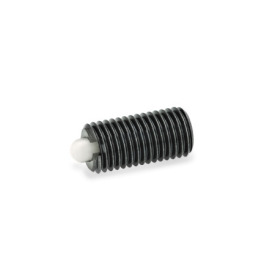
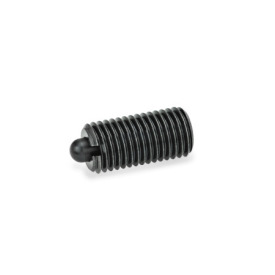
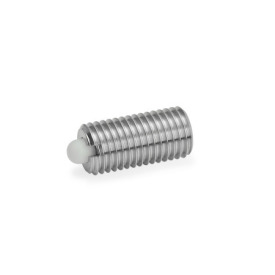
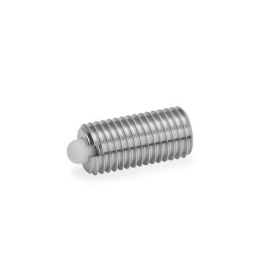
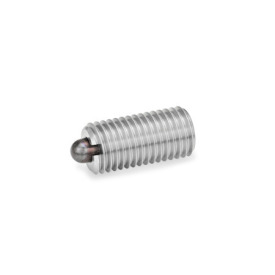
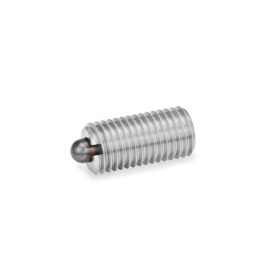
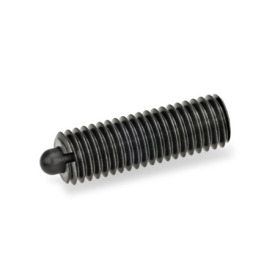
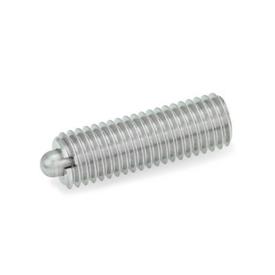
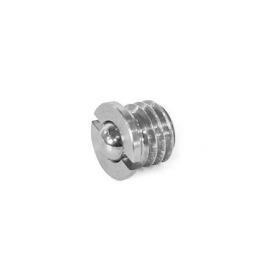
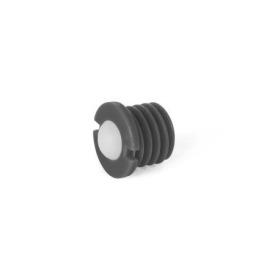
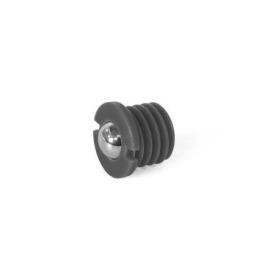
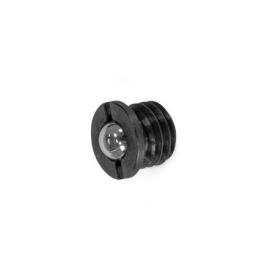
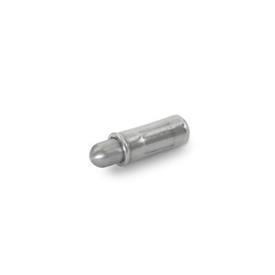
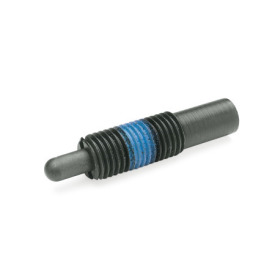
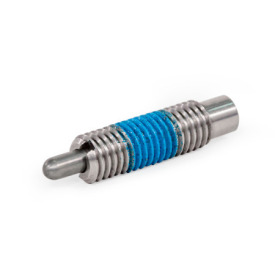
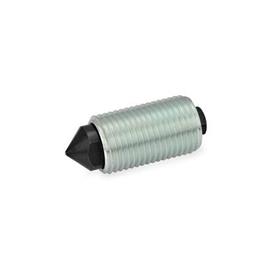
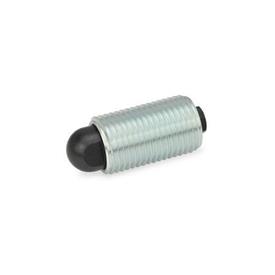
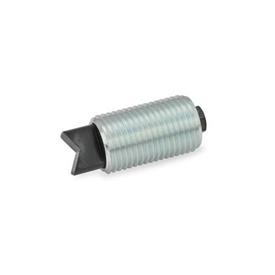
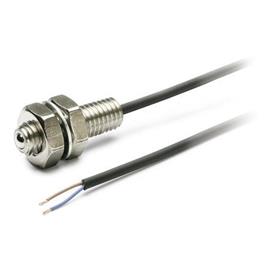
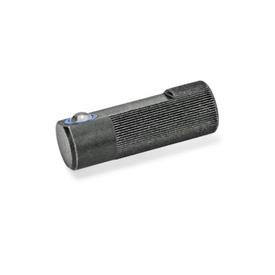
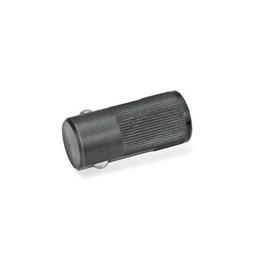
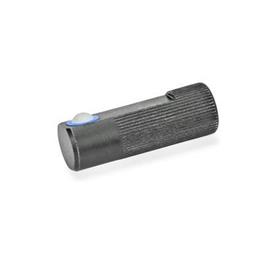
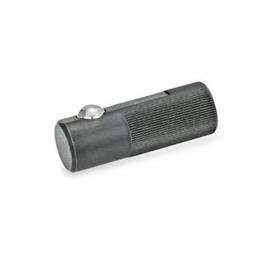
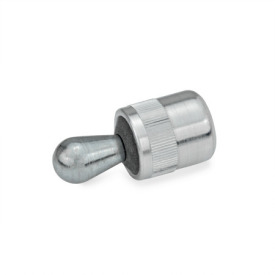
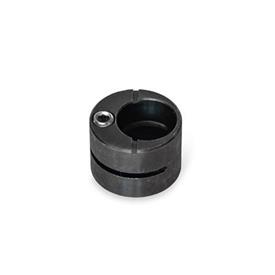
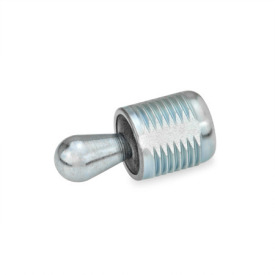
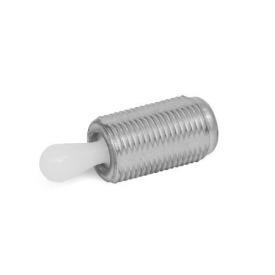
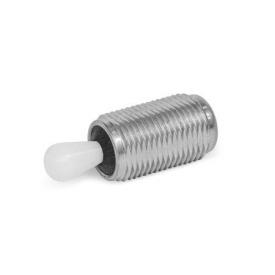
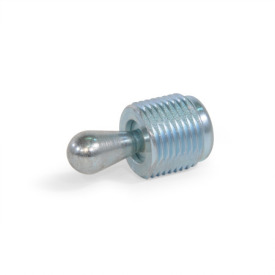
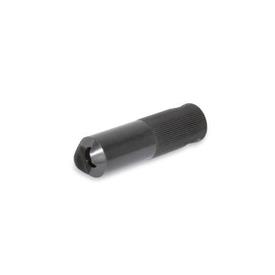
Un posicionador de presión o un posicionador de bola es un elemento normalizado instalado de forma permanente como elemento de sujeción. Consta de un tornillo hueco o un manguito de presión con un muelle integrado y una bola o un pasador.
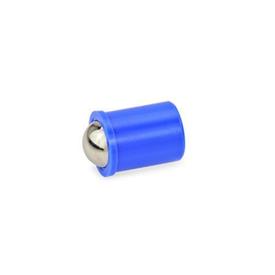
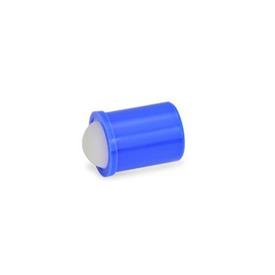
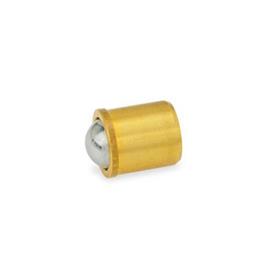
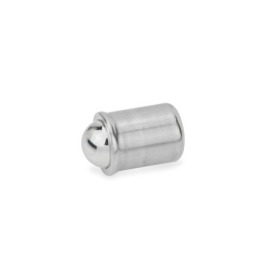
Se necesita una rosca o un hueco correspondiente para la recepción del posicionador. Atornillado como un tornillo normal o presionado, el posicionador se mantiene de forma permanente en su posición. Los posicionadores de presión se pueden usar para asegurar varios elementos en posiciones específicas relativas unas a otras. Generalmente, una pieza sostiene el posicionador, mientras que la parte opuesta tiene una ranura o un hueco en donde encaja el elemento de sujeción. Los posicionadores de presión son útiles para fijar elementos deslizantes, como un pasador de cierre. Para hacerlo, hay ranuras coincidentes fresadas en el pasador. Tras el cierre, los posicionadores de bola sujetan las piezas correspondientes con la suficiente firmeza, de modo que su posición relativa no cambia bajo el influjo de vibraciones. Cuando las piezas se mueven activamente fuera de la posición de sujeción, la bola del posicionador de presión se presiona al interior del manguito, y el mecanismo de cierre queda libre. Los usos típicos de los posicionadores de presión incluyen:
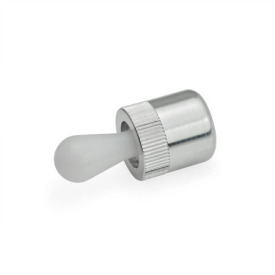
Gran selección para diversos usos

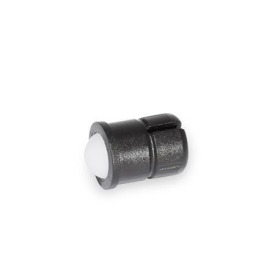
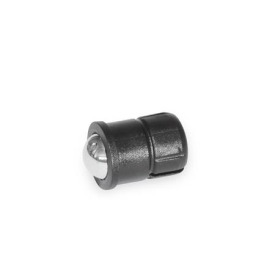
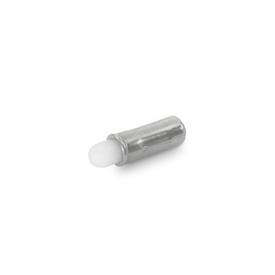
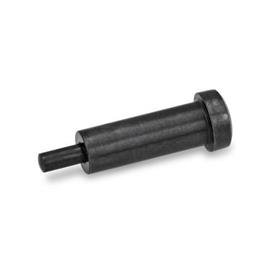
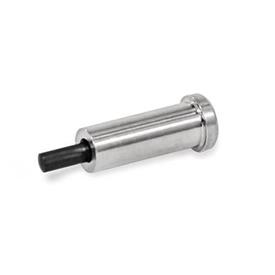
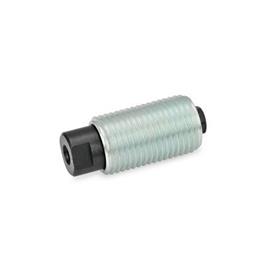
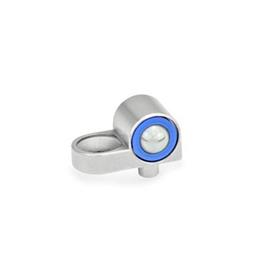
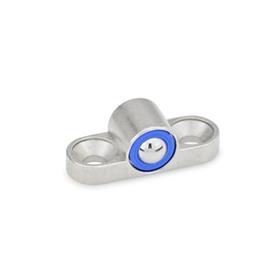
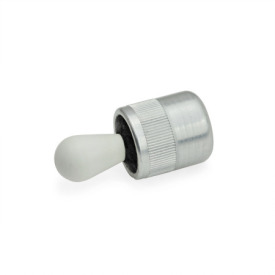
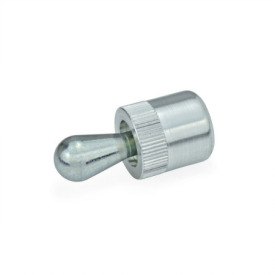
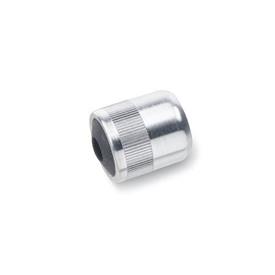
Hay disponible una gran variedad de posicionadores de presión de muy diversas combinaciones de materiales. Los manguitos están disponibles con o sin rosca, y están hechos de acero, acero inoxidable o plástico; las bolas también están disponibles en cerámica. Prácticamente todos los posicionadores se pueden equipar con un muelle normal o reforzado. Los diseños incluyen cojinetes de bolas móviles para reducir el desgaste, cojinetes de plástico para el aislamiento eléctrico o un cierre de rosca fijado. Con esta amplia variedad de materiales, tipos y tamaños, Ganter puede proporcionar el posicionador de presión correcto prácticamente para cualquier aplicación. Las solicitudes específicas de los clientes, como materiales o tamaños personalizados, no suponen ningún problema.
FAQ - Preguntas frecuentes

Filtrar productos
Material
Diámetro exterior (de - a) Diámetro exterior
Rosca (de - a) Rosca
Versión
Familia de productos

¿No encontró lo que buscaba? Solicitudes especiales

FAQ - Preguntas frecuentes

Which applications are spring plungers especially well suited to?

Spring plungers are especially well suited for use as locking devices to securely lock, position, and secure movable components. Typical applications include securing adjustment elements, positioning workpieces in machining fixtures, and securely holding assemblies in defined positions – even under vibration. This allows the positions of mechanical components to be clearly defined and flexibly adjusted, significantly reducing the effort required for setup and operation.

Typical applications for spring plungers

  • Locking of swivel, rotation, and slide adjustments
  • Precise positioning of workpieces and fixture components
  • Secure locking of sliding doors, covers, and strips
  • Holding and clamping components during installation or manufacturing

Practical benefits

By using spring plungers – such as those in the GN 615, GN 615.3, or GN 615.8 series – you can achieve repeatable securing of parts without the need for complex adjustment mechanisms. This improves usability and enhances process reliability during changeovers, setup, or positioning.

Technical advantages and selection criteria

  • High operational reliability even under vibrations thanks to an internal spring mechanism
  • A wide variety of designs, operating mechanisms, and materials – from steel and stainless steel to ceramic balls, such as in GN 615.5 or GN 615.10
  • Options for screw-in, press-fit, or threadless installation, suitable for specific installation spaces and requirements
  • Reduced wear thanks to design features such as friction bearings (e.g. GN 615.8, GN 615.9)
  • Quick, tool-free adjustment and locking

What this means in practice is that by using spring plungers, you can achieve a modular design and thus respond flexibly to changing requirements. This will significantly improve both the production reliability and operational safety of your system.

How does the locking function work on a spring plunger?

Spring plungers secure components using an integrated spring that pushes a ball or pin out of a sleeve or hollow screw. When the spring-loaded ball or pin is pressed against an opposing part, the spring yields. The ball or pin then locks into a bore, groove, or recess in the workpiece. Once the components are in the desired position, the spring force holds the element securely in place. This ensures that the situation remains stable even in case of vibrations or frequent changes.

Practical advantages of the locking device with spring plungers

Spring plungers enable the reliable positioning of adjustment elements, workpiece holders, or fixture components, and can be quickly released or moved as needed. This allows you to respond flexibly to changing production requirements and ensure a stable, defined stop position.

Technical features that support the function

  • Various versions, such as GN 615 (slotted), GN 615.3 (with internal hexagon), GN 815 (flanged), or GN 615.8 (ball with friction bearing), allow for adaptation to specific installation requirements.
  • Different material combinations for the sleeve, ball, or pin (e.g., stainless steel, steel, ceramic, as in GN 615.5) increase resistance to corrosion or wear.
  • Additional features such as thread lock (GN 615.3), electrical insulation, or sealed pins (GN 616.1) enable use under special operating conditions.

Example of use

Spring plungers, such as those in the GN 615 series, are typically used to hold swivel arms, stops, or workpiece holders in the desired position. The simple operation saves time and improves operational reliability, as there are no loose parts and the locking device always engages automatically.

What are the advantages of spring plungers compared to other locking solutions?

Spring plungers enable the secure and precise positioning of moving components. These usually consist of a sleeve or a hollow screw with an integrated spring and a ball or pin. Compared to other locking solutions, they stand out thanks to their easy installation in threads or bores, their compact design, and their high operational reliability, even under vibration or during repeated adjustments.

Advantages of spring plungers in mechanical and plant engineering

  • Automatic reset: The built-in spring ensures that the ball or pin automatically returns to the desired position after an adjustment. This enables locking without any further action.
  • Vibration resistance: Thanks to the spring’s constant contact pressure, the positioning remains reliable even under vibrations or jerky loads. This allows you to securely fasten components without them unintentionally shifting out of position.
  • Low-wear operation: Precision-guided balls or pins (in versions such as GN 615.8 or GN 615.9 with balls with friction bearings) reduce wear on the contact surfaces – especially if frequent adjustments are made.
    Compact design: Spring plungers require little installation space and can be integrated directly into workpieces or assemblies – ideal for tight spaces.
  • Highly adaptable: A variety of designs, materials (steel, stainless steel, plastic, ceramic, etc.GN 615.5), spring forces, and versions ensures that a suitable solution is available for virtually any application. This allows you to respond flexibly to requirements such as increased corrosion resistance, electrical insulation, or reduced friction.

What does this mean in practice?

By using spring plungers such as GN 615, GN 815 or GN 616, you can securely and conveniently fasten adjustment elements, fixtures, or workpieces with repeatable accuracy. Installation is quick and easy, and adjustments can be made later with ease. Spring plungers offer practical advantages over knurled screws, hand levers, or positive connection pins, especially at high cycle rates or when settings need to be changed frequently.

Typical applications for spring plungers

  • Positioning and locking for slides, stops, guides, and workpiece holders
  • Secure latching for adjustment devices in automation systems
  • Quick securing and releasing of interchangeable components in jig construction

This allows you to ensure consistently precise and low-maintenance locking even under demanding conditions. The result is enhanced safety, user-friendliness, and efficiency for your applications.

How do spring plungers differ from indexing plungers or clamping indexing plungers?

Spring plungers are specifically designed to serve as compact, long-lasting locking devices that enable precise and secure positioning or locking of components. They consist of a sleeve with an integrated spring and a ball or a pin at the tip. The component is held in place at a single point either by the ball end or the pin, with the spring force acting constantly.

Technical differences compared with indexing plungers and clamping indexing plungers

  • Indexing plungers secure the mechanism with a solid pin that can be fully extended and retracted. The locking device uses a positive connection and can be released or disengaged using a control knob. The position remains locked until it is intentionally released.
  • **Clamping indexing plungers ** combine latching with a clamping function. In addition to the positive connection provided by the pin, components can also be clamped by friction. This provides additional stability, such as when there are forces acting perpendicular to the locking mechanism.
  • Spring plungers use the preloaded springs to continuously press a ball or pin into a cutout or against a catch. There is no need to pull it out or manually release it; the force remains active at all times.

Summary

Spring plungers allow you to effectively tackle tasks that require quick automatic engagement, precise locking without manual operation, and a compact design. For simple locking that is intentionally released, however, indexing plungers or clamping indexing plungers are the appropriate choice.

What materials are spring plungers available in?

Spring plungers are available in a wide variety of materials, allowing for flexible adaptation to different operating conditions. They are available in steel, stainless steel, or plastic versions. Additional components such as ceramic or plastic balls or pins, as well as special friction bearings, are used depending on type.

Distinctive features of the materials

  • Steel: For high strength and reliable positioning. Suitable for standard applications in mechanical and plant engineering.
  • Stainless steel: Offers high corrosion resistance for use in humid environments or in the food and packaging industries. Also useful when handling corrosive substances.
  • Plastic: Reduces weight and protects delicate surfaces. Occasionally used for pins or balls to reduce friction and wear.
  • Ceramic balls: These increase wear resistance, are non-magnetic, and improve electrical insulation.

Relevant types of spring plungers

  • Models with steel or stainless steel housings, such as: GN 615, GN 615.3, GN 616, GN 816, GN 614, GN 614.7, GN 616.1, GN 615.9.
  • Versions with plastic pins or balls, such as GN 616, GN 616.2.
  • Variants with ceramic balls or friction bearings, such as GN 615.5 and GN 615.10.

How do you select the right spring rate for spring plungers?

When selecting the appropriate spring rate for spring plungers, it is crucial that the contact pressure is precisely matched to your application. The spring rate determines how much force the locking mechanism exerts and how securely the component remains in position or locked – even in the presence of vibrations or frequent movements.

How does spring rate affect performance?

  • Strong springs ensure a firm grip, secure latching, and a defined resistance when the ball or pin is passed over.
  • Weaker springs allow for easier release of the locking mechanism and simplify frequent repositioning or adjustment of machine parts.

This allows you to adjust the amount of force required for operation directly to meet ergonomic or process-related requirements.

What should you look for when making your selection?

  • Check the forces and loads applied in the intended application – if latching and safety require high latching force, a stronger spring provides greater stability.
  • Assess the frequency of use: For components that are frequently repositioned, a lower spring force is recommended to reduce wear and simplify handling.
  • Also take the material of the opposite part into account. Delicate or soft materials benefit from a reduced spring rate to prevent wear or indentations on the contact surfaces.

How to choose spring plungers with the optimum spring rate

  • Determine how much clamping force is actually required for a component – Ganter products such as GN 615, GN 615.3 or GN 615.8 offer various spring forces, which are clearly specified in the technical data sheets.
  • Choose from our range of models with light, medium, or heavy springs, depending on your specific needs. Product names or order codes indicate the respective spring force.
  • Compare the technical specifications in the data sheet for the respective size and version before selecting the part number.

This allows you to tailor spring plungers precisely to ensure safety, ease of use, and component protection. You will benefit from improved ease of use and an extended service life of machines, fixtures, or adjustable assemblies.

Practical tip for adaptation

If necessary, switch to a version with adjusted spring force, such as those available for the GN 615 (with ball), GN 615.8 (ball with friction bearing), or GN 615.3 (with thread locking). Always refer to the respective product data sheet for the exact spring force. Ganter Service can assist you in selecting an individual spring rate for demanding applications or special cases.

What is the difference between ball and pin designs in spring plungers?

When it comes to spring plungers, a basic distinction is made between ball and pin designs. Both variants consist of a sleeve with an integrated spring, but they differ in the design of the moving part: In the ball version, this is a hardened ball; in the pin version, it is a cylindrical pin.

Differences in design and operating principles

  • Ball versions, such as GN 615, GN 615.2 or GN 615.8, feature a spring-mounted ball that locks into place precisely and at specific points. The ball can roll slightly and easily adapts to the shape of the surface it is resting on.
  • Pin versions, such as GN 615.1 or GN 615.4, use a cylindrical pin that fits into a corresponding socket, allowing for the linear transmission of force. The pin can transmit axial forces over a larger area and does not rotate.

Practical benefits for use

  • Ball-type spring plungers are ideal when a light, precise stop point or flexible adaptation to uneven surfaces is required. This allows you to position components easily, precisely, and gently – such as when using adjustment elements or for repeated clamping without causing wear on the opposite part.
  • Pin-type spring plungers are useful when components need to be securely fastened to prevent twisting or lateral movement. The larger contact surface ensures better transfer of force. This allows you to securely lock device components in place or implement stops to prevent movement. In addition, spring plungers with pins are ideal for damping or cushioning components.

Technical distinguishing features

  • Ball-type spring plungers are available in versions with different ball materials (e.g., steel, stainless steel, ceramic, or with friction bearing), allowing you to flexibly address requirements such as minimizing wear or ensuring electrical insulation.
  • Pin-type spring plungers are often available in versions with steel or plastic pins and, thanks to different spring forces, offer performance optimized for specific applications.

The choice between ball and pin designs for spring plungers determines whether the focus is on precise, point-to-point engagement and flexibility (ball) or on a positive connection for linear locking devices (pin). This way, you can be sure to always choose the best solution for your specific installation situation from both technical and cost perspectives.

Can spring plungers still ensure secure locking when subjected to vibrations?

Spring plungers even ensure secure locking when subjected to vibrations. Spring plungers, such as the GN 615, GN 616 or GN 815 product series, consist of a sleeve or hollow screw with an integrated pressure spring and a ball or pin. This design ensures that the ball or pin always returns to the designated locking surface, even when the system is subjected to external vibrations.

Advantages in applications involving vibrations

  • The spring-loaded ball generates a constant clamping force, ensuring that the locking device remains in place even when subjected to prolonged vibrations.
  • A range of spring rates and ball or pin materials (steel, stainless steel, plastic, ceramic) allows for adaptation to the specific vibration and load levels.
  • Optimized versions, such as ball seats with friction bearings (for example, in GN 615.8, GN 615.9), reduce wear and improve service life under dynamic conditions.

What should you look out for?

  • Select the spring rate and material based on the expected load and vibration.
  • Models with a sliding fit, thread lock, or wear-resistant ceramic ball are recommended for particularly high or continuous vibrations.
  • During installation, make sure that the product is properly seated in the threads or bores to achieve full latching action.

You can therefore use spring plungers specifically in applications involving vibration and achieve maximum operational reliability. This makes it easy to operate, position, and latch components – even under demanding operating conditions.

Which variants are suitable for high temperatures or corrosive environments?

Spring plungers made of stainless steel and those made with special ball materials are especially well suited for use at high temperatures or in corrosive environments. This means you can latch, position and lock components securely even in tough conditions, without compromising on performance or service life.

Typical features for use in special environmental conditions

  • Stainless steel components offer protection against rust and many chemicals.
  • Special bearings, such as friction bearings, reduce friction and enable low-maintenance operation even under fluctuating temperatures.
  • Designs with sealed pins prevent dirt and moisture from getting in.

What does this mean in practice?

With spring plungers made of stainless steel or featuring ceramic balls, you can securely lock adjustment elements, workpieces, and fixtures in place – even when exposed to the elements or in contact with corrosive substances. This reduces maintenance requirements and prevents downtime. Ideal for use in mechanical engineering, the food industry, the chemical industry, and plant engineering, as well as for outdoor applications.

Can spring plungers be custom-made or modified?

Spring plungers can generally be custom-made or modified to meet specific customer requirements. In addition to standard models featuring various sleeve, spring, and ball materials as well as different designs, Ganter offers customized product variants tailored to customer requirements. This allows you to have custom dimensions, alternative materials, or specific spring rates manufactured. Variants with specific features, such as electrical insulation, additional safeguards against loosening, or special surface coatings, are also available.

Practical benefits of custom versions

Individual customization ensures that the spring plunger is adapted precisely to your application. The available installation space can be optimally utilized, and specific requirements regarding corrosion resistance, electrical properties, or wear protection can be met. This enhances both the precision and reliability of your overall system – ideal for applications where standard parts do not cover all the technical criteria.

Procedure for ordering custom spring plungers

  • Analyze specific requirements (dimensions, materials, application, function)
  • Check standard products for compatibility
  • If you have special requirements, please contact Ganter directly

This allows you to respond flexibly and confidently to project-specific challenges. Direct contact with Ganter allows for technical coordination and provides you with planning certainty in finding the right custom spring plunger solutions

Su persona de contacto

¿Busca un socio de Ganter próximo a su localidad? Seleccione su país.

Servicio de Ganter

Nuestro equipo de servicio está disponible de lunes a viernes, entre las 7:30 AM – 5:00 PM

Solicite que le devuelvan la llamada