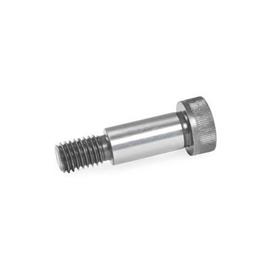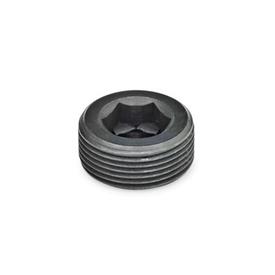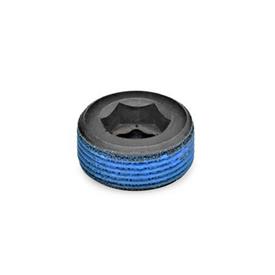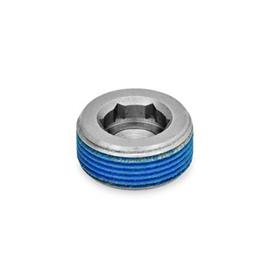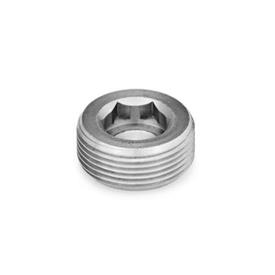
Vis d'articulation

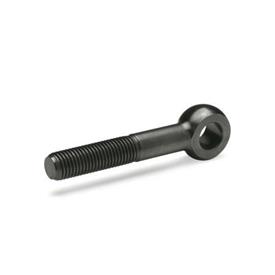
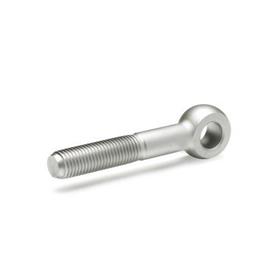
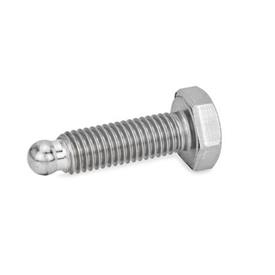
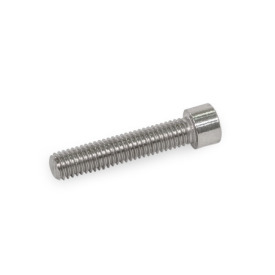
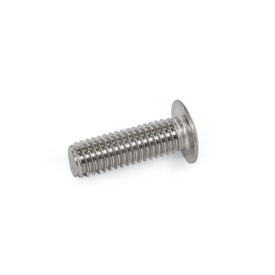
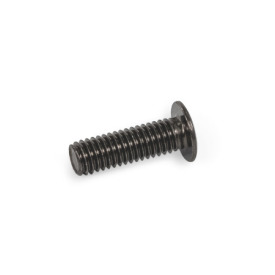
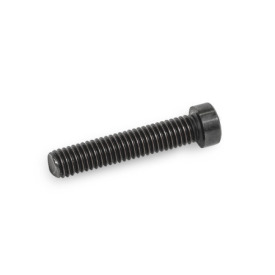
Domaines d'application pour la vis d'articulation DIN 444 Les vis d'articulation, également appelés boulons pour anneau de levage, ont une vaste variété d'applications dans la construction et la conception de machines. Utilisées avec les boulons à axe épaulé rectifié GN 732.1, comme par ex.

les boulons de palier, elles créent des points de fixation rapides et peu coûteux.

Achetez en ligne des vis d'articulation Ganter

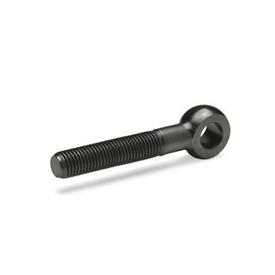
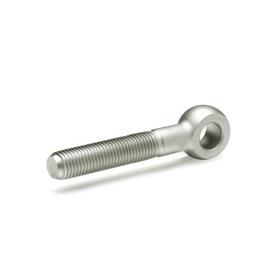
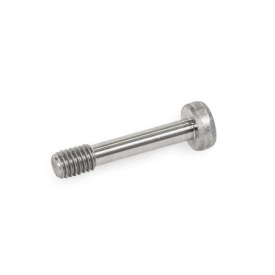
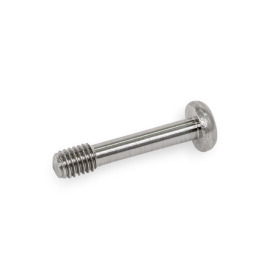
Ganter propose des vis d'articulation en acier noirci ou en inox. Elles sont disponibles dans les tailles standard allant de M5 à M24. Les dimensions les plus courantes de vis d'articulation sont les M8, M10 et M12. La sélection comprend également des vis d'articulation avec le long boulon fileté GN 1524 pour une gamme étendue de possibilités.

FAQ - Foire aux questions

Filtrer produits
Nouveaux produits
Matériau
Types de vis
Filetage (de - à) Filetage
Longueur de goujon (de - à) Longueur de goujon
Famille de produits

Rien trouvé ? Demandes spéciales

FAQ - Foire aux questions

What is the difference between swing bolts, shoulder screws and thrust bolts?

Swing bolts, shoulder screws and thrust bolts differ in their design and applications.

Properties of swing bolts

Swing bolts such as DIN 444 or GN 1524 have a closed ring or eye as the bolt head. They are used in machine and plant construction as fastening points for loads or flexible support points, such as for quickly mounting parts. This makes it easy to create a versatile connection.

Features and benefits of shoulder screws

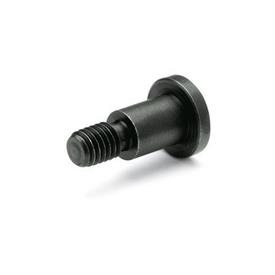
Shoulder screws, such as ISO 7379, are characterized by a precisely manufactured shaft with tight tolerances. This allows for zero-clearance connections and precise positioning of parts. They are primarily used where parts must be mounted or reliably secured with repeatable precision, such as in jig construction or on assembly units. You benefit from reproducible assembly results and reliably tight fits.

Properties of thrust bolts

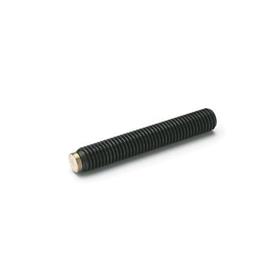
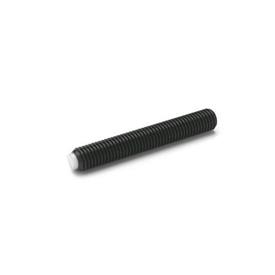
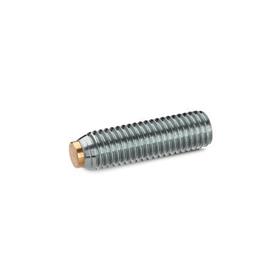
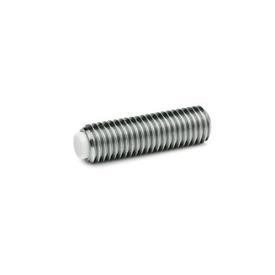
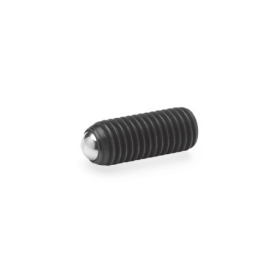
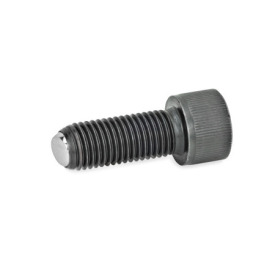
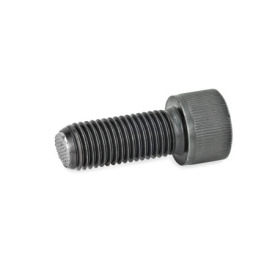
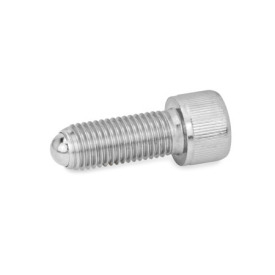
Thrust bolts – such as Ganter’s GN 605 or GN 913.3 – terminate with special studs, balls or thrust pads. They are designed for gently transmitting forces onto surfaces without creating a permanent connection between the parts. This allows for temporary clamping or securing of workpieces without damaging their surfaces. You can safely clamp and flexibly position even sensitive or painted parts.

Typical applications in machine and plant construction

  • Swing bolts: Support points, lifting points, receiving of tensile forces and loads
  • Shoulder screws: Assembly work with exacting positioning requirements, zero-clearance connections in jig construction
  • Thrust bolts: Clamping and securing without a permanent connection, surface protection for sensitive parts
You can select the right connecting element for any design situation and effectively adapt your assembly processes to the technical requirements. This increases both reliability and precision, while facilitating the flexible setup of technical systems.

What applications are swing bolts, shoulder screws and thrust bolts especially well suited for?

Swing bolts, shoulder screws and thrust bolts are especially well suited for machine and plant construction measures requiring exact positioning, secure fastening and precise application of forces. Each type of screw fulfils specific functions and offers advantages for diverse design and assembly requirements.

Applications of swing bolts

  • Swing bolts of type DIN 444 and GN 1524 are used to quickly create strong support or retaining points. They can be used as reliable fastening points for loads, as attachment points for hinge pins or as deflection points in assemblies.
  • The pronounced eye enables the flexible design of support points, such as for rotating or pivoting applications.
This allows users to individually adjust and quickly modify fastening and support points in assembly systems and jigs – an ideal solution wherever temporary or removable connection solutions are called for.

Applications of shoulder screws

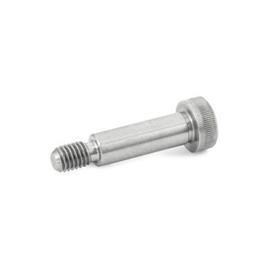
  • Shoulder screws of type ISO 7379 as well as cylinder head shoulder bolts GN 732.1 provide for clearance-free and repeatably precise fixing of components, such as for the positioning of machine components, guide elements or tool mounts.
  • They connect parts with high precision, and the low tolerances prevent alignment errors and relative motion.
This makes it possible to achieve the high assembly accuracy that is essential for mechanisms requiring repeatable precision, such as guide rails and adjustment connections. This way, users can realize flexible and precise assemblies.

Applications of thrust bolts

  • Thrust bolts such as ball point screws GN 605, GN 606 or blanking plugs GN 252 enable low-force clamping, retaining or supporting without a fixed connection between the end of the screw and the mating part.
  • The rounded or floating thrust surfaces made of differing materials protect sensitive surfaces and permit the measured introduction of force into jigs or clamping systems.
This allows you to securely fix workpieces or components without risking damage – especially when it comes to the clamping, mounting or inspection of frequently changed or sensitive workpieces.

Everyday technical advantages

  • Swing bolts, shoulder screws and thrust bolts can be flexibly and effectively integrated into diverse assembly, clamping or support solutions.
  • They increase positioning accuracy in the building of modular systems and simplify the reliable transmission of forces or the damage-free clamping of sensitive components.
  • Ideal wherever alternating requirements, high precision or part protection are of importance.
These standard parts help you increase the productivity and reliability of your systems and efficiently respond to a diverse range of design objectives.

How do shoulder screws provide for positive connections between components?

Shoulder screws such as ISO 7379 enable precise positive connections between parts thanks to cylindrical shafts machined with very low tolerances. These shoulder screws are inserted into holes with precisely matched diameter to ensure accurate insertion without any clearance.

Technical function of shoulder screws

  • The shaft of the shoulder screw has a precise diameter that is matched to the dimensional accuracy of the holes.
  • When inserted, the shoulder screw completely fills the hole, preventing any relative movement in the radial direction.
  • The thread is present only in the back part of the screw and serves for tightening and applying axial tension to the parts.

Advantages in machine and plant construction
  • Precise, repeatable positioning of parts even with frequent removal and installation.
  • Non-positive as well as positive connection for maximum positioning accuracy.
  • Ideal for attachments, machine connections, quick-change jaw systems and jig construction.

Practical benefits for users

The precise fit of the shoulder screw prevents the joined components from shifting relative to each other under load or due to vibrations. This allows for precise, long-lasting alignment and attachment of machine components with no play and no loss of accuracy over time. Typical applications are found in jig construction, where parts must often be positioned and attached with reproducible precision.

How do I select the right shoulder screw for a hole?

Shoulder screws are used to create zero-clearance and precisely positioned connections between machine elements. It is crucial to ensure a precise fit and reliable force transmission when selecting the right shoulder screw for a borehole.

Important criteria for selecting shoulder screws

  • The shaft diameter of the shoulder screw (e.g. ISO 7379, shoulder screws with collar, steel or stainless steel) must precisely match the diameter of the borehole. A narrow tolerance range ensures a perfectly snug fit.
  • The length of the shoulder should corresponds to the component to ensure a secure fit. The shaft should ideally extend through both parts to be joined.
  • The collar of the shoulder screw offers an additional contact surface. This allows for axial stabilization of the connection.
  • The metric thread of the shoulder screw serves only for tightening, while the actual centering is achieved by the shaft.
  • For applications with elevated corrosion resistance requirements, the shoulder screws of Stainless steel as per ISO 7379 are an ideal choice.
Practical benefits of shoulder screws

The use of shoulder screws to position components without play allows for precise alignments in machine or jig construction. This way, lasting dimensional stability, repeatability and the functionality of technical assemblies can be ensured.When you are designing a new assembly, first check the required tolerance of the hole dimensions. Adapt these to the shaft diameter of the ISO 7379 shoulder screw. You will then be able to quickly and precisely assemble the component without laborious alignment work – ideal for precision tasks as well as frequent tool or jig changes.
How is exact positioning ensured by shoulder screws?

Shoulder screws like ISO 7379 (Steel or Stainless steel) enable the accurate positioning of components. They have a precisely manufactured shaft with tight tolerance with respect to the receiving hole. Once inserted, they achieve a zero-clearance fit between the screw and hole. Thanks to this perfect fit, the joined parts are firmly fixed in place. In addition to fastening, the screw also serves a centering function. This makes it possible to compensate for manufacturing tolerances and achieve high-precision alignment.

Benefits in machine and plant construction

  • Reliable reproducibility for repeated setup and takedown processes.
  • Prevents accidental twisting or shifting of the parts.
  • Increases assembly precision and minimizes readjustment work.
The functional components can be quickly assembled without the need for subsequent adjustments, such as when changing jigs or mounting tools. This is ideally suited for assembly tasks as well as jigs and fixtures that demand precision and repeatable accuracy.

How do thrust bolts prevent damage to a workpiece?

Thrust bolts prevent damage to the workpiece by enabling force transmission without directly constricting or pressing against the contact surface. Thanks to special design features such as ball-shaped or floating studs, the workpiece sustains no damage during clamping or positioning.

Thrust bolts: Technical function and design

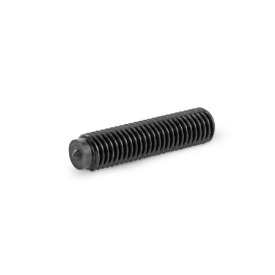
  • With standard parts such as GN 913.2, GN 913.3, GN 913.5 and GN 933.5, a floating or rotating stud separates the rotating screw thread from the surface in contact with the workpiece.
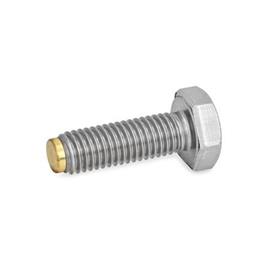
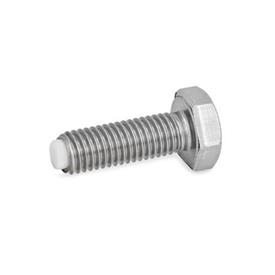
  • Depending on the version, the contact surfaces are made of hardened steel, brass or plastic. These materials prevent scratching of sensitive surfaces.
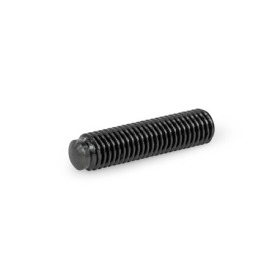
  • With ball point screws (GN 605, GN 606), a freely floating ball in the screw head ensures even transmission of force to the workpiece via a single point of contact.

Practical benefits for machine and plant construction

With these standard pars, you can clamp, secure or position workpieces without damaging their surfaces. This makes them ideal for applications requiring the preservation of surface appearance, dimensional accuracy or functional coatings on the part – such as in jig construction, assembly aids or test fixtures.

Typical scenarios for gentle clamping

  • Positioning screws with plastic or brass contact points protect sensitive workpiece surfaces during assembly and testing work.
  • Ball point screws allow for gentle clamping even with setups that are slightly askew or irregular.
  • Adjustment operations on sensitive guideways or alignment surfaces can be performed safely and without risk.
You benefit from reliable fixation without leaving behind pressure points or marks on the workpiece.

What are the areas in which thrust bolts are commonly used?

Thrust bolts are commonly used when force has to be applied to components without a fixed screw connection. Typical applications include jig construction, mounting and clamping mechanisms as well as adjustment mechanisms in machines and plants. Thrust bolts are used when parts must be positioned, clamped or fixed in place without damaging their surface.

Practical advantages of thrust bolts

  • Thrust bolts such as GN 913.3, GN 913.5, GN 913.2 and GN 933.5 enable the localized application of force via special contact elements like brass or plastic pivots or ball thrust points without damaging the component.
  • This allows for individual adjustment of clamping points while also protecting sensitive surfaces.
  • Ball point screws GN 605 and GN 606 can be used to flexibly and reliably clamp components together. The ball conforms to inclined or curved surfaces, allowing for a wider range of applications.

What does this mean in practice?

You can use thrust bolts in workpiece holders for quick clamping without damaging the parts or in mounting solutions for flexibly adapting to various geometries. When used in machines and plants, the targeted force application ensures high reliability and consistent fastening without compromising the workpiece. This improves process reliability and extends the service life of sensitive components.

How do Ganter’s thrust bolts differ from conventional thrust bolts?

Ganter thrust bolts, as offered in versions GN 913.2, GN 913.3, GN 913.5 and GN 933.5, differ from typical thrust bolts in their design and the way they transmit forces without placing stress on the components. Thrust bolts have special contact surfaces, such as hardened, brass or plastic studs or ball thrust points. These studs minimize damage to sensitive workpieces during clamping or retaining tasks. In contrast to conventional thrust bolts, which generally have a rigid, flat contact surface that can deform or damage the surfaces of components, Ganter’s thrust bolts are able to flexibly and gently adapt to a variety of surfaces.

Technical differences with respect to conventional thrust bolts

  • Integrated studs on the grub screw ensure highly localized force transmission to protect components from damage.
  • Ball-shaped or cylindrical stud heads conform to slight angular errors, allowing uniform contact pressure even on imperfect surfaces.
  • Material combinations with brass or plastic studs increase the surface protection and prevent wear marks.

User benefits in machine and plant construction

  • Sensitive parts can be reliably fixed in place without leaving behind visible impressions.
  • The floating heads and studs permit fine alignment and adjustments without repositioning.
  • The screwable design allows rapid replacement or adaptation as required.

Practical advantages of Ganter thrust bolts

They make it possible to implement clamping solutions precisely and without damaging surfaces, such as for securing polished machine parts, building assembly jigs or creating adjustable support points for moving mechanisms. The rotatable studs simplify the clamping of irregular workpieces and offer significant advantages in terms of flexibility and protection of parts and surfaces when frequent clamping changes are required. Ideal for applications involving frequent tool changes or varying contours.

Which types of swing bolts are available from Ganter and how are they typically used?

Ganter offers swing bolts such as DIN 444 made of steel and stainless steel as well as GN 1524 in both materials with extended thread. These swing bolts are designed for creating secure fastening and support points on machines or frames. The closed eye allows for quick connection of hooks, cables or components to easily create dynamic or static lifting points.

Technical features of swing bolts

  • DIN 444 Swing bolts have a stable eye that allows for reliable transmission of force under tensile loads.
  • GN 1524 Swing bolts feature an extra-long thread, permitting flexible fastening solutions in various wall thicknesses or clamping ranges.
  • Both versions are available in steel and stainless steel, making them suitable for standard applications as well as areas with a risk of corrosion.

Typical applications in machine construction

  • Mounting ports for lifting, repositioning or transporting machine components
  • Temporary support or fastening points, such as in jig or plant construction
  • Guide and deflection points for cables, chains or lifting equipment

Practical benefits of swing bolts

The use of swing bolts such as DIN 444 and GN 1524 allows for flexible positioning of fastening points, which can be quickly disconnected or relocated as necessary. This enables efficient setup work in technical applications. The closed shape of the eye further protects the attached parts from sliding off or sustaining damage. This increases safety and reliability during the handling of heavy components. Ideal applications include situations requiring flexible and secure lifting points, such as in tool and machine construction or for maintenance work on machines.

How do swing bolts ensure that support and lifting points are reliable?

Swing bolts such as DIN 444 and GN 1524 offer a stable and defined connection for support and lifting points in machine and plant construction. The closed eye on the screw head securely receives lifting eye bolts, pins or hooks, preventing the attached components from slipping out. The result is a uniform transfer of force to the part. This means that support points, lifting points or mounting options can be realized safely – even under frequent loading or changing load directions.

Typical technical features of swing bolts

  • Closed ring head for securely receiving pins, hooks or cables.
  • Steel or stainless steel for high stability even in challenging environments.
  • Available variants with standard or extended thread (e.g. GN 1524) to cover individual installation situations.

Practical benefits for users

  • The strong, positive connection prevents accidental sliding or releasing. The lifting point remains reliable even after prolonged use.
  • The user can flexibly position support points that can accept prolonged loads without the bolt working loose or wearing out.
  • Ideal in jig construction, for transport eyes or for mounting deflection pulleys: As the connection is both positive and non-positive, it remains reliably stable even under changing loads.

What does this mean in practice?

You can use swing bolts to create secure lifting points for sustained and reliable suspension, transport or positioning of lifting tackles, deflection pulleys or machine parts – without the risk of accidental release. They will significantly improve process reliability, prevent downtime and simplify assembly and maintenance work on your systems.

Are there screws for hygienically sensitive areas?

Yes, special screws have been developed for hygienically sensitive environments and specifically adapted to food processing, pharmaceutical applications, medical technology and laboratories. These differ from normal screws in terms of design, material, cleaning properties and appearance, with the goal of minimizing contamination risks.

What makes these screws “hygienic”?

Hygienic screws typically have the following features:
  • Stainless steel A4 / 316L – high corrosion resistance, food-safe.
  • Very smooth surfaces (Ra < 0.8 µm) – prevents adhesion of dirt and microorganisms.
  • Tightly fitting screw heads or flanges without dead space underneath – no grooves where germs could collect.
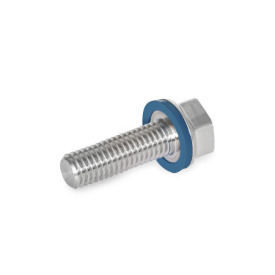
  • Seals (EPDM, H-NBR, FKM) – to prevent the entry of water, bacteria and cleaning liquids and ensure that the screw remains easy to clean.
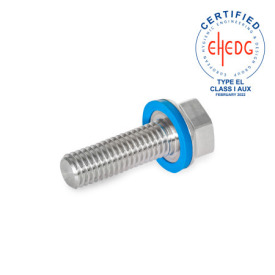
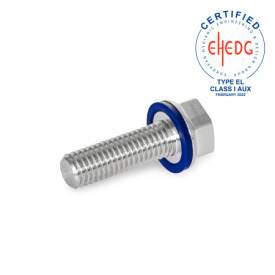
  • EHEDG and FDA conformity / certifications (and compliant materials) for hygienic applications.

Examples of suitable hygienic screws

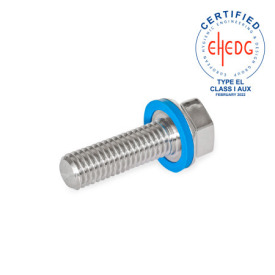
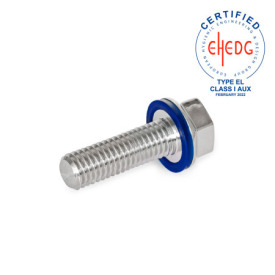
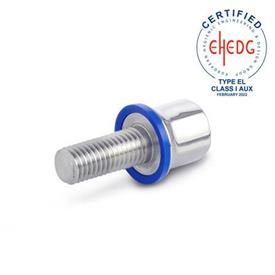
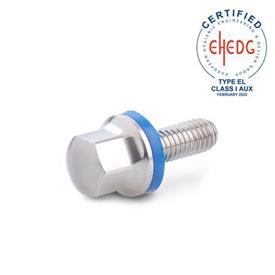
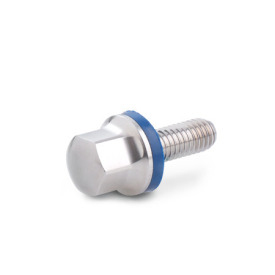
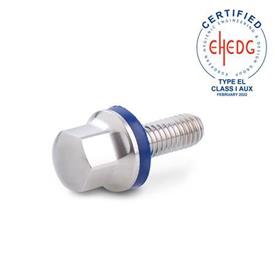
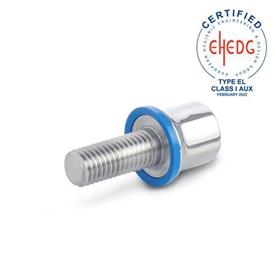
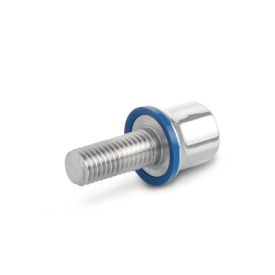
  • GN 1580 Screws, stainless steel, hygienic design
  • GN 1581 Screws, stainless steel, with low-profile head, hygienic design
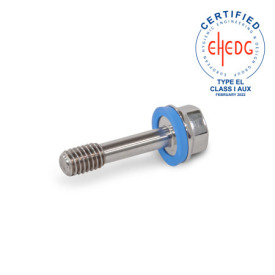
  • GN 1582 screws Screws, stainless steel, with recessed stud for loss prevention, hygienic design
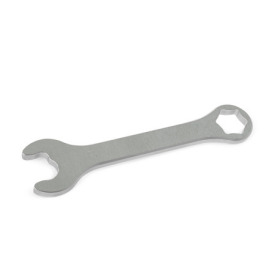
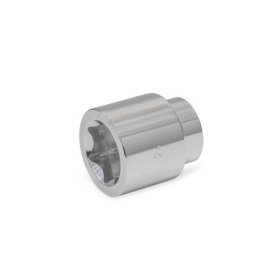
Special wrench sockets GN 3124 as well as the open-ended combination wrench GN 3113 were designed specifically for these hygienic screws. Thanks to the rounded geometry of the wrench surfaces and the aluminum material used, the torque is transmitted evenly to the screw head without damaging it.

Votre contact

Vous recherchez un partenaire Ganter à proximité ? Veuillez sélectionner le pays.

Service Ganter

Notre équipe de service est disponible du lundi au vendredi de 07:30 à 17:00

Demande de prise de contact téléphonique