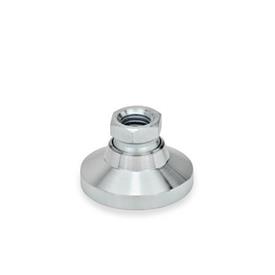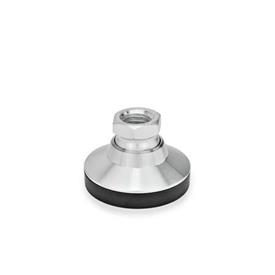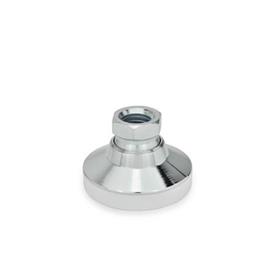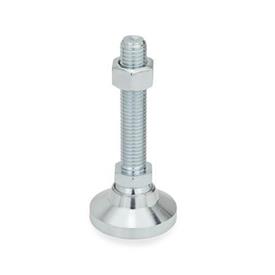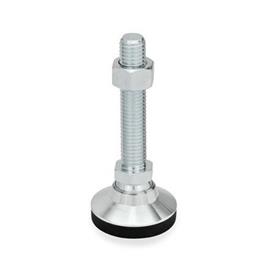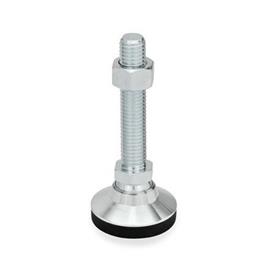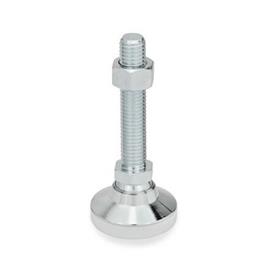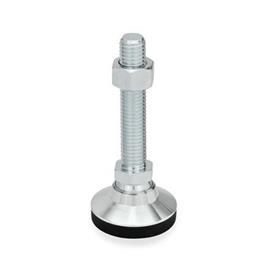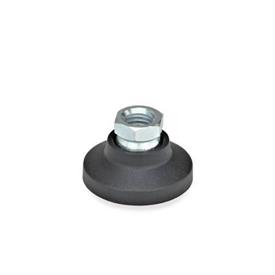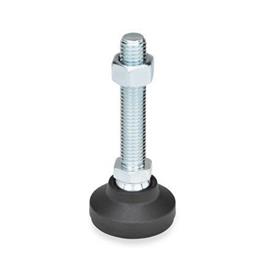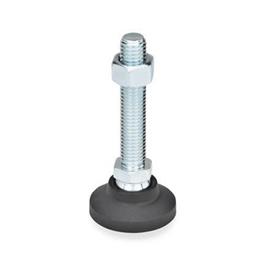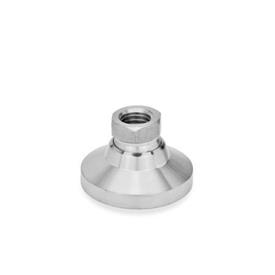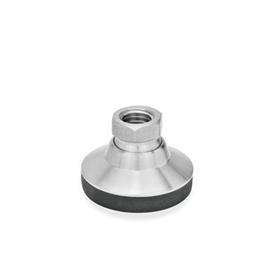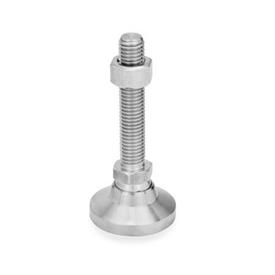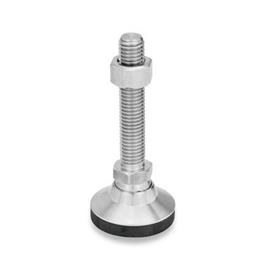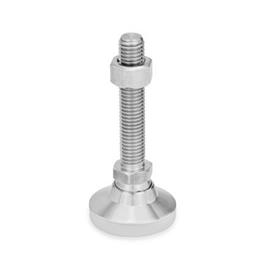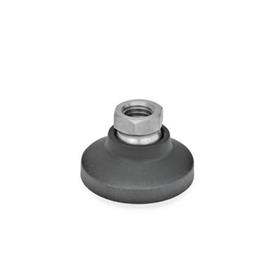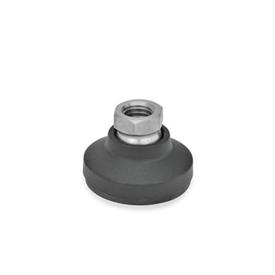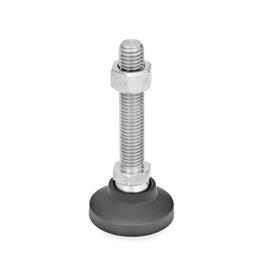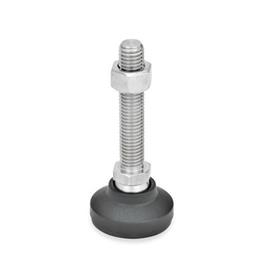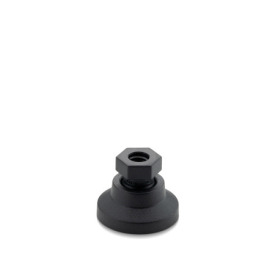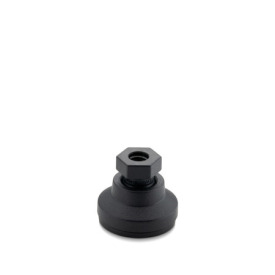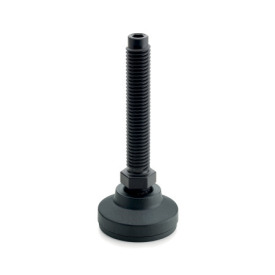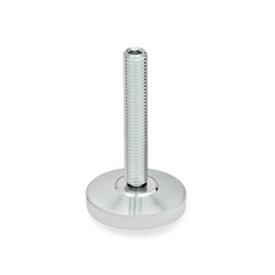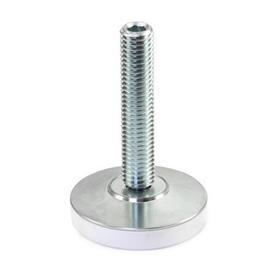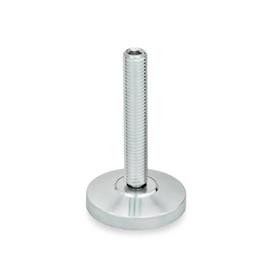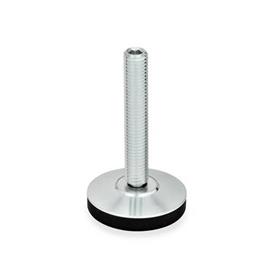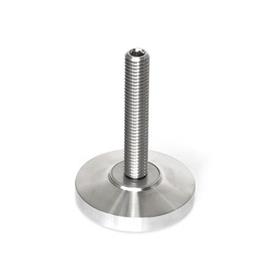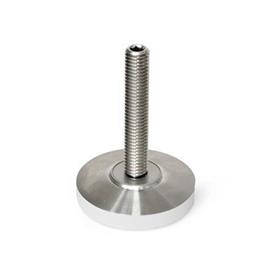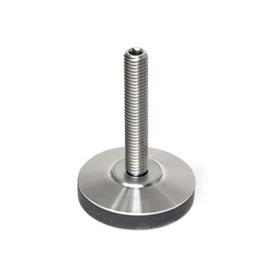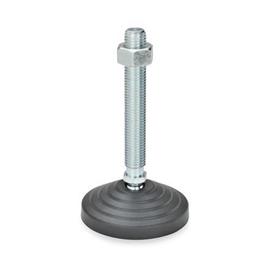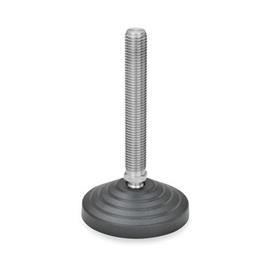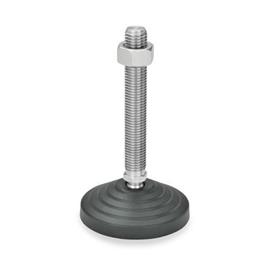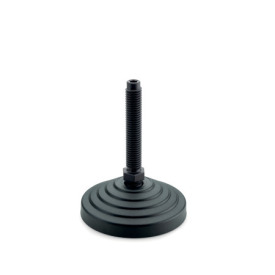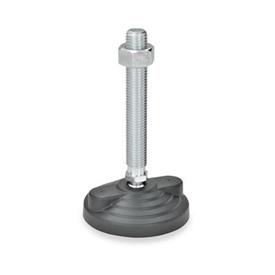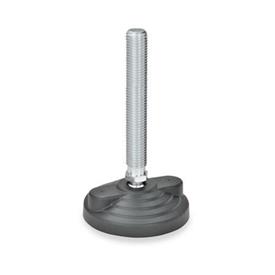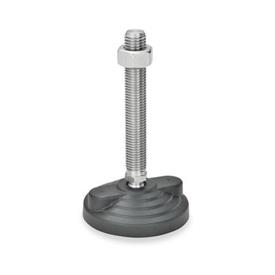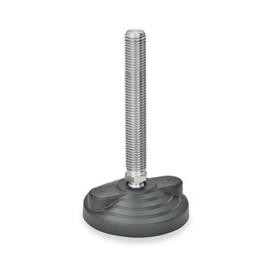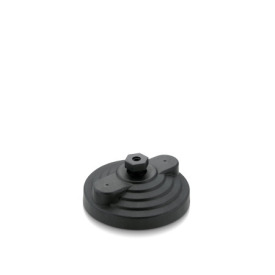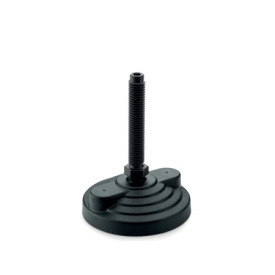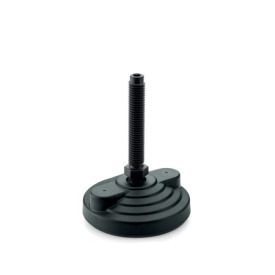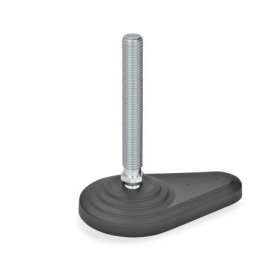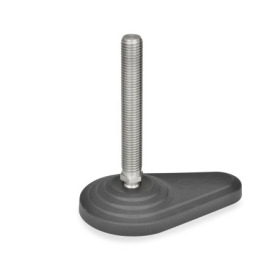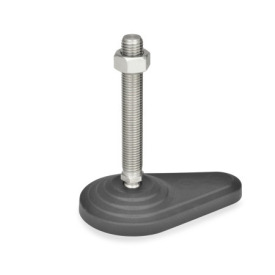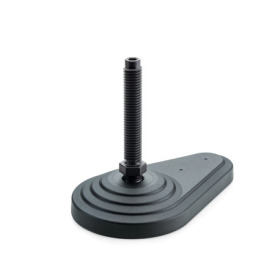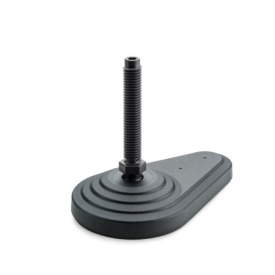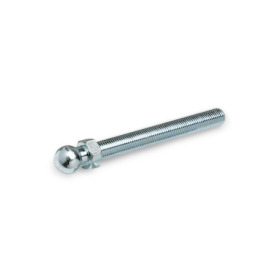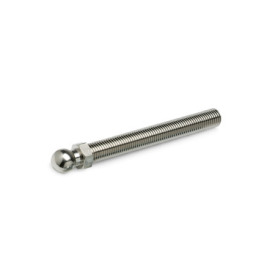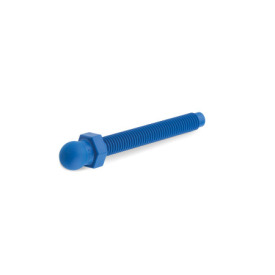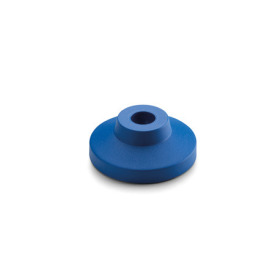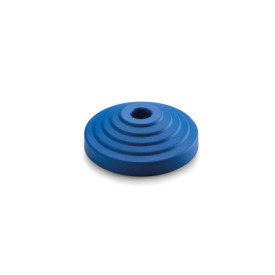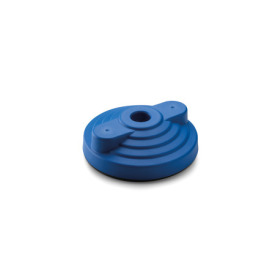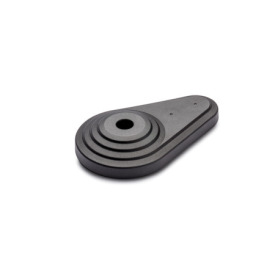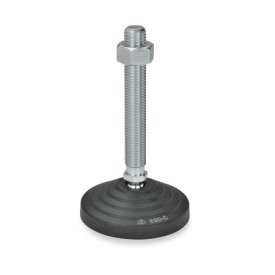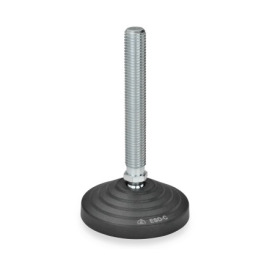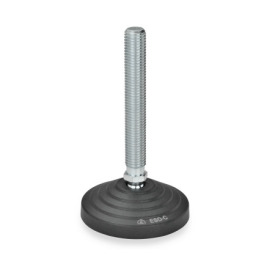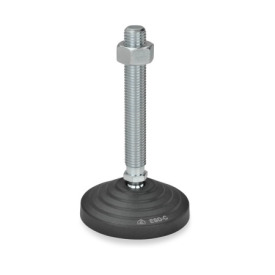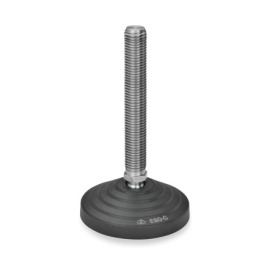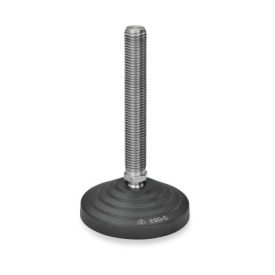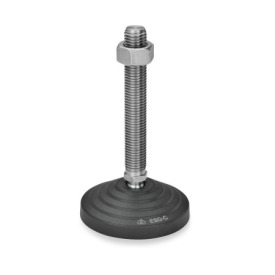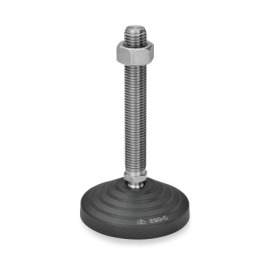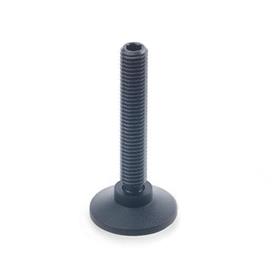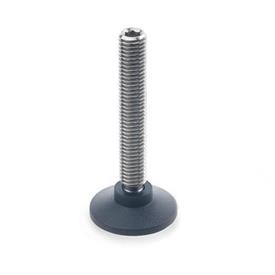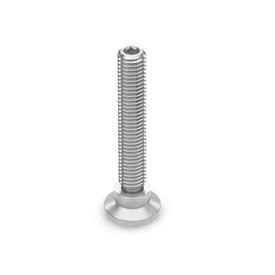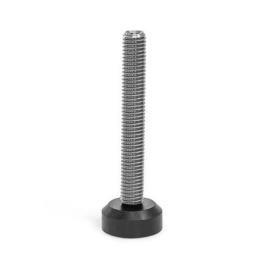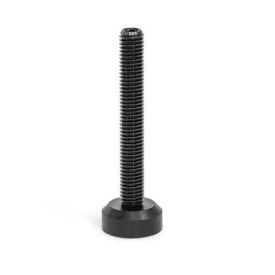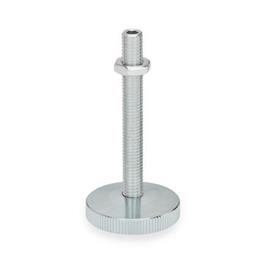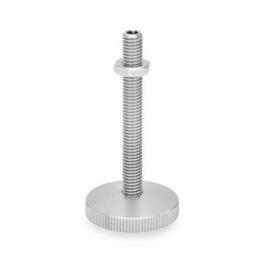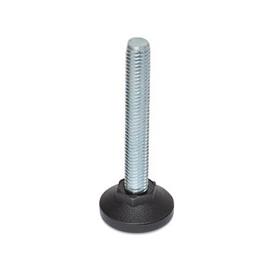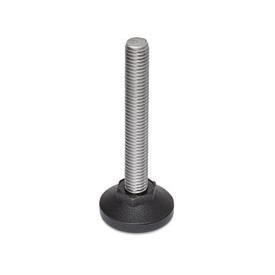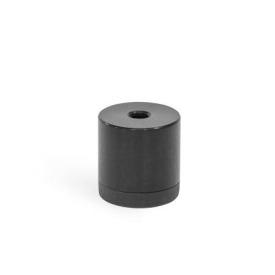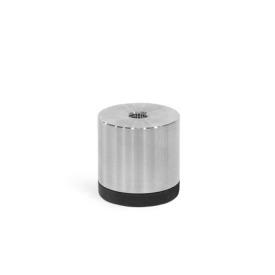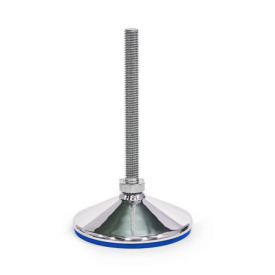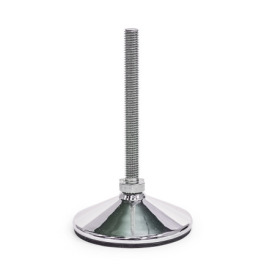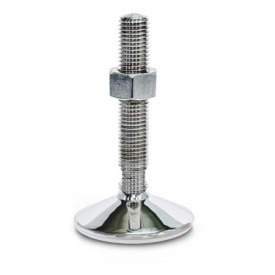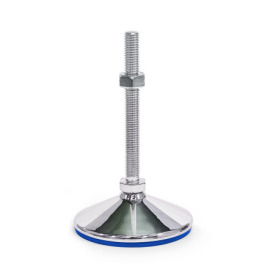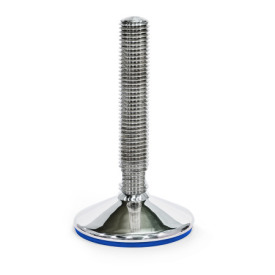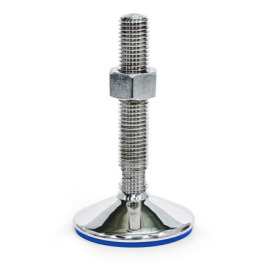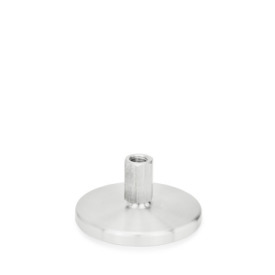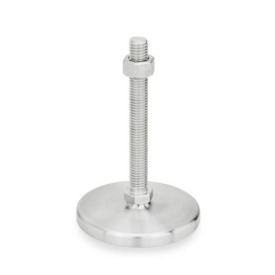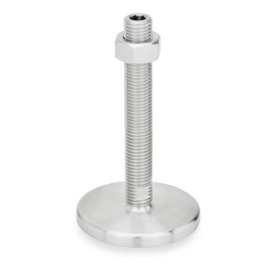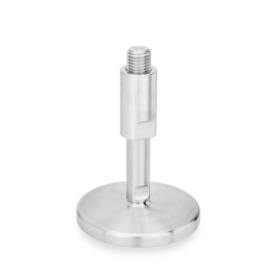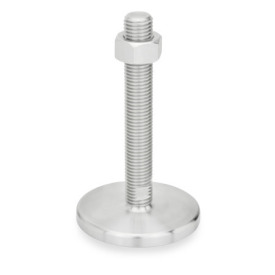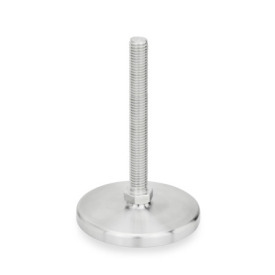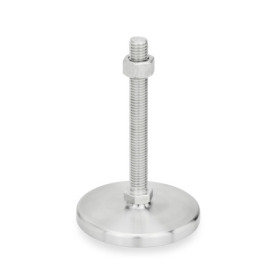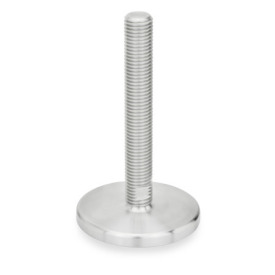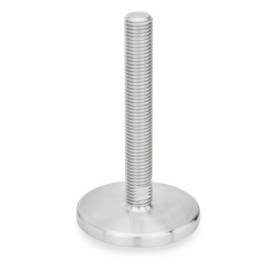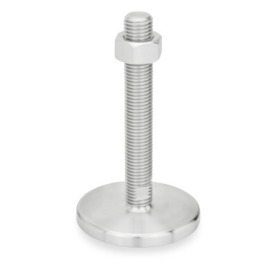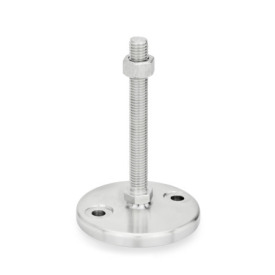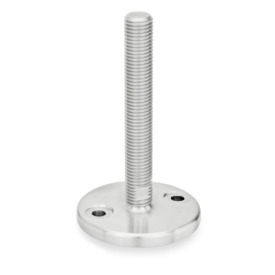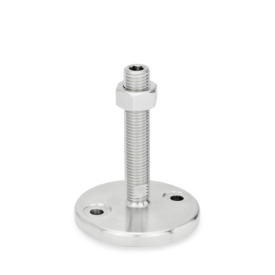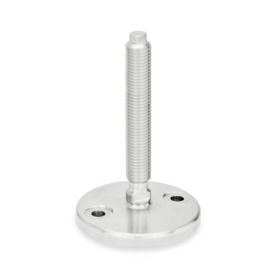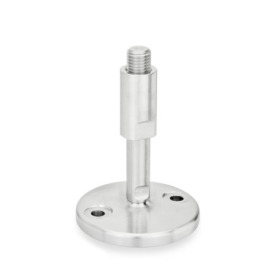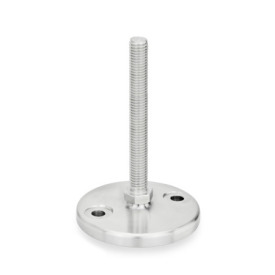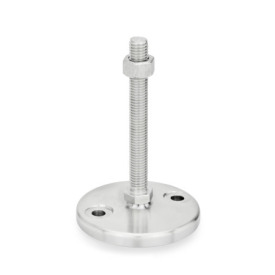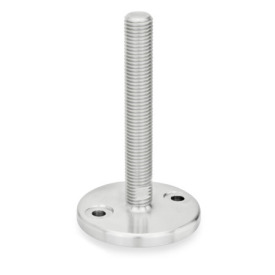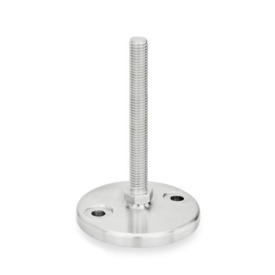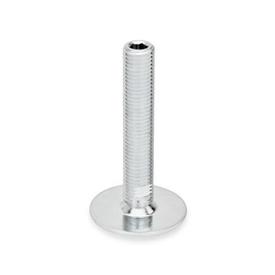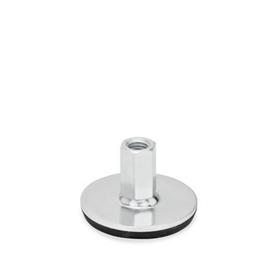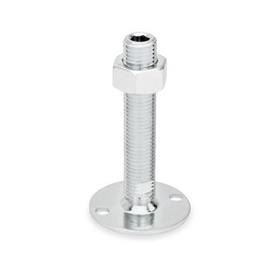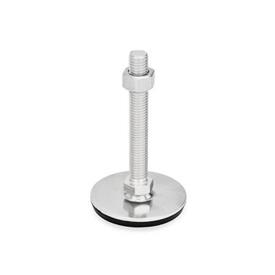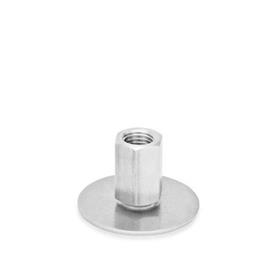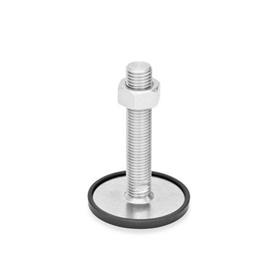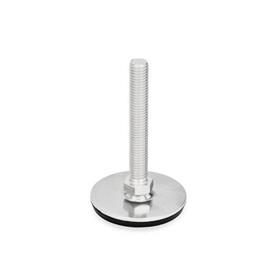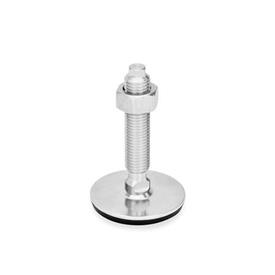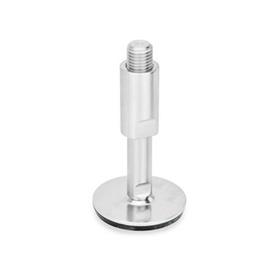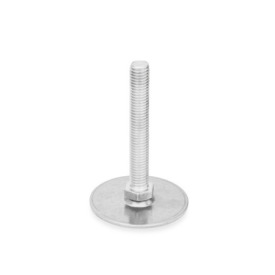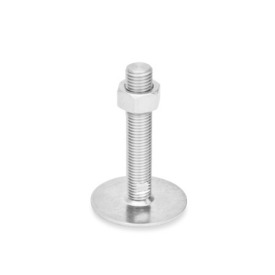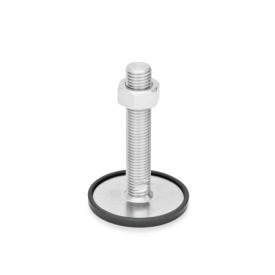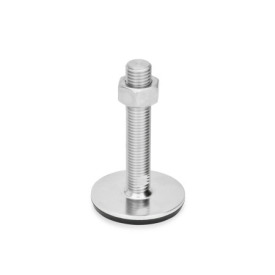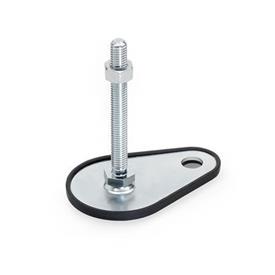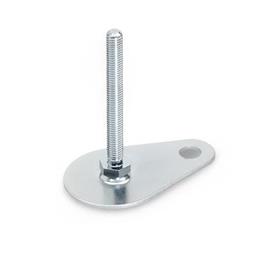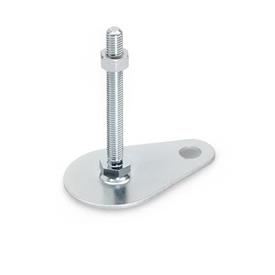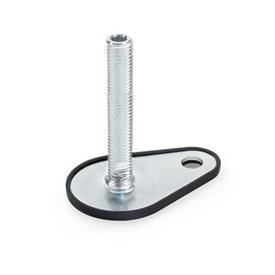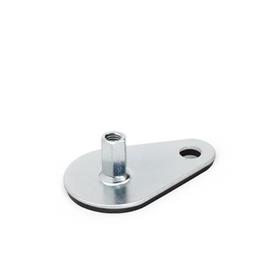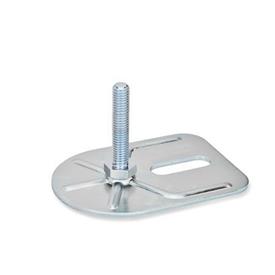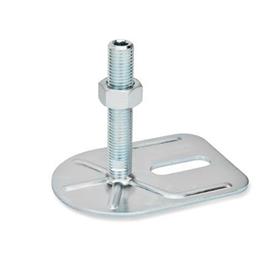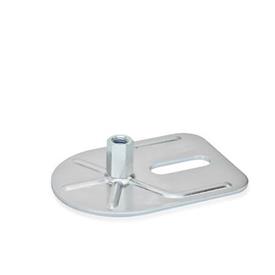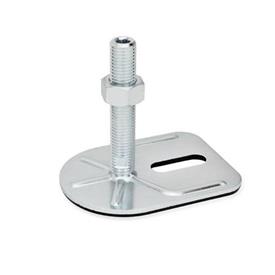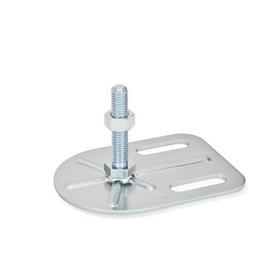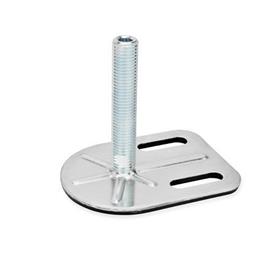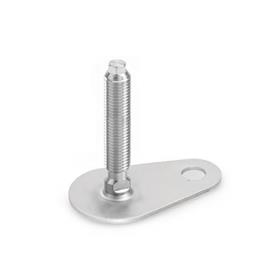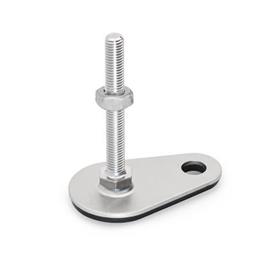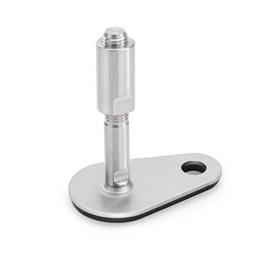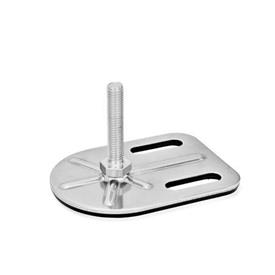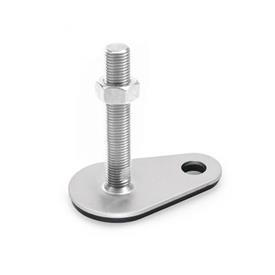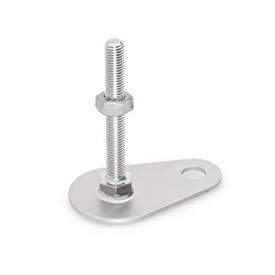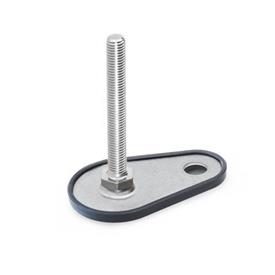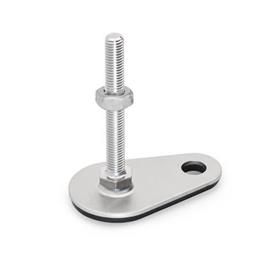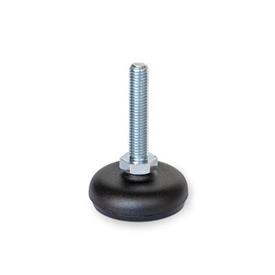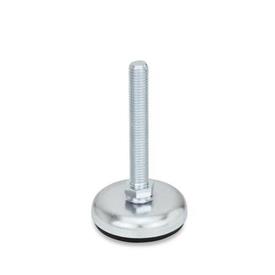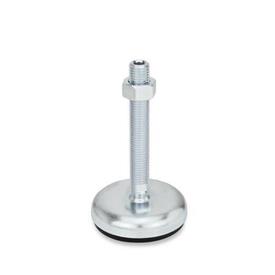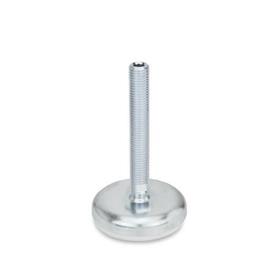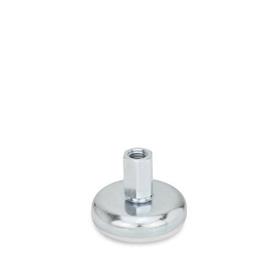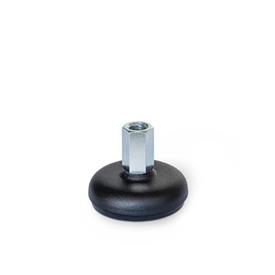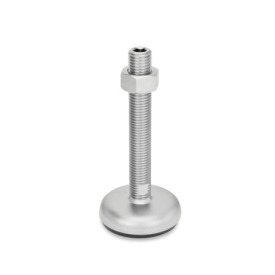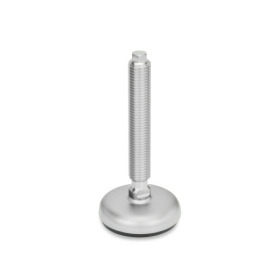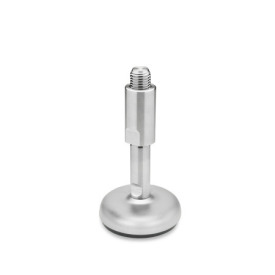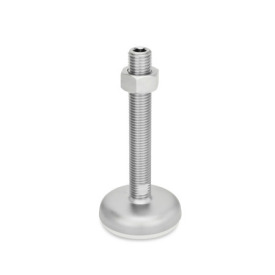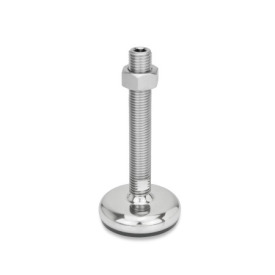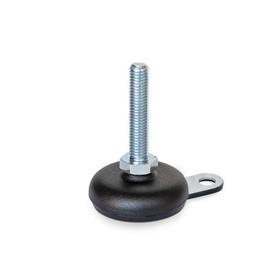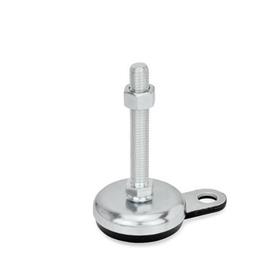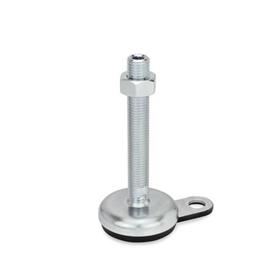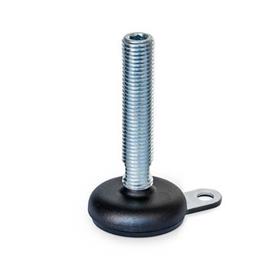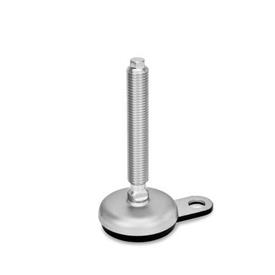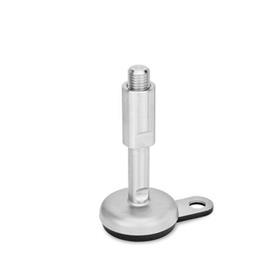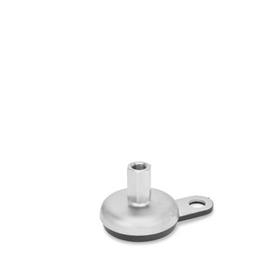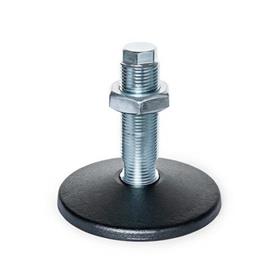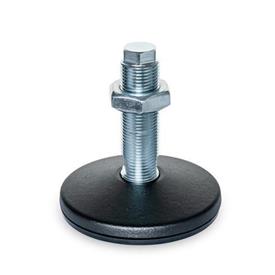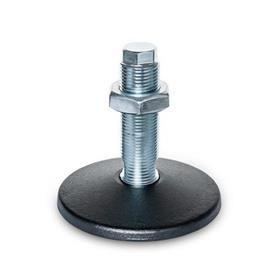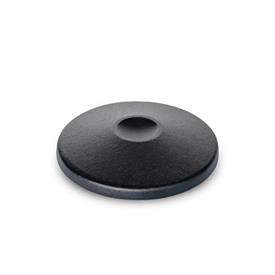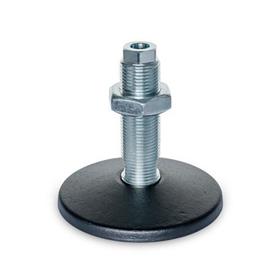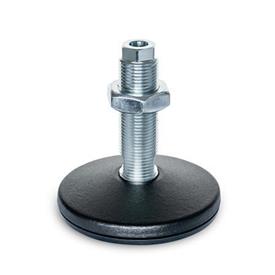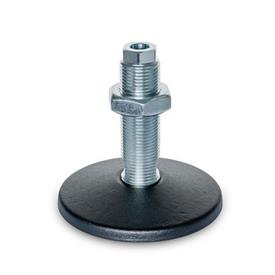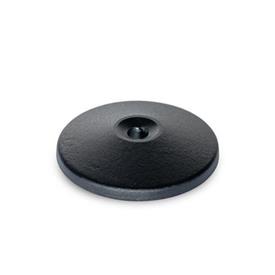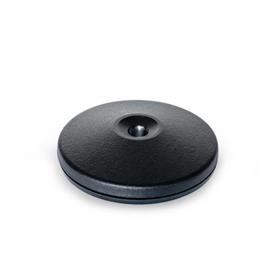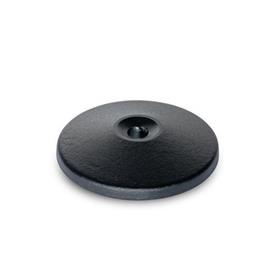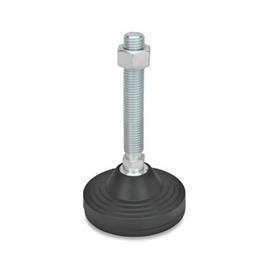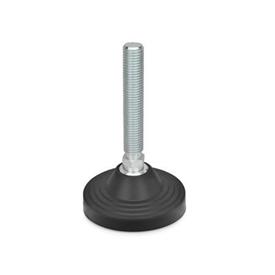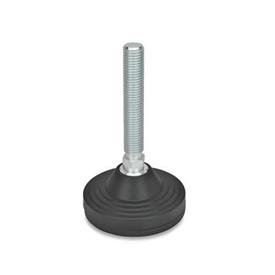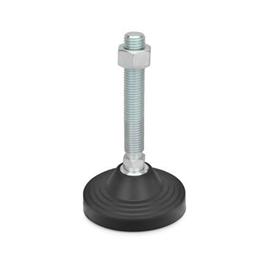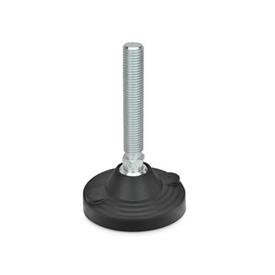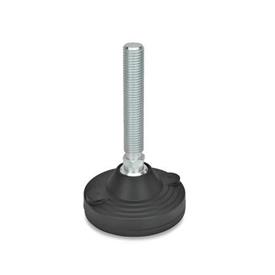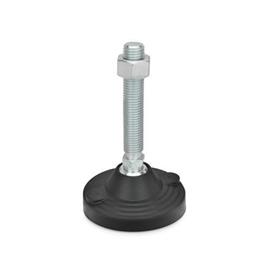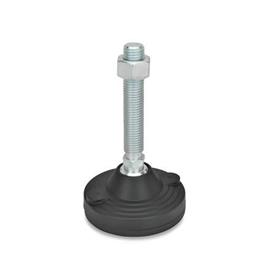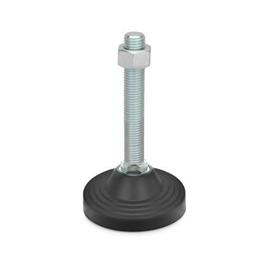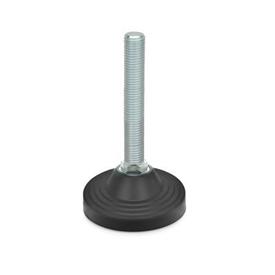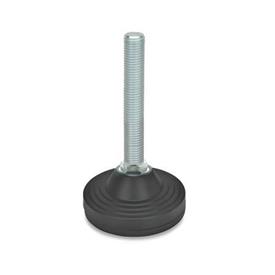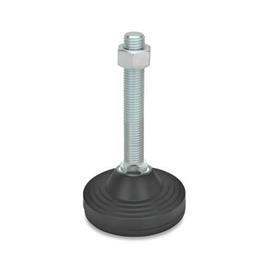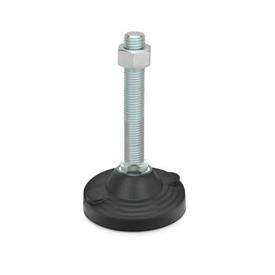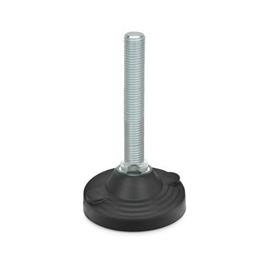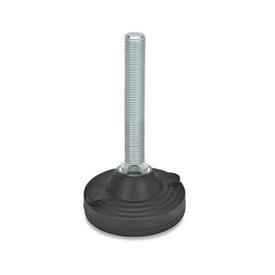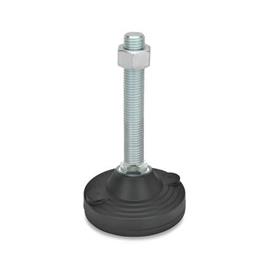
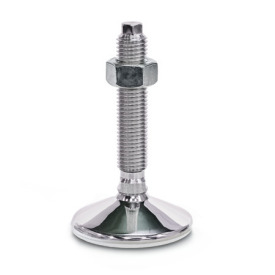
Leveling feet, also referred to as machine feet, are used to support and stabilize machines and systems. They generally consist of a foot plate together with a threaded stud and are available in a rigid design or as articulated feet for floors that are not perfectly even.
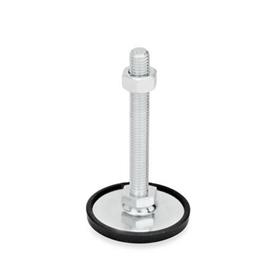
Leveling feet are used to stabilize machines, systems and equipment on any floor. They create a space between the support surface and the housing or frame. The foot plates are designed to prevent damage to sensitive floor coverings. In addition, typical designs feature protective caps or rubber inserts.
Ganter offers levelling feet as standard parts in many different versions for a variety of applications:
Machine feet with vibration damping are particularly suited for especially sensitive measurement equipment or machines that produce high levels of vibration.
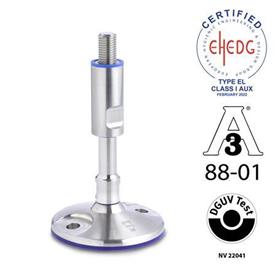
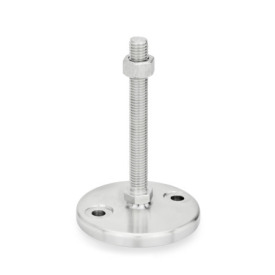
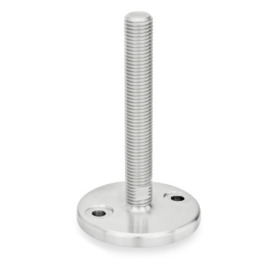
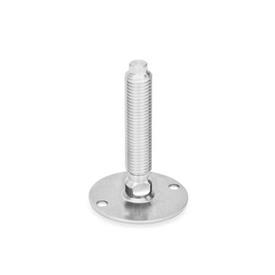
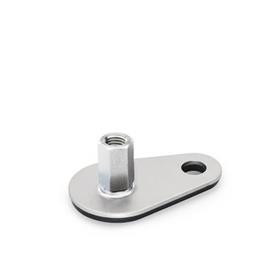
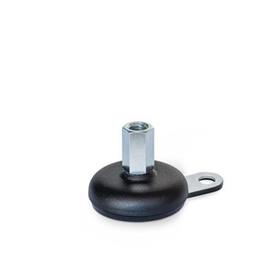
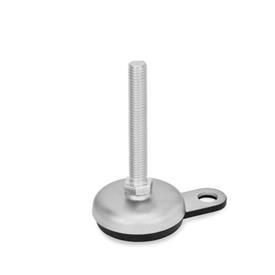
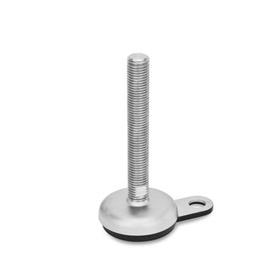
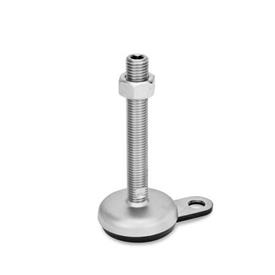
Levelling feet with fixing lugs have an extended support plate with one or more holes. The premade holes allow the machine feet to be fastened to the support surface.
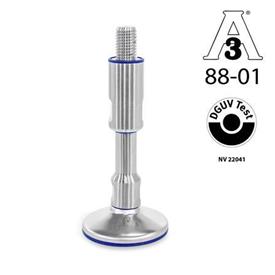
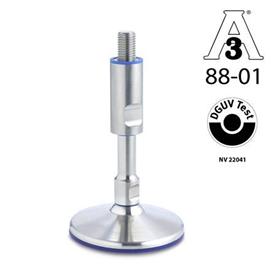
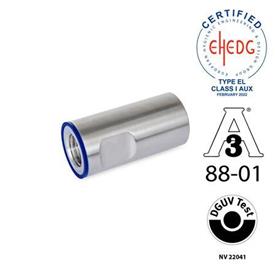
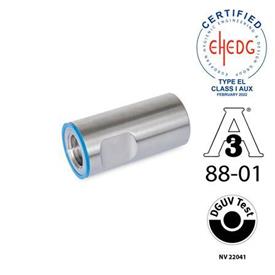
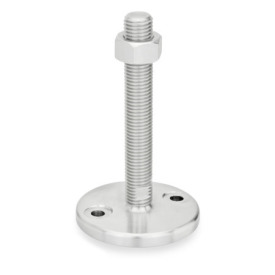
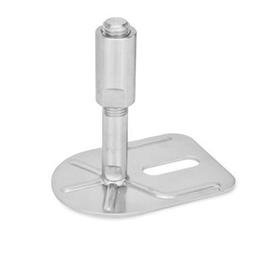
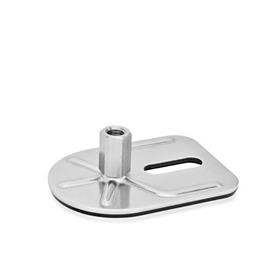
Levelling feet for hygienic applications are made of precision turned, non-rusting stainless steel. They are available in designs certified according to EHEDG and 3A guidelines.
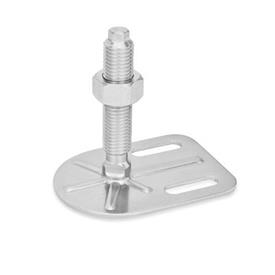
Articulated and fixed-base leveling feet are height-adjustable mounting elements consisting of a threaded stud and a base plate. These components ensure that machines and equipment are stable and precisely leveled while compensating for uneven floors, if necessary. A wide range of requirements can be met by selecting the appropriate materials and versions – from high load-bearing capacity and corrosion protection to hygiene and damping properties.
This allows you to set up machines easily, quickly, and safely and to make flexible adjustments during operation. Uneven mounting surfaces or slight slopes are specifically compensated for, which significantly reduces the effort required for alignment, particularly in machine construction.
For example, articulated leveling feet made of ESD-rated plastic (GN 344.2) are used in electronically sensitive facilities. Stainless steel versions ensure long-term durability in humid environments. Models with fastening holes provide additional stability and resistance to tipping on slippery floors.
Leveling feet play a crucial role in ensuring precision and safety when setting up machines and equipment. Thanks to the wide variety of designs and materials, you can adapt flexibly to any installation situation and avoid time-consuming adjustments during alignment.
The main difference between fixed base and articulated leveling feet lies in their range of motion and intended use:
A fixed-base leveling foot is a sturdy, height-adjustable foot.
An articulated leveling foot also has a movable joint between the threaded stud and the base plate.
Fixed-base leveling foot = height-adjustable but rigid
Articulated leveling foot = height-adjustable + flexible (adapts to the floor)
Articulated and fixed-base leveling feet are precisely adjustable components designed for the safe setup and leveling of machines, systems, and equipment. The selection criteria are based on the requirements of the specific application and the environmental conditions. This allows you to select the ideal articulated or fixed-base leveling foot and ensure that your equipment is set up in a stable and level manner.
The machine can be securely positioned and efficiently leveled by carefully selecting the appropriate articulated or fixed-base leveling feet. This simplifies installation and ensures a smooth commissioning process, even on uneven industrial floors. In day-to-day production, this enhances operational reliability and ensures a durable, stable setup – ideal conditions for trouble-free machine operation.
This allows you to tailor your setup to the specific requirements of your application, make precise adjustments, and at the same time enhance both safety and efficiency.
Both articulated and fixed-base leveling feet come in your choice of steel, stainless steel, and plastic. Each material offers specific advantages that make it easier to adapt to different environments as needed and ensure greater safety, longer service life, and easier maintenance.
This makes it possible to perform robust installations quickly and cost-effectively – for applications such as machine tools or indoor equipment.
This allows you to ensure a permanently secure machine setup and hygienic cleaning even under demanding conditions. Stainless steel leveling feet are ideal for processing equipment in food production facilities or washrooms.
Choosing the right material makes it easier for you to adapt efficiently to specific requirements and enhances the operational reliability of your machines. This way, you can always choose the best solution for your application.
Vibration Damping Elements reliably reduce the transmission of vibrations between machines and the ground beneath them. This improves smoothness of operation and prevents vibrations from being transmitted to the hall floor or adjacent equipment. This allows you to operate even sensitive measuring instruments or machine components with greater precision and specifically protect individual components from unwanted motion.
In most cases, the leveling feet from the Ganter product range can be easily combined with existing machine feet. For this purpose, Ganter offers a wide selection of different connection threads, threaded bushings, threaded studs, and base plate dimensions. This usually allows you to select the right connecting element for your preferred solution and use it right away. For compatibility, it is essential that the mounting thread and the size of the base match your existing machine foot mounting.
Virtually any machine setup can be achieved thanks to the wide range of sizes, mounting options, and material combinations. This makes it easier to install your machines so that they are level and stable, even if existing mounting brackets are already in place or are being refurbished.
Ganter’s leveling feet are ideal for use in retrofit projects, upgrades, or the replacement of worn machine feet, as compatibility with standard industrial dimensions is generally ensured.
You should take a systematic approach to selecting the correct size and type of leveling foot. First, consider the conditions at the installation site, the requirements for the machine or device, and any specific criteria for your application. This will help you find the right product quickly and reliably and avoid making the wrong choice.
The leveling feet in the Ganter product range can be optimally configured for environments with high vibration levels or dynamic loads by specifically selecting models with vibration damping components or suitable material combinations. Choosing the right one improves stability and protects both the machinery and the surface. This ensures stable operation even under heavy load fluctuations and vibrations.
By carefully selecting suitable leveling feet with vibration dampers – such as those featuring an integrated rubber pad, vibration damping, and fastening holes – you can prevent unwanted machine vibrations, reduce noise levels, and protect load-bearing components from material fatigue. This allows you to operate your equipment comfortably and safely, even in harsh, high-vibration environments
Depending on the version, Ganter’s articulated and fixed-base leveling feet comply with various standards and specifications, which specifically address requirements for hygiene, material properties, and certifications. For many products in the leveling feet family, you will find special versions designed for applications that comply with industry standards.
By adhering to these norms and standards, you can select articulated or fixed-base leveling feet from Ganter that specifically meet your industry-specific requirements. This ensures that your systems are operated safely and in compliance with regulations – such as in food production, cleanrooms, or medical applications.
Be sure to take into account the relevant standards and material requirements for your industry when selecting your leveling feet. Use the product filter on the Ganter website to search specifically for certified or hygienic leveling feet. This allows you to install or retrofit systems and equipment conveniently, safely, and efficiently.
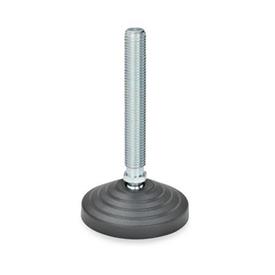
Ganter can also provide custom stud lengths, alternative threads, or specific base plate geometries for many of its articulated and fixed-base leveling feet upon request. Please contact Ganter Service directly with your requirements.
Yes – such leveling feet do exist, and they are even offered as standard products in a hygienic design
A very typical example is the GN 20 series
This combination is actually available – especially for versions with fastening holes (type B).
Important technical note:
The reason: EHEDG requires a defined, leak-tight installation to prevent dead spaces.