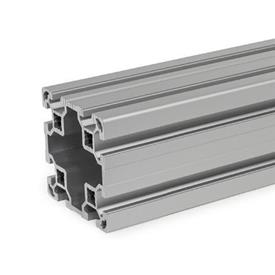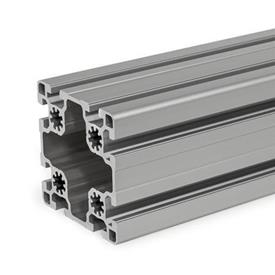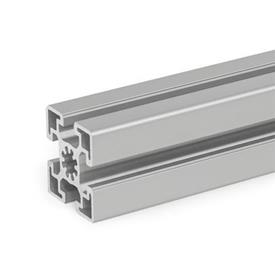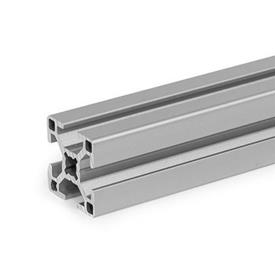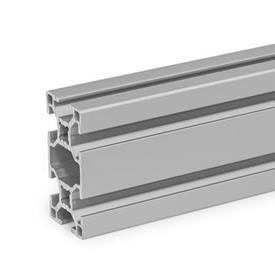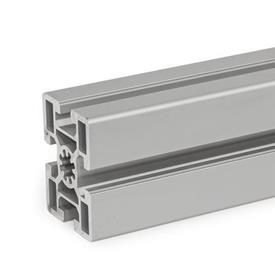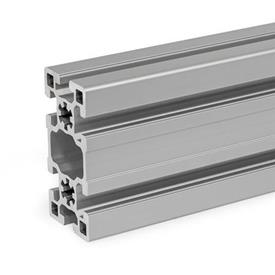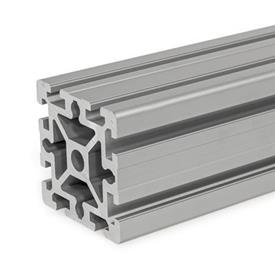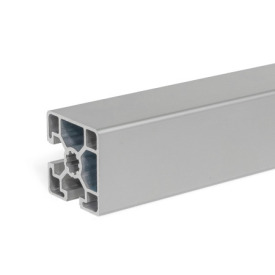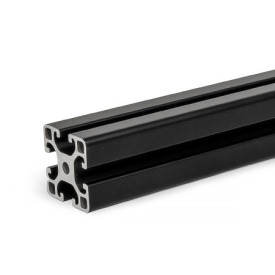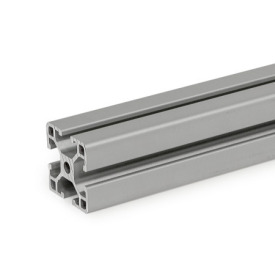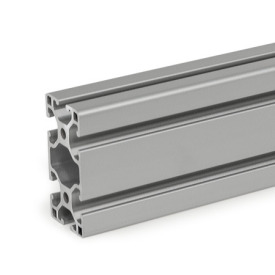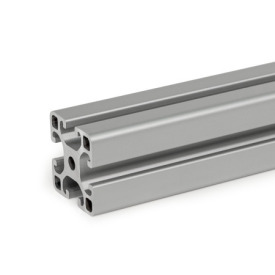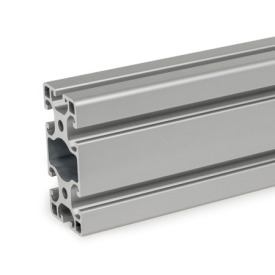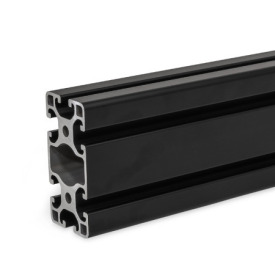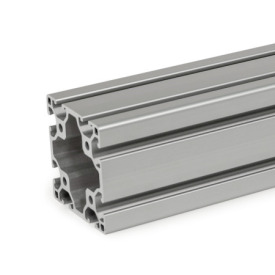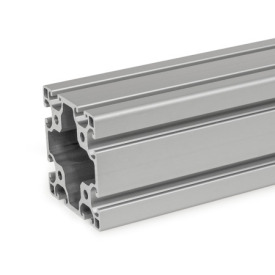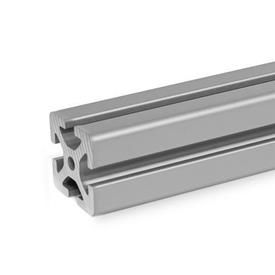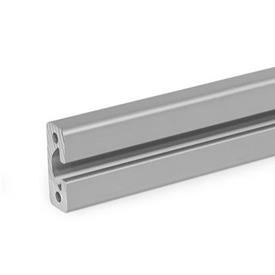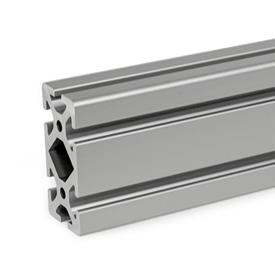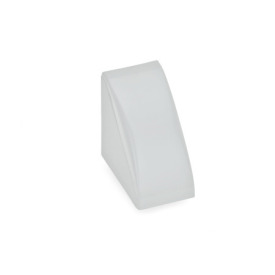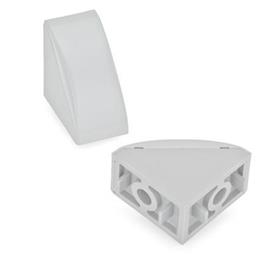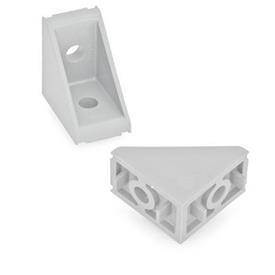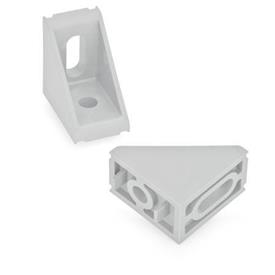
Perfiles de aluminio

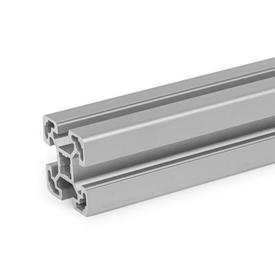
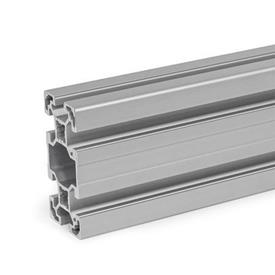
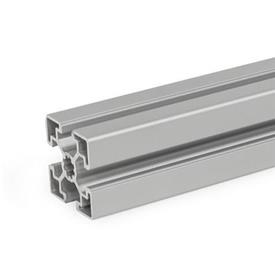
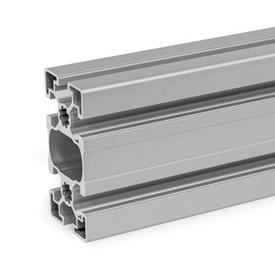
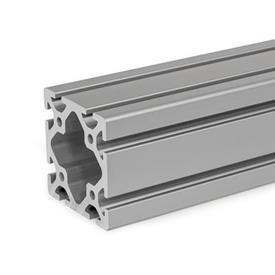
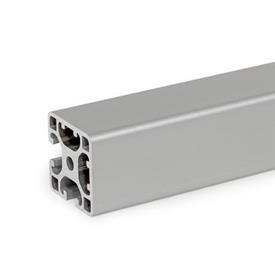
Los perfiles de aluminio son una elección muy popular a la hora de crear máquinas y elementos estructurales estables y versátiles. Estos perfiles de alta calidad de aluminio extrudido ofrecen numerosas ventajas que los hacen indispensables para una gran variedad de aplicaciones. Los perfiles de aluminio son a la vez ligeros y extremadamente resistentes.

Usos de los perfiles de aluminio

Desde la construcción de muebles hasta la ingeniería mecánica, desde la logística del transporte hasta los muebles para taller o stands de feria, los perfiles de aluminio son extremadamente versátiles y permiten realizar soluciones a medida. Estas propiedades hacen que resulten ideales para construir estructuras ligeras pero a la vez estables y fiables. Los perfiles de aluminio se utilizan a menudo en áreas donde se requiere una larga vida útil y resistencia a la corrosión. El aluminio es resistente a la corrosión por naturaleza, lo que lo convierte en una excelente opción para el uso en exteriores y en entornos con vapor. Por consiguiente, los perfiles de aluminio están especialmente indicados para construir estructuras para exterior, como barandillas, marquesinas y cubiertas de terrazas.

sistema modular-i y sistema modular-b

Nuestra tienda online ofrece dos tipos básicos de perfiles de aluminio: el tipo B (compatible con Bosch) y el tipo I (compatible con Item). Por tanto, debe prestarse especial atención al comprar las piezas de conexión adecuadas u otros accesorios.

Uniones y accesorios

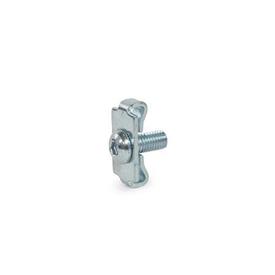
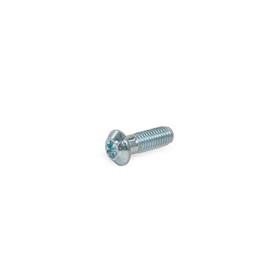
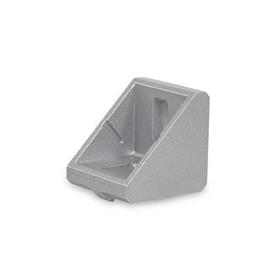
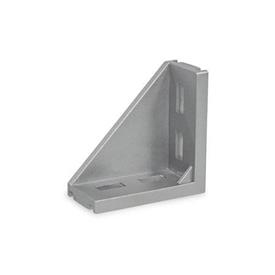
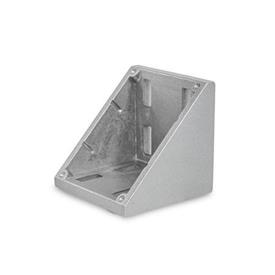
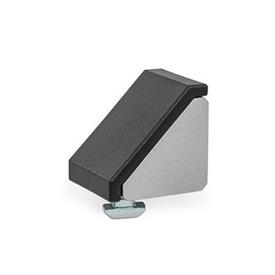
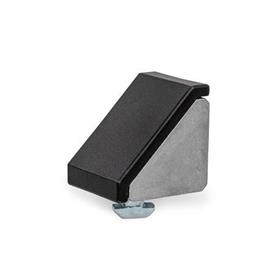
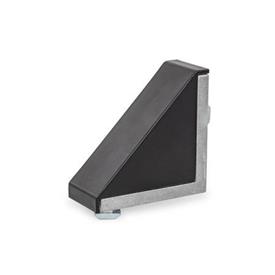
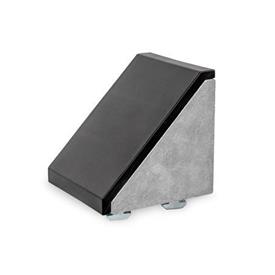
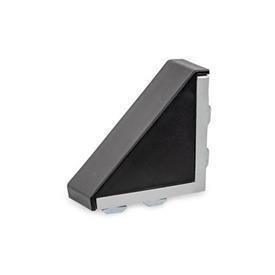
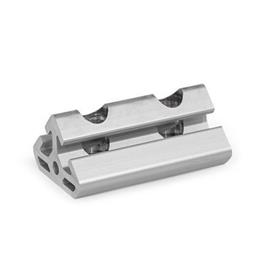
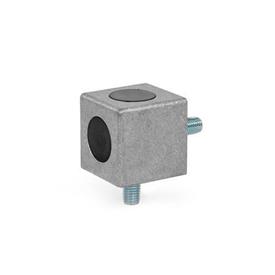
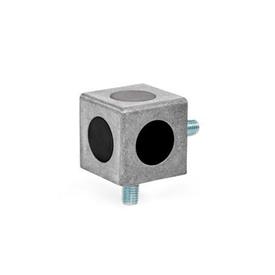
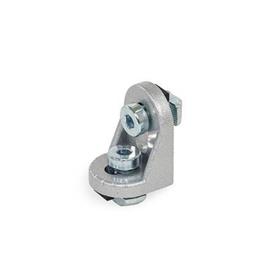
Por sí solos, los perfiles de aluminio ya son extremadamente versátiles y útiles, pero existe una gran variedad de uniones que amplían su funcionalidad y usos posibles. Accesorios como los conectores, soportes angulares, tuercas en T y tapas permiten adaptar y personalizar los perfiles de aluminio para varias aplicaciones en prácticamente todos los sectores.

FAQ - Preguntas frecuentes

Filtrar productos
Material
Sistema modular
Tamaño de la rejilla
Ancho de ranura
Accesorio
Familia de productos

¿No encontró lo que buscaba? Solicitudes especiales

FAQ - Preguntas frecuentes

Which applications or industries are aluminum profiles particularly well-suited for?

Aluminum profiles are especially well suited for applications which call for a lightweight, stable, and modular construction solution. They offer high strength with low weight, good corrosion resistance, and a modular design, so you can quickly and flexibly build individual structures. This allows aluminum profiles to be conveniently adapted to changing requirements and ensures efficient use of material and time.

Typical industries and application areas for aluminum profiles

  • Machine and plant construction: For frames, protective enclosures, workstations, test benches, and fixtures. You can easily create load-bearing frame structures by combining them with connecting elements such as GN 20i standard connectors, GN 21b central screws, or GN 30b / GN 30i angle brackets.
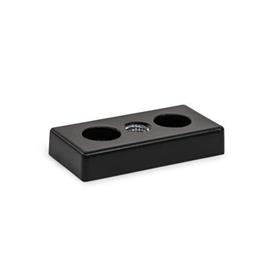
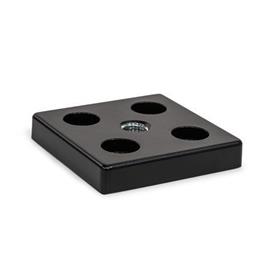
  • Automation technology: Modular design allows for quick adjustments when implementing conveyor lines, assembly tables, or robot safety cells. The range of accessories (such as GN 60i / GN 60b cover caps or GN 80i / GN 80b foot plates) ensures secure footing and clean finishes.
  • Construction and architecture: For temporary or permanent structures such as partition walls, frames, and assembly systems, as aluminum profiles are both visually appealing and easy to modify.
  • Furniture construction: For robust yet elegant table frames, shelving, and presentation systems. Cover profiles GN 71i / GN 71b create clean finishes that promote a classy appearance.
  • Vehicle and device construction: Lightweight, corrosion-resistant frame structures that can be quickly adapted or disassembled – ideal for mobile applications, such as in service vehicles or at trade fairs.
  • Special machine construction

What does this mean in practice?

Thanks to the modular concept of the aluminum profiles – such as with the b-modular system (Bosch compatible) (GN 10b, GN 11b) or the i-modular system (Item compatible) (GN 10i, GN 11i) – you can build, modify, or expand complete frames without special tools or welded joints. The connection technology, e.g. GN 23i automatic connectors for right-angled connections, ensures that you can react flexibly and with minimal tools. This saves assembly time, reduces storage costs, and enables individual solutions with minimal planning effort.

Advantages of using aluminum profiles in various industries

  • High flexibility when adapting and expanding existing systems
  • Quick and secure assembly using standardized accessories
  • Reduced dead weight with high stability – ideal for mobile or temporary structures
  • Corrosion resistance for use in harsh environments
  • Visually appealing solutions that still look great in plain sight

This allows you to always implement custom-fit solutions for the relevant industry with Ganter aluminum profiles and react flexibly to new requirements when needed.

What different profile systems are there for aluminum profiles and how do I choose the right one?

Two profile systems are available to you for aluminum profiles: the b-modular system and the i-modular system. Both systems offer true-to-size modular aluminum profiles that are characterized by high strength with low weight and excellent corrosion resistance. This makes them ideal as a basis for designs in mechanical engineering, plant engineering, and for many different custom solutions in industrial settings.

Overview: Profile systems for aluminum profiles

  • b-modular system (Bosch compatible): The aluminum profiles GN 10b (light/heavy) and GN 11b (light, with partially closed slots) are part of the b-system. This system is especially well suited for structures which call for a high degree of flexibility in connection and an extensive range of accessories.
  • i-modular system (item compatible): The aluminum profiles GN 10i (light/heavy) and GN 11i (light, with partially closed slots) are part of the i-system. This system focuses on extensive compatibility with standard i-system profiles and accessories on the market.

Both systems can be expanded with numerous connectors, angle brackets, plates, and accessories and assembled into stable frame structures, racks, workstations, or enclosures.

Selection criteria for the appropriate profile system

  • Which accessories and connecting elements are important for your construction? Check which system parts are available in the modular system in question (e.g. GN 20i, GN 22i, GN 21b, GN 25b)
  • Should the slots be open on all sides (e.g. GN 10b, GN 10i) or partially closed (e.g. GN 11b, GN 11i)? Closed slots can offer added safety, make cleaning easier, and create a more attractive appearance – ideal for work surfaces or display areas.
  • Choose between profile type “light” (for standard applications with moderate load) or “heavy” (for load-bearing structures and applications with increased requirements for rigidity).

This allows you to select the profile system that best suits your specific needs for design, integration, and expansion – whether your priority is quick installation, flexibility for future expansions, or compatibility with existing systems.

Which accessories (such as connectors, angle brackets, and T-nuts) are available for aluminum profiles?

A comprehensive range of accessories is available for aluminum profiles, enabling flexible assembly and adjustment of a wide variety of constructions in mechanical and plant engineering. These mainly include various connectors, angle brackets, and T-nuts that are optimally matched to the b- and i-modular profiles. This allows structures, frames, or protective enclosures to be realized conveniently and reliably – whether for projects that require quick changes or permanent, stable connections.

Connectors for aluminum profiles

  • Standard connectors: GN 20i for the i-modular system, steel, for the stable connection of profiles in various directions.
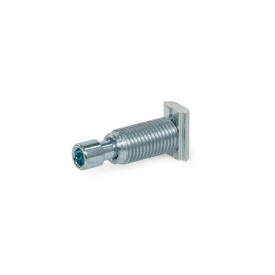
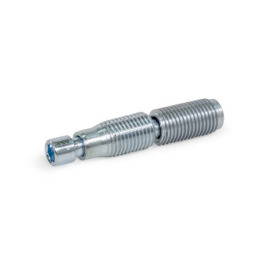
  • Central screws: GN 21b for the b-modular system, steel, enable easy-to-assemble, non-positive connections without having to machine the profiles.
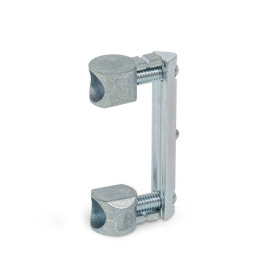
  • Universal connectors: GN 22i made of zinc die casting (also with double T-nut), flexibly usable in the i-modular system for diverse construction tasks.
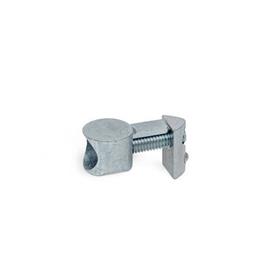
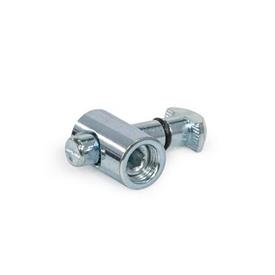
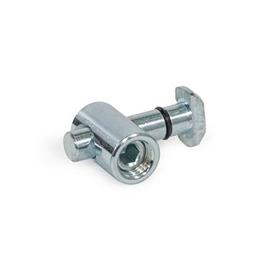
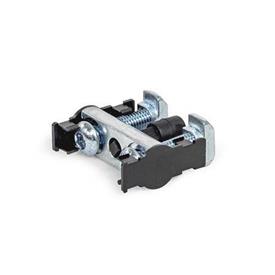
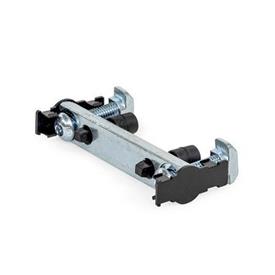
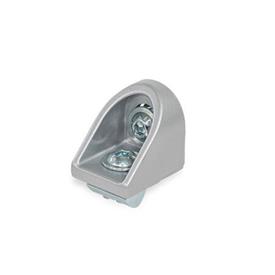
  • Automatic connectors: GN 23b and GN 23i (also with double T-nut), steel, for quick right-angled or end-face profile connections without preparing the end face. This allows you to build frames, racks, or booths exceptionally efficiently.
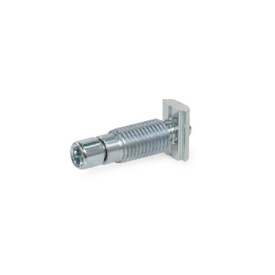
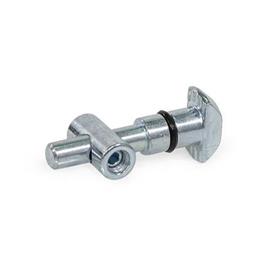
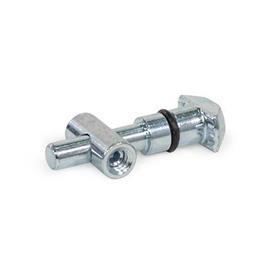
  • Quick-release connectors: GN 25b, with asymmetrical or symmetrical mounting stud, enable the quick and detachable connection of profiles in the b-modular system.
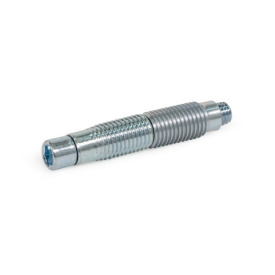
  • Bolt connectors: GN 26b for the b-modular system – positive connection, internal, for concealed and fixed connections.
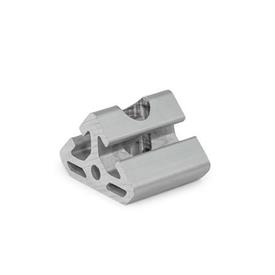
  • Angle connectors: GN 32i made of aluminum, for corner, single, or double installation in the i-modular system, as well as GN 33b cube connectors for stable 3D connections in the b-modular system.

This allows you to stably connect profiles in different orientations and flexibly expand or adapt your constructions.

Mounting brackets for aluminum profiles

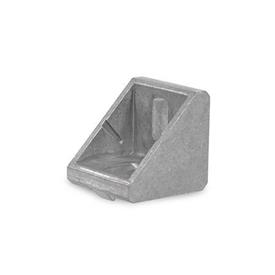
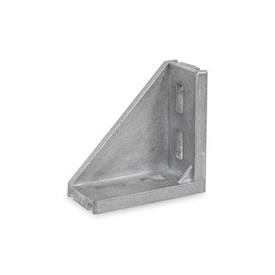
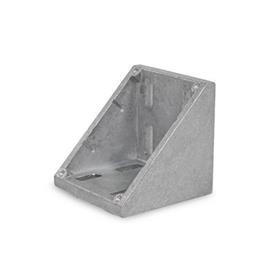
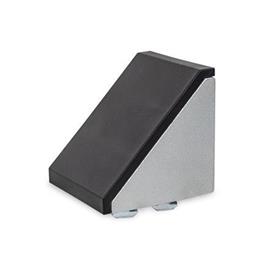
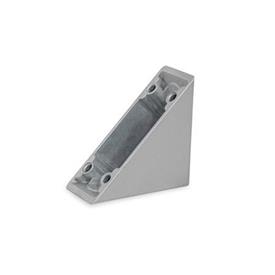
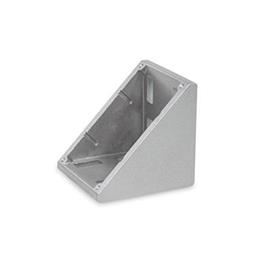
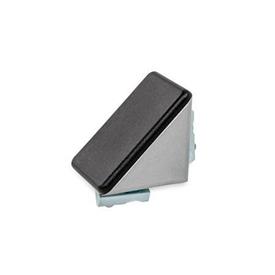
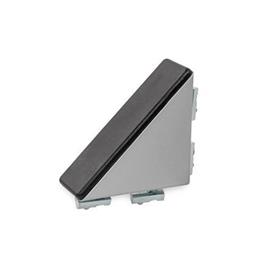
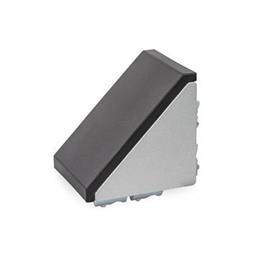
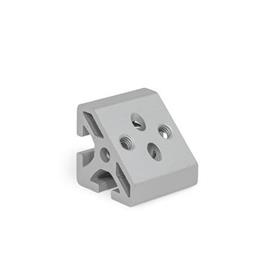
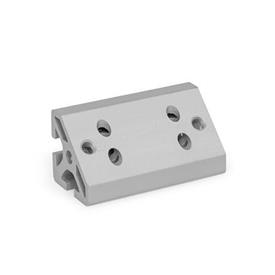
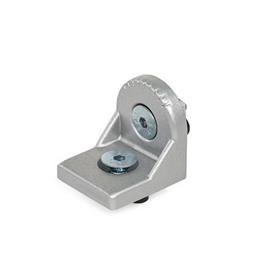
  • Aluminum angle brackets: GN 30b for the b-modular system (also with accessories), for the right-angled connection of two profiles.
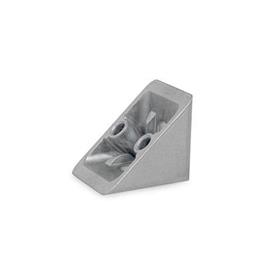
  • Angle brackets made of zinc die casting: GN 30i for the i-modular system (also available with accessories), for easy installation and high rigidity.
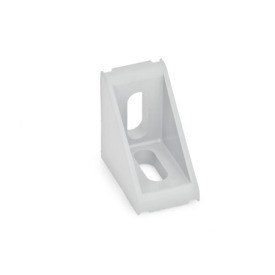
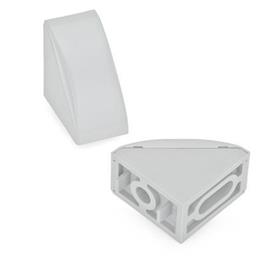
  • Plastic mounting brackets: GN 561, type A, B, C, universal for b- and i-modular systems, suitable for additional support or mounting tasks.
  • Rotating angle brackets: GN 41b (aluminum, b-modular system), GN 41i / GN 42i (zinc die casting, i-modular system), to connect profiles in a rotatable manner – ideal for adjustable mounts or covers.

This opens up a variety of possibilities for sturdy assembly, but also for rotatable or swiveling construction elements.

T-nuts and accessories for aluminum profiles

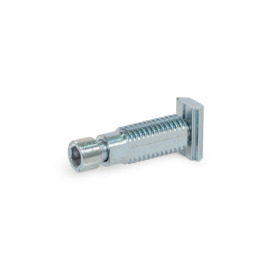
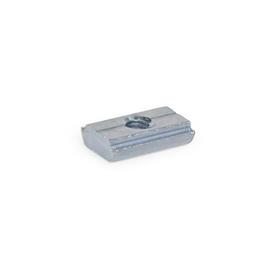
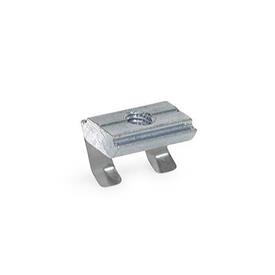
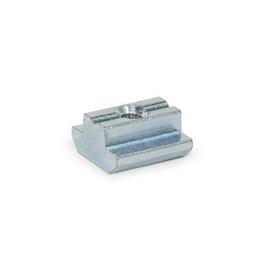
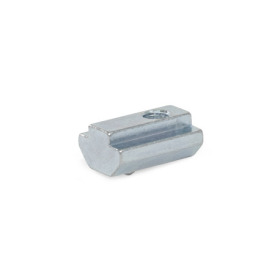
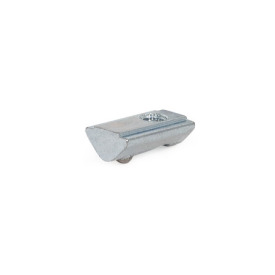
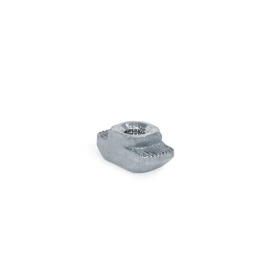
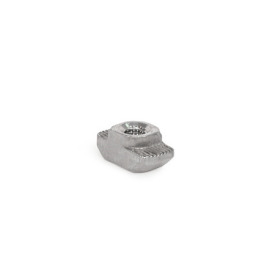
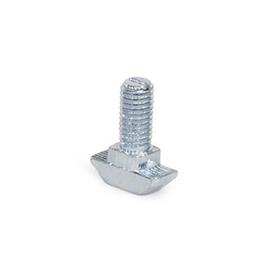
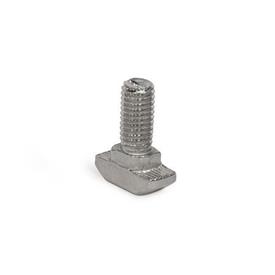
  • T-nuts: GN 50b (steel, b-modular system), GN 50i (steel/stainless steel, i-modular system), as mounting points for screw connections in the profile slot. These make it easier to attach add-on components more quickly.
  • T-slot nuts / T-slot bolts: GN 51b and GN 52b, optimal for quick assembly and retrofitting in slots that are open on the sides.
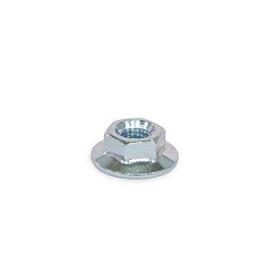
  • Collar nuts: GN 53b for secure and detachable screw connections, specially matched to the b-modular system.

In practice, this accessory ensures that you can mount add-on parts quickly, make subsequent additions easily, and maintain high modularity.

Further accessories

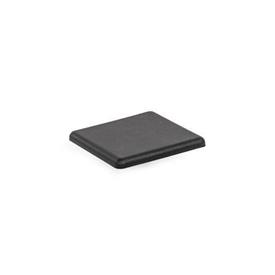
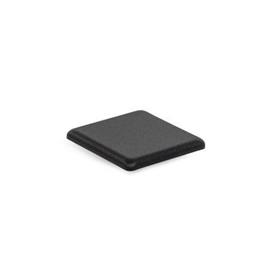
  • Cover caps (GN 60b / GN 60i) for profile ends provide protection against injuries and ensure a tidy appearance.
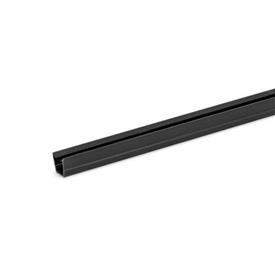
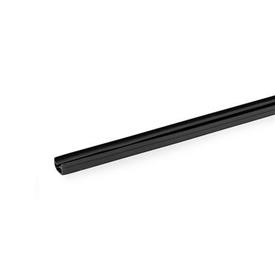
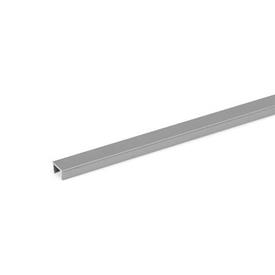
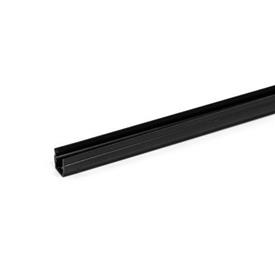
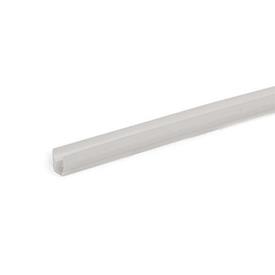
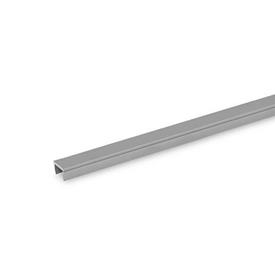
  • Cover and edging profiles (GN 70b / GN 70i, GN 71b / GN 71i) in plastic or aluminum to close slots or visually enhance edges.
  • Transport and base plates (GN 80b / GN 80i) for supporting or safely transporting frames and units.

Conclusion and practical tip

The range of accessories for aluminum profiles allows you to build versatile, sturdy structures that can be easily adapted at any time – without the need for any special tools or profile machining. This makes it possible to quickly build and easily expand machine enclosures, workstation systems, or mobile frames. The selection of connectors, angle brackets, and T-nuts is tailored to typical requirements in mechanical engineering, allowing you to significantly reduce planning and assembly effort.

Do aluminum profiles need to be machined to use connectors?

Yes, in some cases aluminum profiles must be machined for the use of connectors. Depending on the version of the connector, it may be necessary to perform drilling, threading, or other machining steps on the profile.

However, there are also connectors that can be mounted directly to the aluminum profile without additional machining. The necessary machining steps in each case are described for the individual products.

An application video which clearly explains the assembly and use is also available for every connector.

*
*
*

  • , coding S
  • , coding R
  • , coding S
  • , coding S
  • Identification no. 1
  • , Identification no. 2

What standard dimensions and cross-sections are available for aluminum profiles?

Aluminum profiles are available as modular system profiles in numerous standard dimensions and cross-sectional shapes. You can choose between profile series of the b-modular system and i-modular system. The most important standard cross-sections range from narrow, light profiles to heavy duty versions which can bear heavy loads.

Profiles of the b-modular system: Standard dimensions

  • GN 10b (all slots open, light/heavy): Depending on the application, various cross-sectional dimensions (widths/heights) are available, such as 30x30 mm, 40x40 mm, 45x45 mm, as well as larger formats such as 80x80 mm and 90x90 mm or rectangular profiles (such as 40x80 mm). This wide selection allows for both compact designs as well as frame structures for bearing particularly heavy loads.
  • GN 11b (partially closed slots, light): This system also gives you standard cross-sections such as 45x45 mm. The closed slots offer increased safety and a cleaner design.

Profiles of the i-modular system: Standard dimensions

  • GN 10i (all slots open, light/heavy): Typical grid sizes such as 30x30 mm, 40x40 mm, 60x60 mm, or 80x80 mm are available here. Rectangular profiles, such as 30x60 mm or 40x80 mm, are also available.
  • GN 11i (partially closed slots, light): These are primarily used where smooth side surfaces are required. Standard cross-sections such as 40x40 mm are available.

Shape of cross-sections for aluminum profiles

  • Square (e.g. 40x40 mm, 45x45 mm)
  • Rectangular (e.g. 40x80 mm, 45x90 mm)

What does this mean in practice?

You can select aluminum profiles to exactly match your specific requirements. Whether light protective frames, machine enclosures, or stable support structures – the modular selection of profile cross-sections ensures an optimal balance of weight, available installation space, and desired stability. Thanks to standardized cross-sections, all connecting elements and accessories such as T-nuts, angle brackets, or cover caps can be mounted precisely and easily. This reduces assembly effort, and the structure remains flexible for later adjustments.

Quick overview: Test criteria for selection

  • Select the required profile size for frame structures based on load and installation situation (e.g. 40x40 mm for light frames, 80x80 mm for load-bearing structures).
  • Consider whether open or closed slots are desired (visual appearance, safety, ease of cleaning).
  • All cross-sections are designed so that they can be combined with the suitable connecting elements and other accessories from the Ganter program.

How can I cut or machine aluminum profiles individually?

You can cut and machine aluminum profiles individually to adapt the constructions to your specific requirements. Ganter aluminum profiles such as GN 10b and GN 10i always come as standard commercial bar stock with defined standard lengths. You then cut it to the desired dimension or perform special machining such as drilling directly in your workshop or production facility.

Cutting aluminum profiles

  • For precise cuts, use miter saws with carbide-tipped blades or circular saws with a suitable insert for aluminum.
  • The cutting area should be cooled and deburred in order to achieve a clean cut.

Machining aluminum profiles

  • The profile can be drilled or milled at any point, as the material is very easily machinable.
  • Core holes or threads are usually made in the end faces to accommodate connecting elements such as GN 21b central screws, GN GN 20i standard connectors, or GN 23b / GN 23i automatic connectors.
  • Multiple profiles can be flexibly mounted using angle brackets GN 30b / GN 30i or connector elements GN 32i, GN 33b or using T-nuts GN 50b/ GN 10b – all you need to do is drill holes in the necessary places.

How can aluminum profiles and accessories be combined to build individual frames or racks?

Aluminum profiles make it easy and efficient to build custom frames and racks. The modular system profiles, such as GN 10b or GN 10i, offer custom-fit cross-sections and can be assembled quickly and flexibly thanks to standardized connecting elements. This allows you to adapt the construction to your exact requirements and conveniently expand or modify it at any time. You can then carry out projects cost-effectively in mechanical and plant engineering, intralogistics, and jig construction.

Combination options for aluminum profiles

  • Choose the suitable aluminum profiles, such as GN 10b (b-modular system, with slots open on all sides) or GN 10i (i-modular system), depending on the desired stability and slot design.
  • Combine profiles with different profile types (“light” or “heavy”) to achieve the appropriate ratio of load capacity and weight for your application.
  • Use connecting elements such as GN 20i standard connectors or GN 23b automatic connectors to screw profiles together end-to-end or at right angles – without any time-consuming machining.
  • Use quick-release connectors GN 25b for fast or detachable connections. This allows for flexible adjustment to the structure at any time.

Accessories for function and safety

  • Use GN 30b or GN 30i angle brackets to form stable corners and create additional mounting surfaces.
  • T-nuts such as GN 50b or GN 50i and special fastening systems (e.g. GN 51b T-slot nuts, GN 52b T-slot bolts) allow you to securely fasten accessories or panels – without the need for any additional thread-cutting work.
  • Cover profiles (GN 70b, GN 70i, GN 71b / GN 71i) or cover caps (GN 60b / GN 60i) provide protection from fouling and injuries.
  • Transport and base plates GN 80b / GN 80i can be easily screwed on for stability or mobile use.

How to configure your individual frame

  1. Design the frame under load out of aluminum profiles, e.g. with heavy GN 10b for load-bearing structures.
  2. Connect the profiles depending on the construction type using automatic connectors GN 23b or angle connectors GN 32i. This creates a torsion-resistant frame without any additional machining steps.
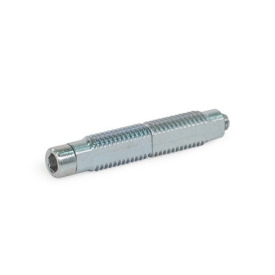
  3. Add accessories from Operating elements, Leveling feet, Vibration dampers or casters (Ruedecillas de bajo rendimiento, Ruedecillas de rendimiento medio, Ruedecillas de alto rendimiento).
Practical benefits for users

By combining aluminum profiles and accessories, you can build frames and racks precisely, quickly, and with few tools. Adaptations and additions, such as the integration of additional elements or the modification of existing racks, are possible at any time. This saves you installation time, increases operational reliability, and allows you to react flexibly to new requirements – ideal for changing production or assembly environments.

How sustainable and recyclable are aluminum profiles from Ganter?

Ganter aluminum profiles are made of high-quality aluminum and offer very high sustainability thanks to the nature of the material. Aluminum can be recycled almost completely without losing any of its essential material properties. This allows Ganter aluminum profiles to be reclaimed into the material cycle after their use. Use of such recycled material leads to significant resource conservation and reduces the need for primary aluminum.
Sustainability of aluminum profiles at Ganter

  • Aluminum is a resource-saving material because it can be melted down and reused again and again without any loss of quality.
  • The production of Ganter aluminum profiles takes high material efficiency into account and minimizes scrap as well as waste in production.
  • Long service life and high corrosion resistance ensure that the profiles remain usable for a long time, even with frequently changing requirements in mechanical engineering, automation technology, and plant construction.

Recyclability in practical use

  • After the end of the product life cycle, aluminum profiles such as GN 10b, GN 11b, GN 10i, GN 11i, and others can be easily sent for scrap recycling.
  • Accessories and connecting parts can usually be removed without tools or with just a few simple steps. This way, you can separate profiles by type and feed them into the circular economy.
  • The low energy requirement for recycling (only about 5% compared to primary production) sustainably improves the environmental footprint.
What does this mean in practice?

With Ganter aluminum profiles, you are choosing a solution that minimizes costs and environmental impact. You can flexibly reuse profiles after a conversion project or after the intended use for them has changed, or have them completely recycled. This is ideal for applications which call for frequent restructuring or adjustments, such as setting up modular workstations or machine frames. You can react flexibly to changing requirements while simultaneously making an important contribution to sustainability and resource conservation.
How are aluminum profiles depicted and made available to CAD systems during the design process?

For design work, aluminum profiles are provided as precisely modeled 3D data in the CAD system. Ganter offers the necessary CAD data online for downloading for every aluminum profile variant – such as GN 10b aluminum profiles for the b-modular system or GN 10i aluminum profiles for the i-modular system. These files contain dimensionally accurate cross-sections and are available in standard CAD formats. This allows you to insert the aluminum profiles directly into your design project.

Advantages of using Ganter CAD files

  • Error-free design: All geometric details, such as slots, radii, and mounting points, are precisely depicted. This way, collisions and fit errors can be prevented early on.
  • Convenient handling: You can easily download the CAD data for free with a click and import it into your system environment. This makes design work much more efficient.
  • Accessory integration: Matching accessories – such as GN 30b angle brackets, GN 41b rotating angle brackets or GN 50b T-nuts – are also available as CAD models. You can flexibly configure complete structures from profiles and connections.

How does this work in practice?

The aluminum profiles are created as a module or component in your design software. You can customize the length individually and combine assemblies at any angle. Connection and fastening elements, such as GN 23i automatic connectors or GN 32i angle connectors, can be screwed directly to the profiles. This allows you to design support structures, workstations, or protective enclosures precisely and reliably in a digital environment before they are actually manufactured. This saves you time in the design phase and increases reliability during subsequent assembly.

Recommendation for CAD users

  • Select the suitable aluminum profile (e.g. GN 10b, GN 10i, GN 11b, GN 11i) in the desired version.
  • Download the required profile and relevant accessories as a CAD dataset from the respective product detail page.
  • Integrate the data into your assembly and use the standard connections (such as GN 26b bolt connectors or GN 30i angle brackets) for complete models.

This allows you to optimally integrate profiles into your project, plan design work consistently, and react flexibly to design changes.

Why should you buy aluminum profiles from Ganter?

Aluminum profiles from Ganter stand for the highest quality, technical competence, and reliable availability. As a manufacturer with over 125 years of experience in the development and production of standard parts, Ganter offers solutions that are used worldwide in a wide variety of applications and industries.

Your advantages at a glance:

  • High delivery availability: Around 98% of the product range is available directly from stock to ensure short delivery times.
  • Internationally established: With partners in more than 80 countries, Ganter ensures worldwide support and reliable supply chains.
  • Made in Germany: Development and production take place in accordance with the highest quality standards in Germany.
  • Sustainability and durability: For over 125 years, Ganter has stood for long-term thinking, responsible action, and continuous innovation.
  • Convenient procurement: All aluminum profiles and accessory parts such as connectors, angle brackets, cover caps, cover profiles, edging profiles, foot plates, joints, and T-nuts can be ordered easily and conveniently via the Ganter webshop.
  • CAD data in reliable quality, available free of charge and as a direct download without registration.
  • Personal consultation on site: Our field service team is available to provide competent assistance if you need any help with the selection or implementation of your project. Further information and contact persons can be found on our Contact page.
  • Technical support: For technical questions regarding products, applications, or designs, our technical sales team will be happy to assist you at the phone number +49 7723 6507-259.

When you choose Ganter, you’re choosing durable and precise solutions, as well as an experienced partner who will support you from the planning stage through to the completion of your project.

Su persona de contacto

¿Busca un socio de Ganter próximo a su localidad? Seleccione su país.

Servicio de Ganter

Nuestro equipo de servicio está disponible de lunes a viernes, entre las 7:30 AM – 5:00 PM

Solicite que le devuelvan la llamada