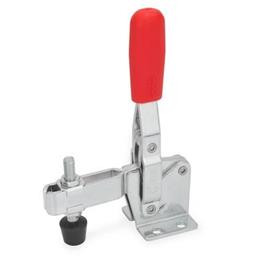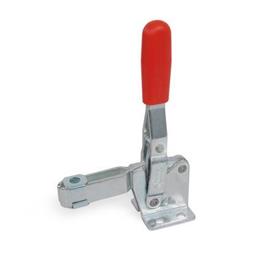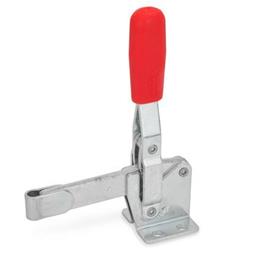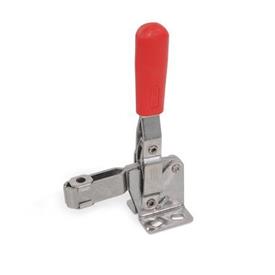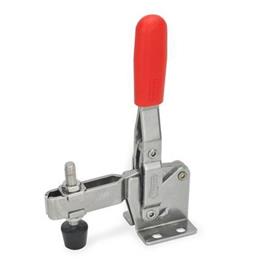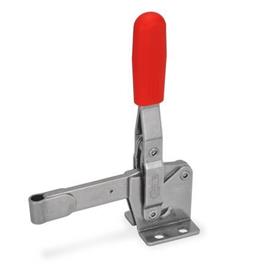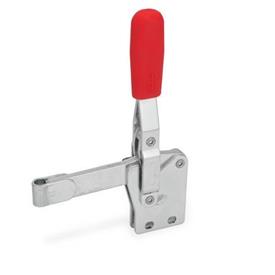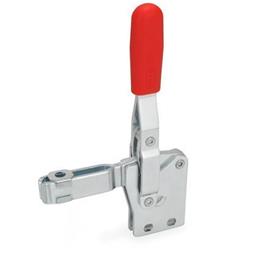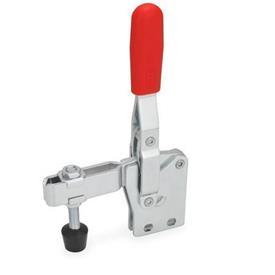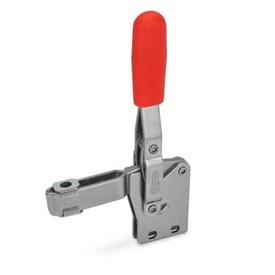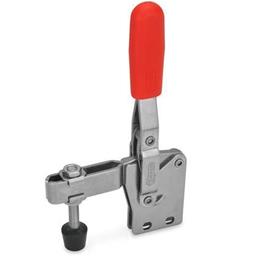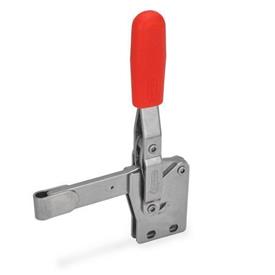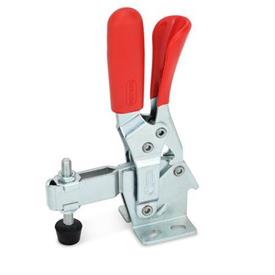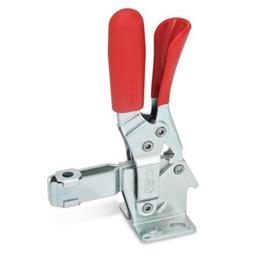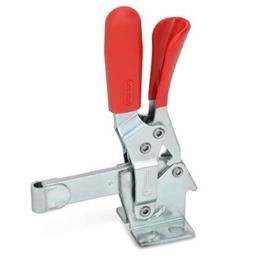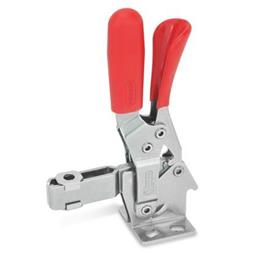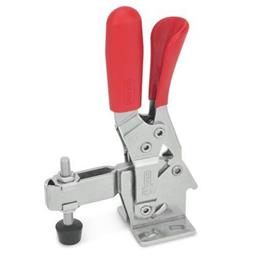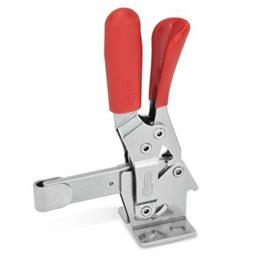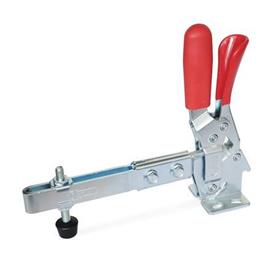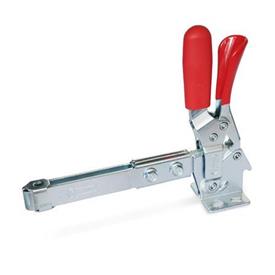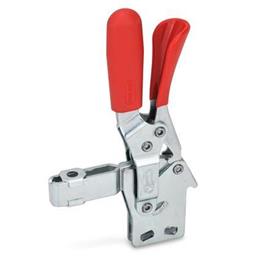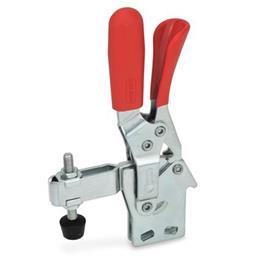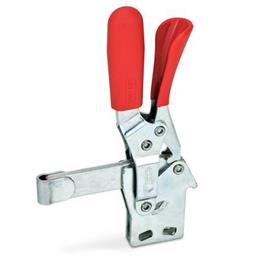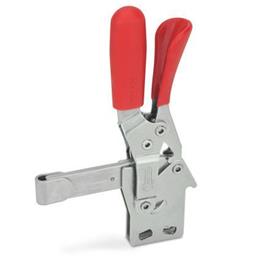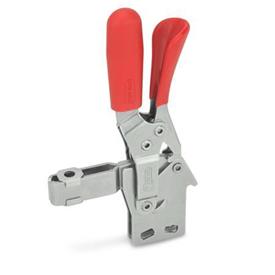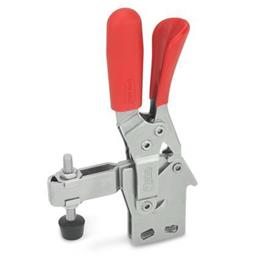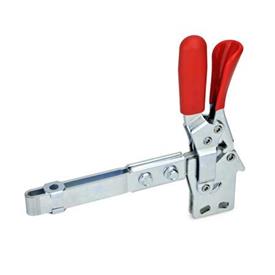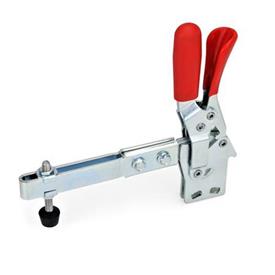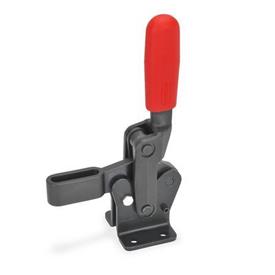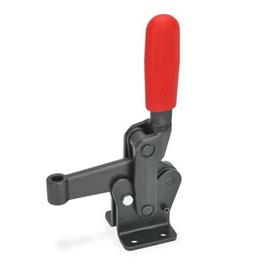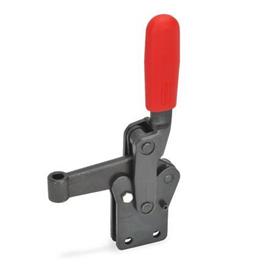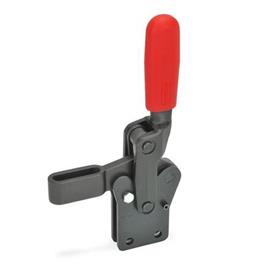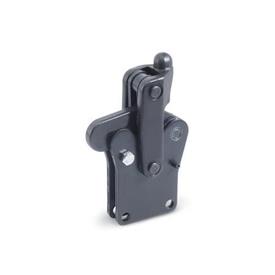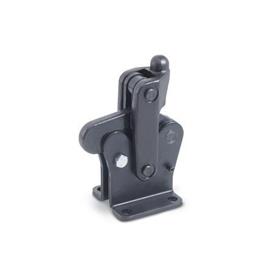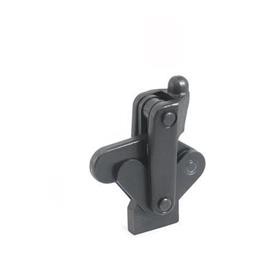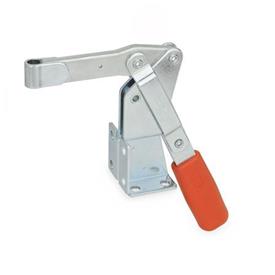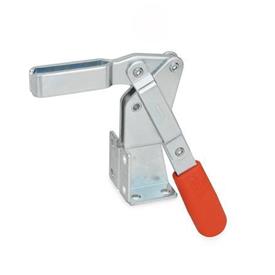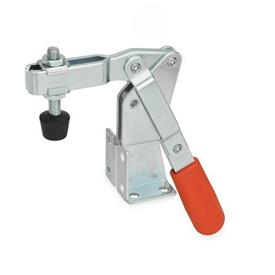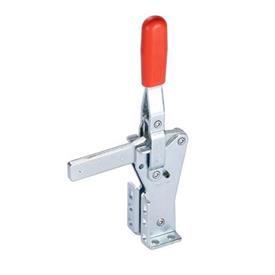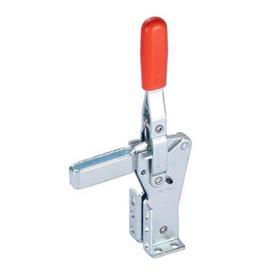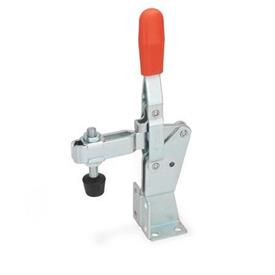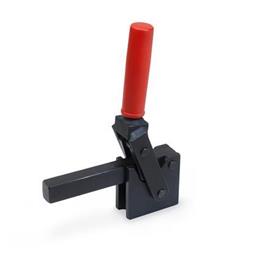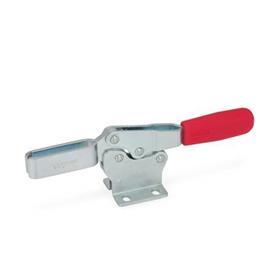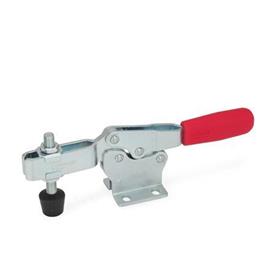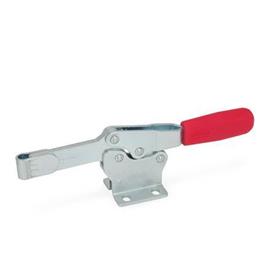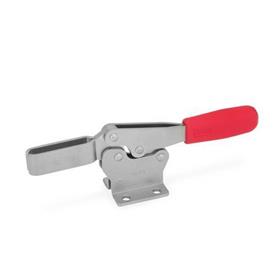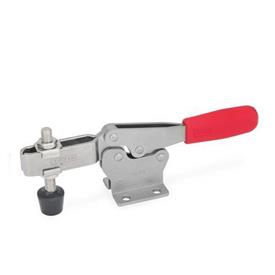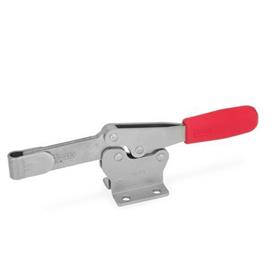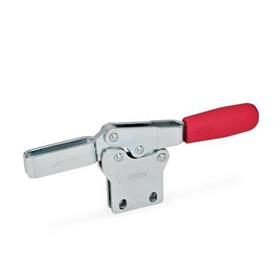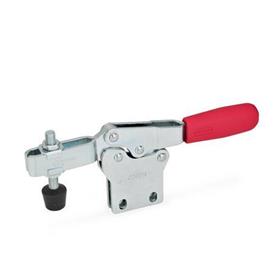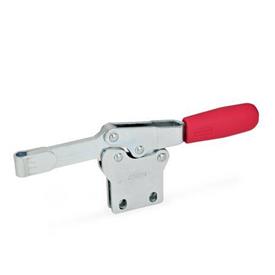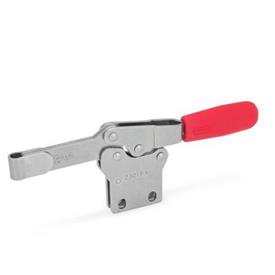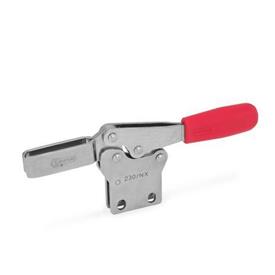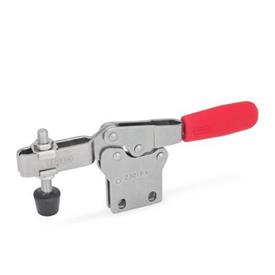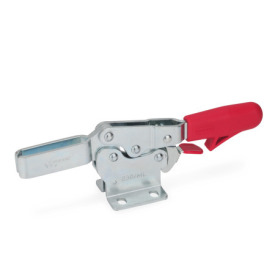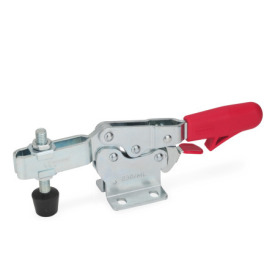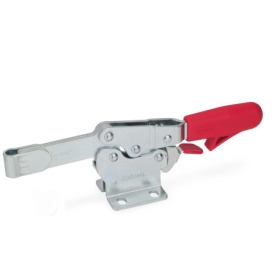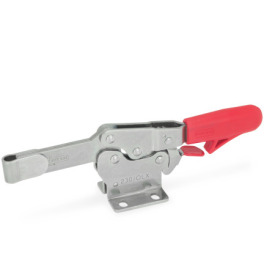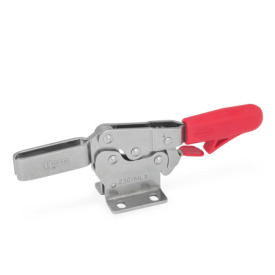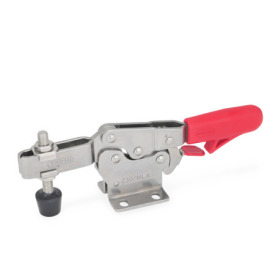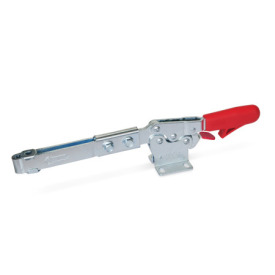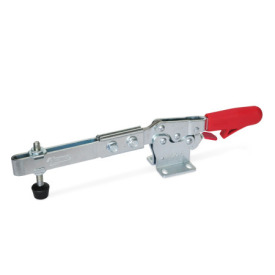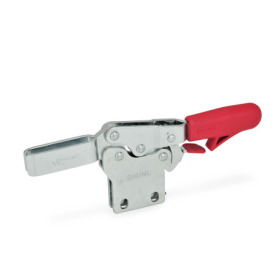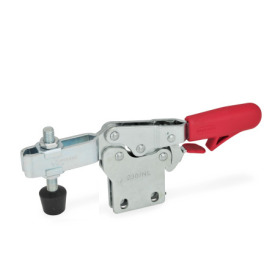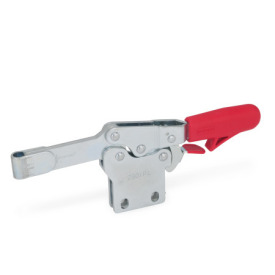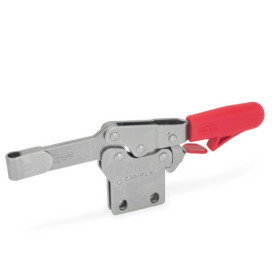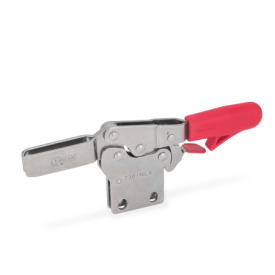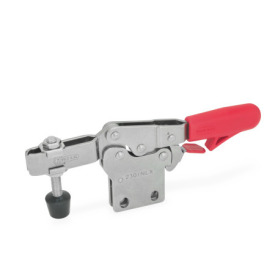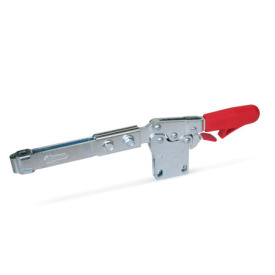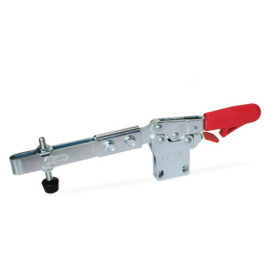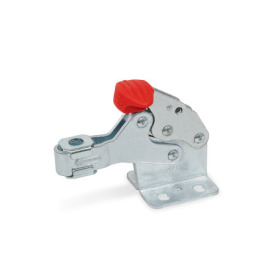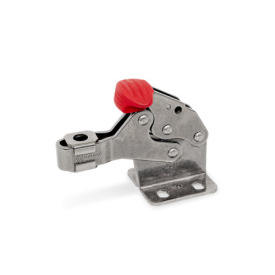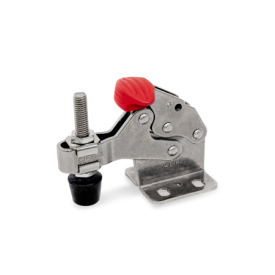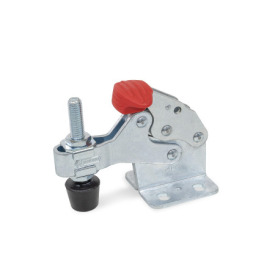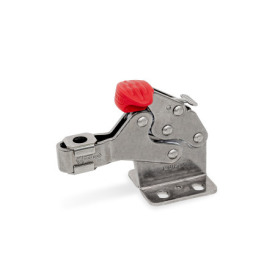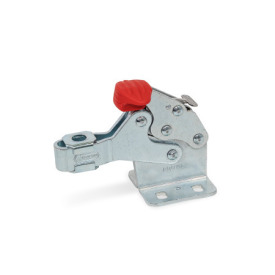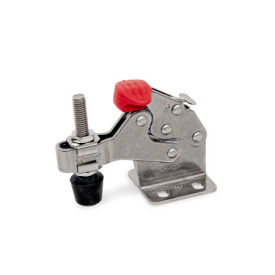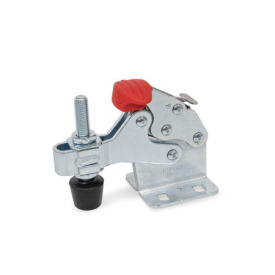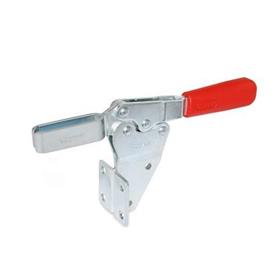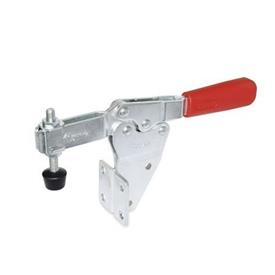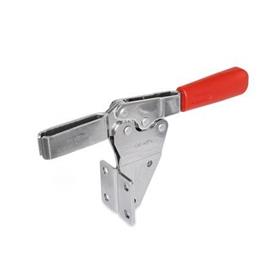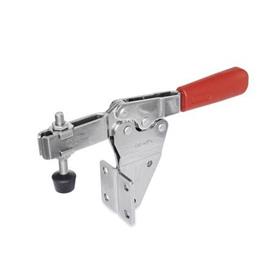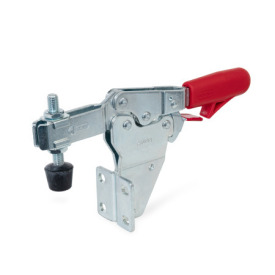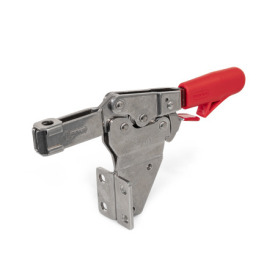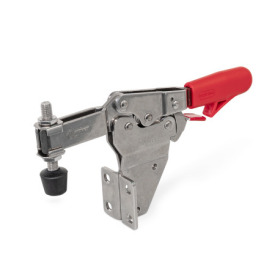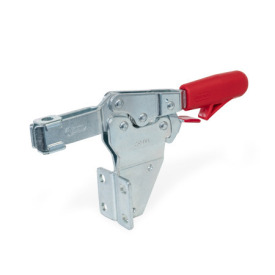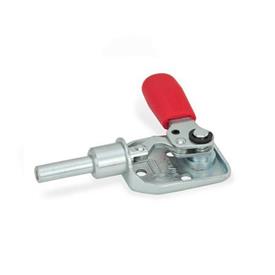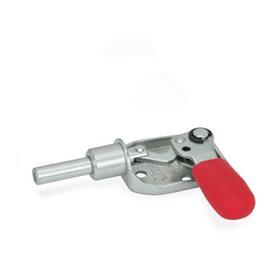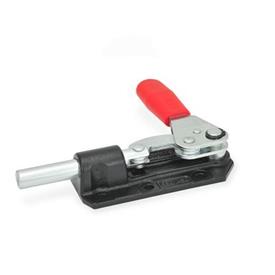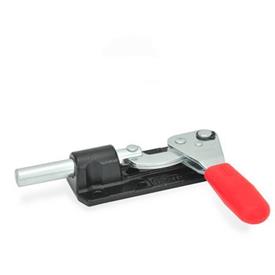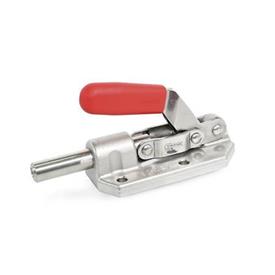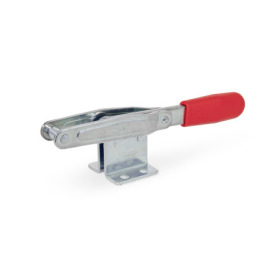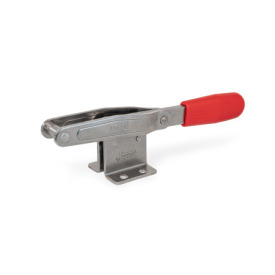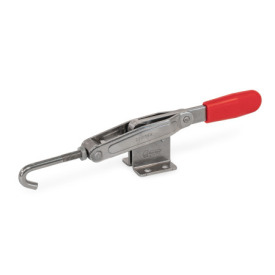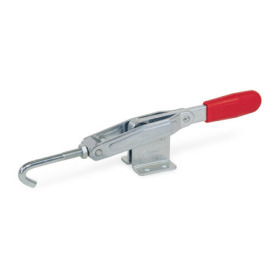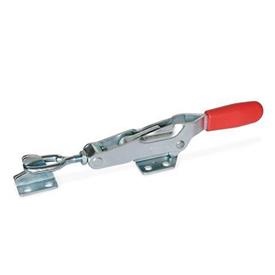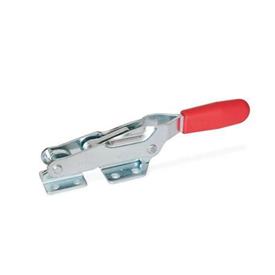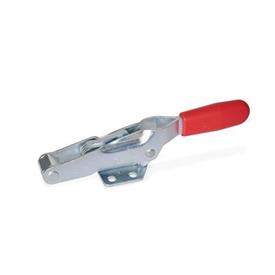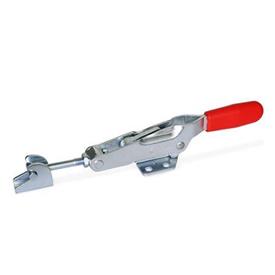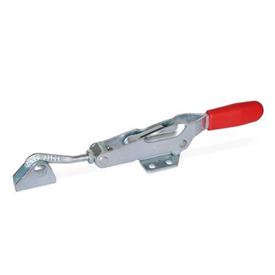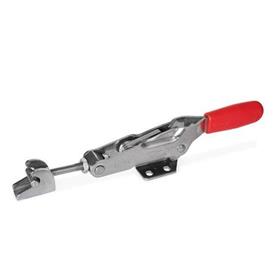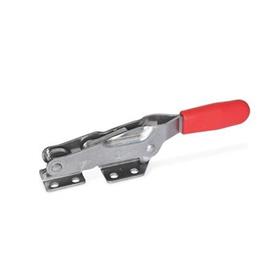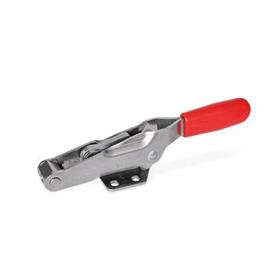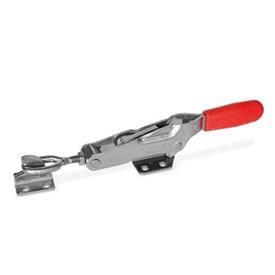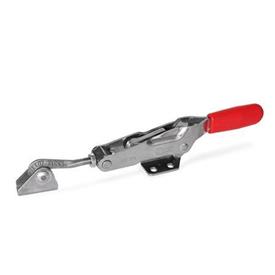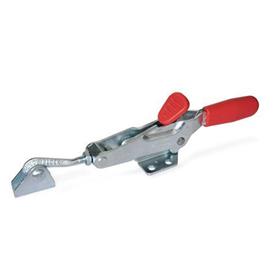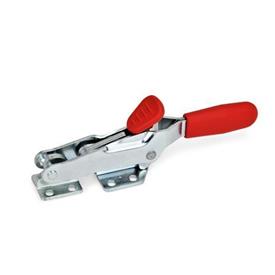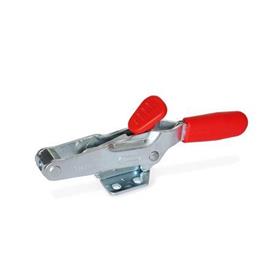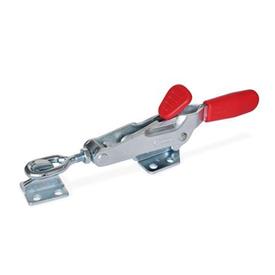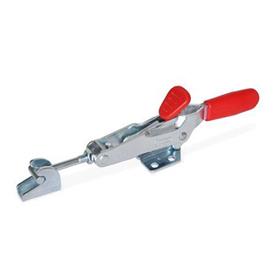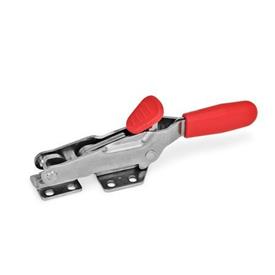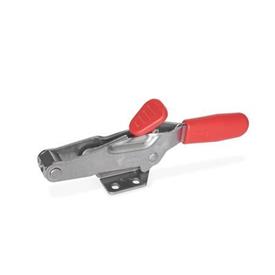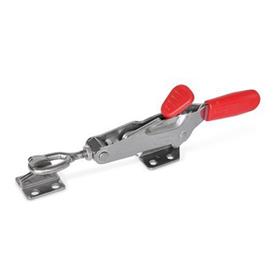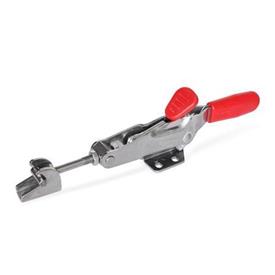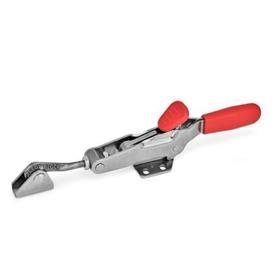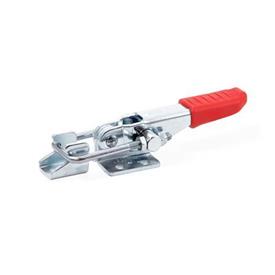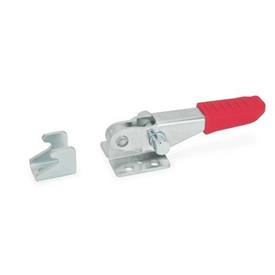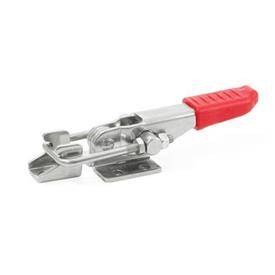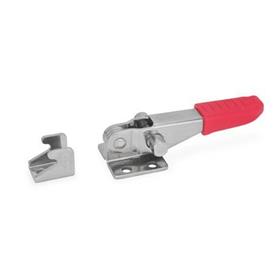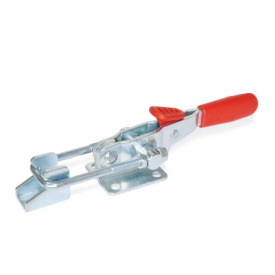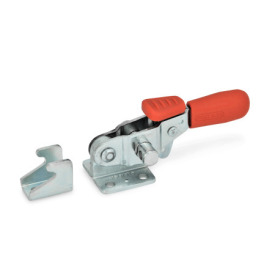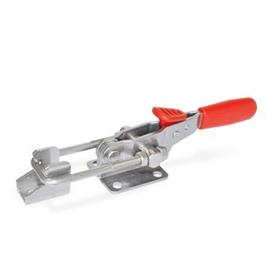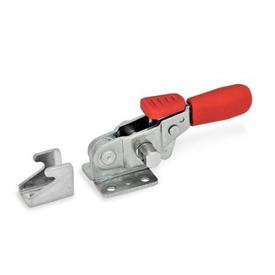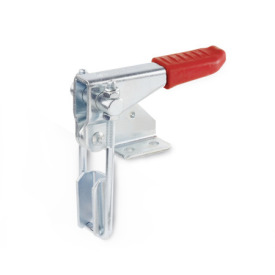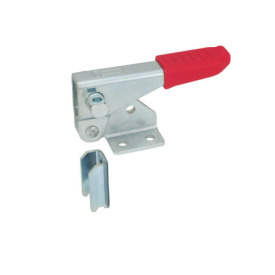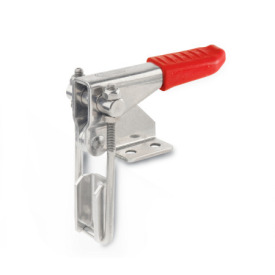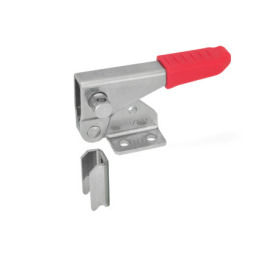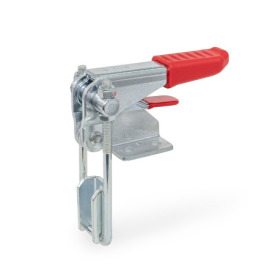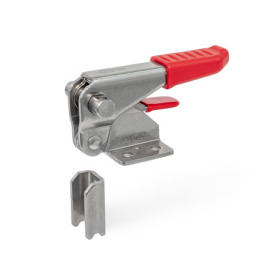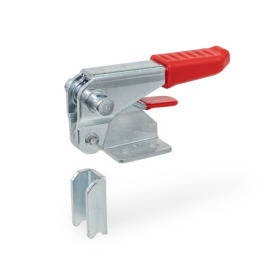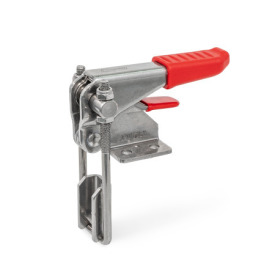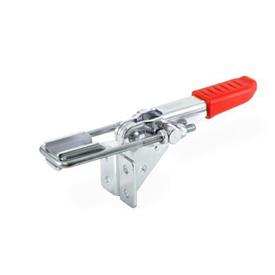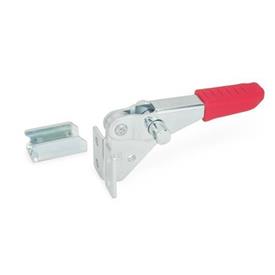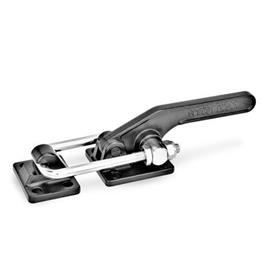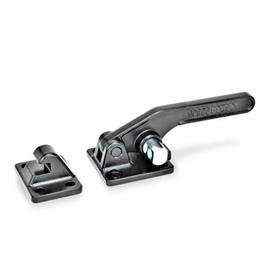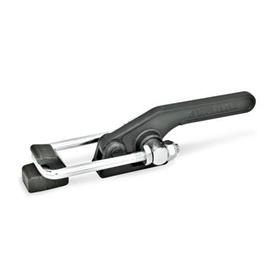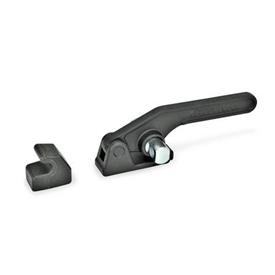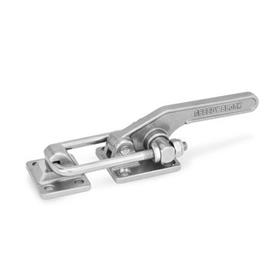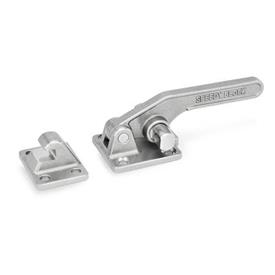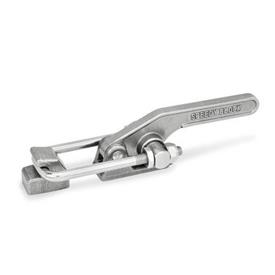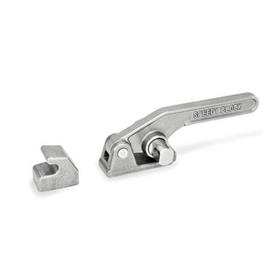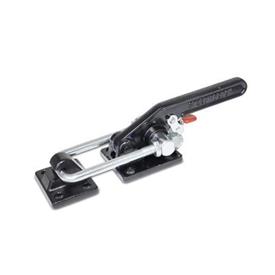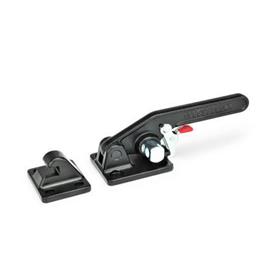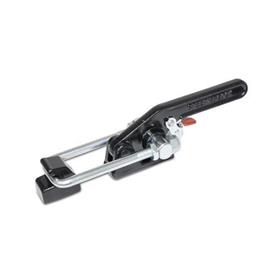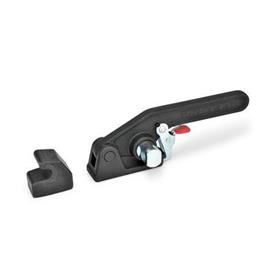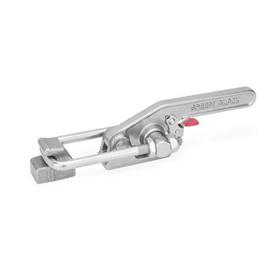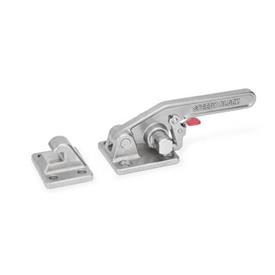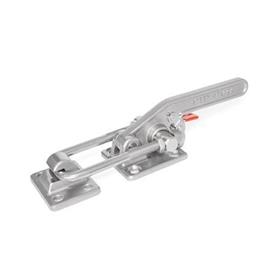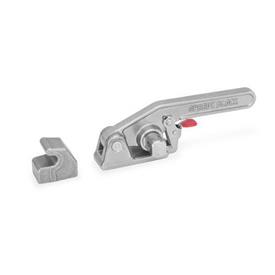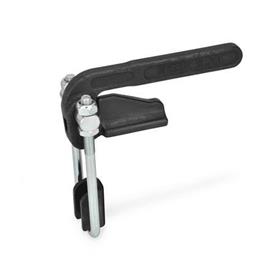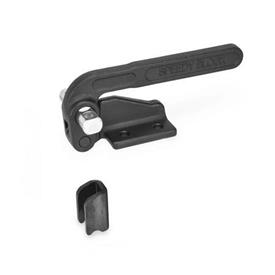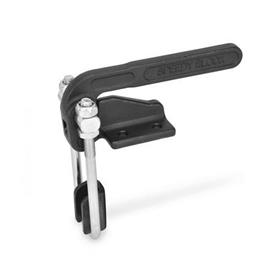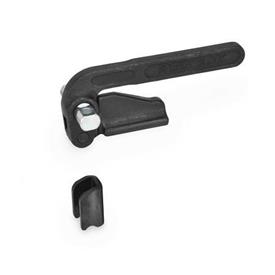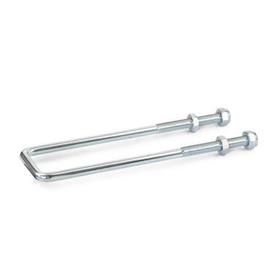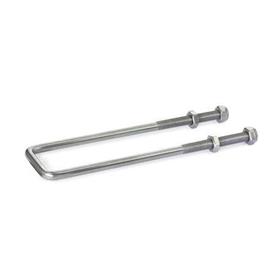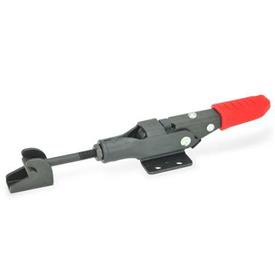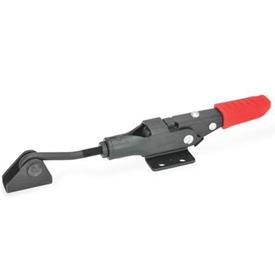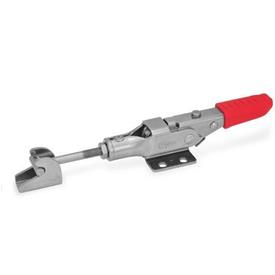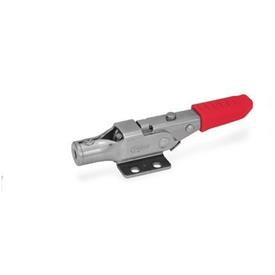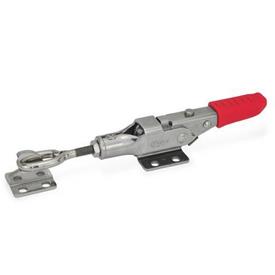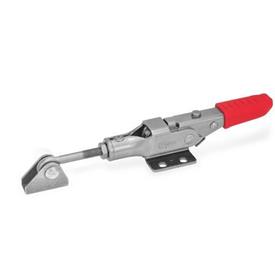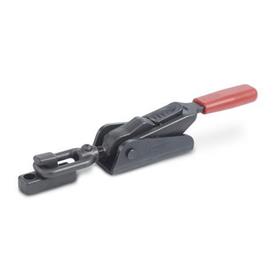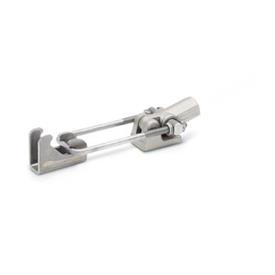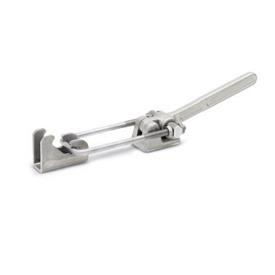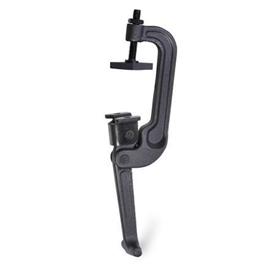
Los cepos de palanca se usan en la construcción de máquinas y en la industria para sujetar o cerrar de forma segura partes móviles.
Estas piezas normalizadas son sistemas de sujeción de accionamiento manual que funcionan típicamente conforme al principio de la palanca y también se conocen como bridas de palanca.
Los cepos de palanca consisten en una palanca que acciona un cepo mediante un mecanismo de palanca. Cuando se acciona, el amplio movimiento de la palanca de accionamiento se traduce en un pequeño movimiento del cepo. Este movimiento supera el centro muerto de la palanca, lo que causa que el cepo se cierre de forma segura en su sitio. Así la pieza de trabajo queda sujeta rápidamente en su posición con una gran fuerza. La fuerza de sujeción es un valor característico de todo cepo de palanca. Depende del tamaño del cepo y de la posición del tornillo de sujeción del cepo.
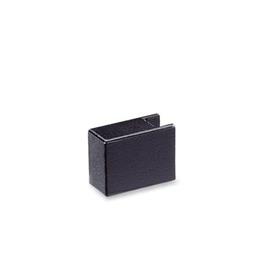
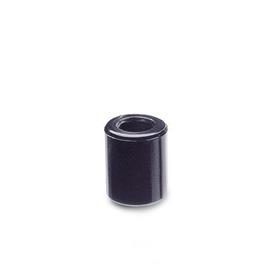
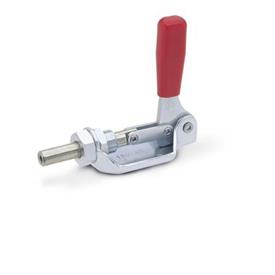
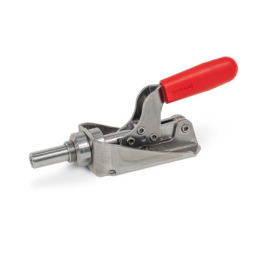
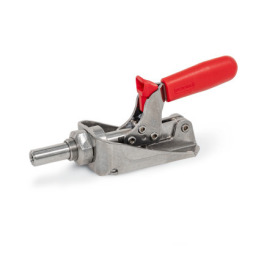
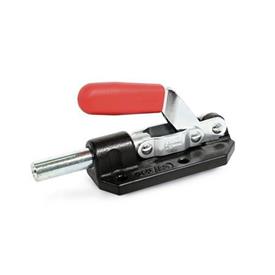
Los cepos de palanca se suelen usar en mesas de soldadura manual, por ejemplo, para sujetar piezas de trabajo individuales. También se encuentran en incontables aplicaciones industriales. Un uso típico de los cepos de palanca de tipo pestaña es la sujeción de tapas de recipientes y cubiertas similares.
Ganter ofrece versiones de este elemento normalizado en cuatro grupos principales:
Ganter ofrece una gran selección de estos elementos normalizados. Hay disponible un cepo adecuado para casi cualquier aplicación. Además de diseños con varias formas, Ganter también ofrece versiones especialmente robustas de "vida prolongada". Estas son particularmente apropiadas para ciclos de sujeción frecuentes, como en la producción en serie.
Toggle clamps are particularly suitable for applications where workpiece-specific or recurring fixing and clamping operations must be carried out quickly, safely, and with minimal effort. Typical areas of application are in mechanical engineering, plant construction, and automation technology, where workpieces, lids, or covers need to be positioned or closed reliably and reproducibly.
The knee lever principle in toggle clamps is based on a special lever mechanism: An operating lever moves the component to be clamped by way of a joint system and a clamping arm. As soon as the operating lever slightly exceeds the dead point, a positive connection with high clamping force is created. In this state, the geometry of the levers prevents the clamping arm from opening unintentionally. This keeps the workpiece or component securely fastened until the user releases the toggle clamp again. The release is achieved by tilting the operating lever back beyond dead point, which can be done with minimal effort.
This principle ensures that high levels of sustained force are not required during clamping. After passing the dead point, the toggle clamp maintains the clamping force on its own – without any re-tightening. This allows you to fix, loosen, or repeatedly clamp workpieces, lids, or covers in a time-saving and reliable manner, without any fatigue or uncertainty in the process.
Ganter offers toggle clamps in a very wide range of sizes and designs. This allows you to choose a suitable solution for almost any installation situation in machine or plant construction, or in automation technology. Different designs enable targeted use in terms of space requirements, operating direction, and mechanical requirements.
Toggle clamps are available in three main designs: Vertical clamps, horizontal clamps, and push-pull type toggle clamps. The difference lies primarily in the movement of the tension lever and the resulting clamping process.
Vertical clamps enable space-saving work when there is sufficient space above the part to be clamped.
Horizontal clamps are especially well suited to situations in which there is little space available for installation from above. This facilitates use in confined installation locations, such as machine enclosures or automated handling devices.
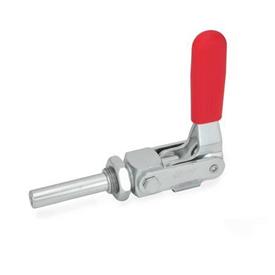
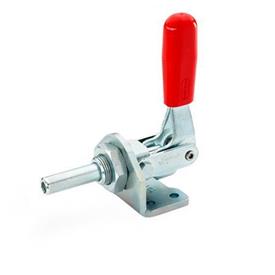
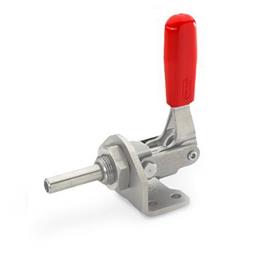
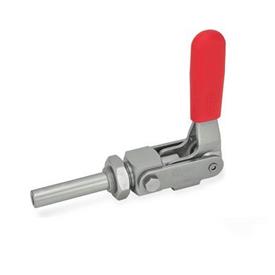
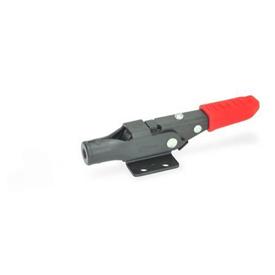
Push-pull type toggle clamps are ideal when axial clamping forces are required, for applications such as precisely clamping or tightening lids, covers, or components. This allows you to flexibly secure a wide variety of geometries while always applying uniform, controlled clamping force. This increases process reliability and facilitates fluctuating assembly tasks.
Longlife toggle clamps such as types GN 810.10 (with horizontal foot) and GN 810.11 (with vertical foot) differ from standard versions in that they are particularly robust. This applies to both the choice of materials and the design of the knee lever mechanism. The use of reinforced components and targeted design optimizations ensures a significantly longer service life and greater functional reliability in continuous use. This allows you to use Longlife toggle clamps specifically in applications where the clamping systems are operated frequently and over long periods of time – such as in production lines, assembly fixtures, or automated clamping processes.
Toggle clamps and latch type toggle clamps are both used for quick and secure fastening or for locking movable components in machine and plant construction. The main difference lies in their respective operating principles and typical areas of application.
Operating principle:
Type:
Toggle clamps – such as ones with vertical or horizontal operating levers – allow you to secure workpieces, parts, or components quickly and conveniently for machining or manufacturing processes. This allows you to speed up workflows and increase precision when clamping, such as when inserting parts into fixtures.
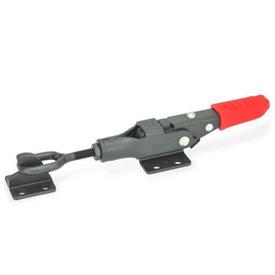
Latch type toggle clamps such as GN 850 or GN 851 are always used where you need to securely close movable components such as lids or doors and lock them in the closed position. This prevents unintentional opening during operation and increases safety for users and equipment.
With toggle clamps from the Ganter range, you can easily and precisely adjust the clamping force by adjusting the pressure bolt or the clamping arm. The central search term “toggle clamp” refers here to all knee lever clamps in which the contact pressure can be varied individually without special tools or major assembly work.
Most toggle clamps – such as GN 810, GN 820, GN 840, or GN 850 – have a threaded bolt at the tip of the clamping arm (often with a pressure plate and nut included).
In this way, you can continuously adjust the clamping force to different workpiece heights and strengths. For example, this makes it possible to reduce stress on sensitive parts or – with generous tolerances – to maximize the working range of a toggle clamp. In such cases, it is not necessary to replace the toggle clamp; adjustments can be made directly on the toggle clamp in just a few simple steps.
In special versions such as latch type toggle clamps GN 850 or GN 853, the clamping force can usually also be adjusted using an adjustment option on the bracket or push rod.
Toggle clamps from Ganter can also be customized to meet specific customer requirements. Even the standard range offers a wide selection of different toggle clamps, such as vertical or horizontal toggle clamps, push-pull type toggle clamps, latch type toggle clamps, or special knee lever modules. This wide range to choose from allows for an application-optimized selection for a wide range of installation situations and operational requirements.
Ganter engineers tailor toggle clamps specifically to customer requirements for numerous projects in machine and plant construction.