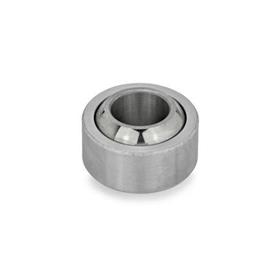
Ball Joint Head, Ball Joint

Ball joint heads, or simply ball joints, are mechanical standard parts. They generally serve to create flexible connections between two parts. Ball joint heads are frequently used in machine construction applications. Ganter ball joint heads according to DIN ISO 12240-4 transmit forces, provide flexibility and enable the transmission of force.

Where are ball joint heads and ball joints used?

Ball joint heads from Ganter are manufactured from high-quality materials. This makes these standard parts from Ganter wear-resistant, long-lasting and reliable. The following range of industries demonstrates their versatility: - Machine construction: Ball joints are used in various machine construction applications. - Heavy industry: Applications on cranes, conveyor belts and lifting systems to move heavy loads. - Agriculture: Ball joint heads are used in agricultural machinery and equipment such as tractors, combine harvesters and trailers. - Medical equipment: Ball joints are found in surgical instruments, medical devices and prostheses. - Electronics manufacturing: In electronics manufacturing, the operating elements are used in automation systems and robots to execute precise movements in the assembly of electronic components. - Automotive industry: In automotive production, the operating elements are used in steering linkages, suspensions and other components to enable steering and shock absorption.

What types of ball joint heads and ball joints does Ganter offer?

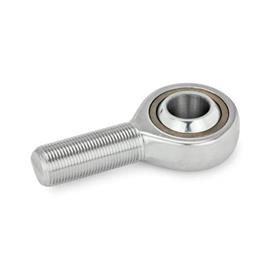
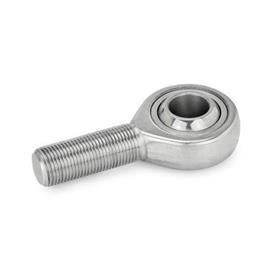
Ganter ball joint heads are available in Steel as well as highly resistant Stainless steel, with either internal or external thread. Ball joints are available in versions that can be lubricated or in maintenance-free versions. The following ball joint heads from Ganter correspond to DIN ISO 12240-4, series K (formerly DIN 648 K):
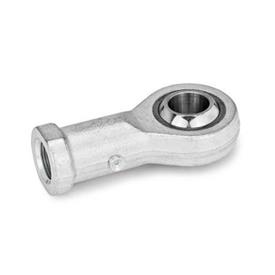
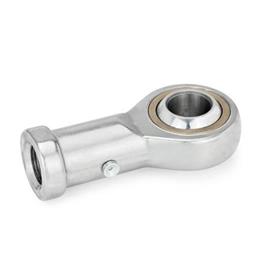
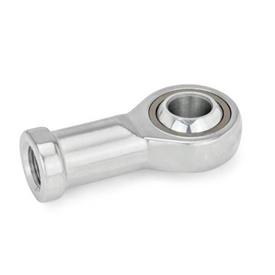
  • Ball joint heads with internal thread GN 648.1
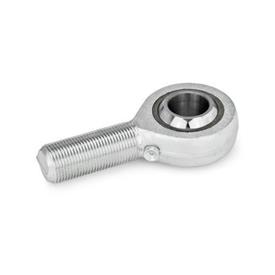
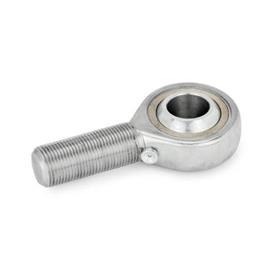
  • Ball joint heads with threaded bolt GN 648.2
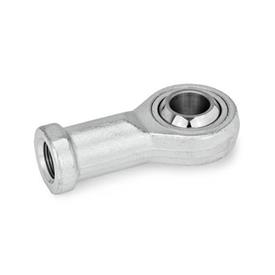
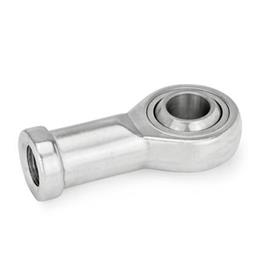
  • Ball joint heads with internal thread GN 648.5
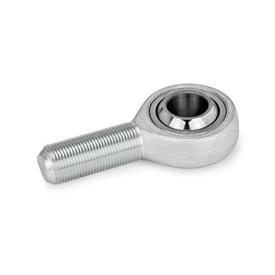
  • Ball joint heads with threaded bolt GN 648.6
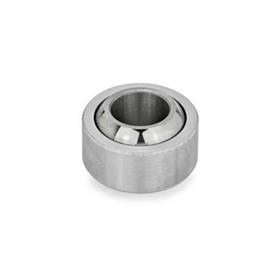
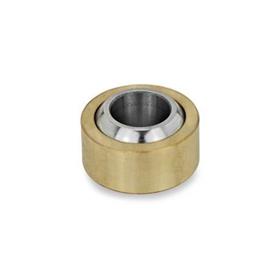
  • The following ball joints from Ganter correspond to DIN ISO 12240-1, series K:
  • Ball joints GN 648.8
  • Ball joints GN 648.9
  • Why choose ball joints from Ganter?

    FAQ - Frequently Asked Questions

    Filter products
    Material
    Thread (from - to) Thread
    Product Family

    Nothing found? Special requests

    FAQ - Frequently Asked Questions

    Which industries or applications are ball joint heads typically used in?

    Ganter ball joint heads are used wherever articulated connections with angle compensation are required. Typical areas of application include mechanical and plant engineering, heavy industry, agriculture, medical technology, electronics manufacturing, and automotive engineering. They allow designers and users to reliably transfer forces between components while simultaneously compensating for movements and misalignment.

    Applications for ball joint heads

    • General mechanical and plant engineering: For switching, positioning and adjusting mechanisms where movable coupling points with force transmission are required. This allows movements to be transferred to other machine parts in a controlled manner – ideal for complex guidance systems.
    • Heavy industry: In lifting or conveying systems, ball joint heads ensure a secure connection and compensation for forces under changing loads. This way, your structures will still be able to withstand heavy loads.
    • Agriculture: Ball joint heads on control and connecting links of agricultural machinery ensure reliable movement even in harsh environments. This allows them to operate safely even in dirt and dust.
    • Medical technology: In hospital beds, diagnostic, and treatment devices, ball joint heads provide secure, articulated connections with low friction. This makes adjustments especially convenient – without sacrificing hygiene.
    • Electronics manufacturing: Ball joint heads ensure precise positioning movements on assemblies such as gripper arms and automation units. This allows you to work flexibly and with high precision even when component positions keep changing.
    • Automotive engineering: In control and suspension elements, ball joint heads absorb vibrations and compensate for angular deviations. This increases reliability and safety in vehicle manufacturing.

    Suitable product versions for different requirements

    Ganter offers ball joint heads in various designs: made of steel or stainless steel, with internal threads (GN 648.1, GN 648.5) or screw connection (GN 648.2, GN 648.6), as well as ball joints made of both materials (GN 648.8, GN 648.9). This allows you to respond flexibly to industry-specific requirements and find the right solution for every environment.

    In practical terms, this means: You benefit from durable, low-maintenance connections that allow for easy movement and compensate for misalignment – whether in harsh industrial environments or sensitive high-tech applications.

    What types of ball joint heads does Ganter offer and how do they differ?

    Ganter offers several variants of ball joint head heads and ball joints as per DIN ISO 12240. The ball joint heads differ primarily in terms of material, connection type (internal thread or screw) and maintenance characteristics. This allows you to specifically select the right product for applications in mechanical engineering, automation, or plant engineering.

    Overview of ball joint head variants

    • GN 648.1: Ball joint head heads with internal thread, steel, as per DIN ISO 12240-4, series K
    • GN 648.2: Ball joint head heads with screw, steel, as per DIN ISO 12240-4, series K
    • GN 648.5: Ball joint head heads with internal thread, stainless steel, as per DIN ISO 12240-4, series K
    • GN 648.6: Ball joint head heads with screw, stainless steel, as per DIN ISO 12240-4, series K
    • GN 648.8: Ball joint, steel, as per DIN ISO 12240-1, series K
    • GN 648.9: Ball joint, stainless steel, as per DIN ISO 12240-1, series K

    Differences and possible applications

    The main difference lies in the material: Versions made of steel (GN 648.1, GN 648.2, and GN 648.8) are robust and suitable for standard applications in mechanical engineering. Stainless steel versions (GN 648.5, GN 648.6, and GN 648.9) boast impressive corrosion resistance, which makes them ideal for use in damp environments or outdoors.

    For the connection type, you can choose between internal thread (GN 648.1 and GN 648.5) and screw connection (GN 648.2 and GN 648.6). The internal thread allows for flexible screw connections to a wide variety of components. The screw version facilitates quick installation if a hole is already present. Ball joints (GN 648.8 and GN 648.9) are always used when the connection is custom made and the angular compensation itself is the most important factor.

    What materials are used for ball joint heads and what advantages do they offer?

    Ganter ball joint heads are available in steel and stainless steel versions, depending on the requirements and area of application. This allows you to specifically select the material that suits your application and immediately benefit from the respective material advantages.

    Materials used in Ganter ball joint heads

    • Steel: High-quality steel is used in GN 648.1 (internal thread), GN 648.2 (with screw) and GN 648.8 (ball joint).
    • Stainless steel: GN 648.5 (internal thread), GN 648.6 (with screw), and GN 648.9 (ball joint) are made of stainless steel AISI 431 (grade 1).

    Advantages of the individual materials

    • Steel: Steel ball joint heads are robust and offer high mechanical strength. They are especially well suited for applications under dynamic loads in mechanical engineering or heavy industry where corrosion resistance is not the primary concern. This allows you to achieve reliable force transmission and safe angle compensation even under harsh operating conditions.
    • Stainless steel: Stainless steel ball joint heads set themselves apart through their high corrosion resistance. They are ideal for use in humid or aggressive environments, such as in food technology, medical technology, or the chemical industry. This allows you to avoid downtime due to corrosion and achieve a low-maintenance connection in the long term, even under demanding conditions.

    Practical aspects: How do you benefit from the choice of materials?

    By choosing steel or stainless steel for your Ganter ball joint heads, you can precisely adapt the component to the operating environment. This increases operational reliability, extends the service life of the connecting elements, and allows you to react flexibly to fluctuating environmental conditions. For example, a steel ball joint head can be used efficiently in a dry manufacturing environment, while a stainless steel ball joint head offers advantages when hygiene or corrosion protection are paramount.

    What thread types are available for ball joint heads?

    Ganter ball joint heads offer a choice of threaded versions with internal thread or with pre-mounted screw (external thread). This allows you to select the connection that best suits your specific assembly or installation situation and enjoy maximum flexibility in your design.

    Thread types available for Ganter ball joint heads

    • Internal thread: Suitable when a screw connection with an external thread is required. The Ganter webshop offers internal threads from M5 to M30, available as right-hand or left-hand threads. You can find this version under GN 648.1 (steel) and GN 648.5 (stainless steel).
    • External thread via fixed screw: Ideal if the connection is made via an internal thread or if assembly needs to be especially quick. External threads from M5 to M30 are available, either as right-hand or left-hand threads. These versions are offered by the types GN 648.2 (steel) and GN 648.6 (stainless steel).

    Practical benefits for your application

    By choosing between internal and external threads, you can tailor ball joint heads precisely to the design conditions at hand. This saves time and makes it easy to integrate Ganter ball joint heads into a wide variety of machine and plant components. You are able to respond flexibly to assembly requirements – such as limited installation space or connections with a specific orientation.

    Selection guidelines for thread types on ball joint heads

    • For classic screw connections with external threads, the internal thread variant is recommended (GN 648.1 or GN 648.5, depending on material requirements).
    • If you want to equip the mating part with an internal thread or prefer direct screw mounting, use the variants with pre-mounted screws (GN 648.2 or GN 648.6).

    This ensures optimal adaptation to all common connection and mounting solutions in mechanical and plant engineering.

    How can you select the appropriate size and design of ball joint heads for a specific application?

    To select the appropriate size and design of ball joint heads for a specific application, first check the mechanical requirements and environmental conditions of your project. Ball joint head heads from Ganter – such as GN 648.1 (steel, internal thread), GN 648.2 (steel, with screw), GN 648.5 (stainless steel, internal thread), GN 648.6 (stainless steel, with screw), GN 648.8 (ball joint, steel), and GN 648.9 (ball joint, stainless steel) – are available in various sizes and designs and are engineered to transmit forces safely and flexibly, even under angular compensation. Selection should be guided by a number of practically relevant criteria.

    Selection criteria for ball joint heads and ball joints

    • Size and connection type: Select the dimensions and connection thread (M5 - M 30, right-hand thread or left-hand thread) to suit the available installation space and the connection to the mating component. Ganter ball joint heads have a mounting hole with an H7 fit of 5 to 30 mm. Variants with internal threads (e.g. GN 648.1, GN 648.5) or screw (e.g. GN 648.2, GN 648.6) enable flexible assembly solutions.
    • Material: Stainless steel (GN 648.5, GN 648.6, GN 648.9) is recommended when corrosion resistance is required. For standard applications in dry environments, the steel version is usually sufficient.
    • Lubrication concept: Choose between lubricatable or maintenance-free models, depending on whether regular maintenance is possible. Ball joint heads with maintenance-free PTFE bearing inserts simplify operation and save on maintenance costs.
    • Type of force transmission: Ball joint heads and ball joints offer reliable angle compensation for articulated connections with frequent changes of direction – ideal where misalignment forces or swiveling movements occur.

    What does this mean in practice?

    By selecting the right ball joint heads (such as GN 648.5, made of stainless steel, for when corrosion protection is a priority, or GN 648.2 with a threaded connection for tight installation spaces), you can tailor the connecting element precisely to your technical and operational requirements. This results in a durable, reliable solution for articulated machine connections and minimizes maintenance costs. This allows you to react flexibly in design and assembly and achieve convenient, reliable force transmission – ideal in confined installation spaces, varying loads, or tough environmental conditions.

    1. Check the connection type required (internal thread or screw).
    2. Decide whether corrosion resistance is crucial – if so, choose a stainless steel version.
    3. Determine the available installation space and choose the appropriate size.
    4. Decide whether a maintenance-free or lubricatable version makes the most sense.
    5. Use the technical drawings and dimension tables at Ganter to precisely match the dimensions.

    This will help you make an informed selection for your application in mechanical engineering, plant engineering, or any other industry where ball joint head heads and ball joints are required.

    What instructions are there for the assembly and installation of ball joint heads?

    The correct selection and proper installation are crucial for the assembly and installation of ball joint head heads from the Ganter product family. Ball joint head heads such as GN 648.1 (with internal thread, steel), GN 648.2 (with screw, steel), GN 648.5 (with internal thread, stainless steel), and GN 648.6 (with screw, stainless steel) enable an articulated connection of components while simultaneously compensating for angular movement. By selecting suitable threaded connections, the ball joint head can be securely attached directly to the attachment part or via a screw connection. This allows you to mount your assembly quickly and precisely — ideal for changing installation situations in machine or plant engineering.

    Important steps for assembling ball joint heads

    • Make sure that the thread used (internal or external thread) is suitable for the application and matches the mating part to ensure a tight, play-free connection.
    • For versions that allow relubrication (e.g. GN 648.1, GN 648.2), use the grease nipple: This allows you to easily reapply grease while the component is installed, ensuring reliable operation over the long term. In the case of maintenance-free stainless steel versions (e.g. GN 648.5, GN 648.6) this step is omitted.
    • Make sure to tighten the screws or nuts to the specified torque. This ensures secure clamping at the bearing point without damaging the components.
    • Align the ball joint head so that the maximum range of motion is maintained during operation. This allows optimal compensation for angular movement.
    • When integrating ball joints (GN 648.8, GN 648.9), make sure that the bearings are pressed or inserted into the housing without any play. This ensures a long service life and precise force transmission.
    • A PDF with further technical information is also available to help you select the appropriate ball joint head: More Information to Ball Joint Heads as well as Load Capacity

    What does this mean in practice?

    Proper installation of the ball joint heads not only improves the smoothness and durability of the connection, it also ensures that misalignment errors or movements are reliably absorbed during subsequent operation. This minimizes downtime caused by premature wear and tear and provides a robust, service-friendly solution – especially in continuous industrial use.

    Why should you buy ball joint heads from Ganter?

    Ganter ball joint head heads stand for superlative quality, technical expertise, and reliable availability. As a manufacturer with over 125 years of experience in the development and production of standard parts, Ganter offers solutions that are used worldwide in a wide variety of applications and industries.

    Your advantages at a glance:

    • High delivery availability: Around 98% of the product range is available directly from stock to ensure short delivery times.
    • Internationally established: With partners in more than 80 countries, Ganter ensures worldwide support and reliable supply chains.
    • Made in Germany: Development and production take place in accordance with the highest quality standards in Germany.
    • Sustainability and durability: For over 125 years, Ganter has stood for long-term thinking, responsible action, and continuous innovation.
    • Convenient procurement: All ball joint head heads can be ordered easily and conveniently via the Ganter webshop.
    • CAD data in reliable quality, available free of charge and as a direct download without registration.
    • Personal consultation on site: Our field service team is available to provide competent assistance if you need any help with the selection or implementation of your project. Further information and contact persons can be found on our Contact page.
    • Technical support: For technical questions regarding products, applications, or designs, our technical sales team will be happy to assist you at the phone number +49 7723 6507-259.

    When you choose Ganter, you’re choosing durable and precise solutions, as well as an experienced partner who will support you from the planning stage through to the completion of your project.

    Your contact

    You are looking for a Ganter partner near you?

    Ganter-Service

    Our service team is available from Monday to Friday between 7:30 AM and 5:00 PM:

    Request Callback