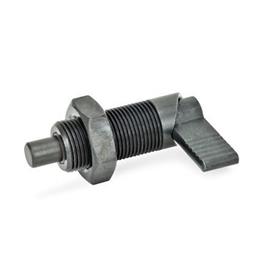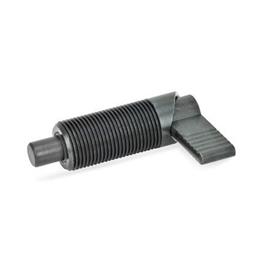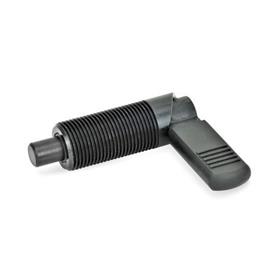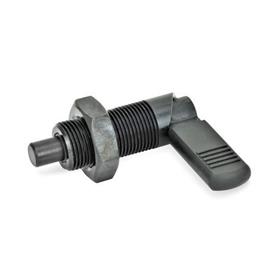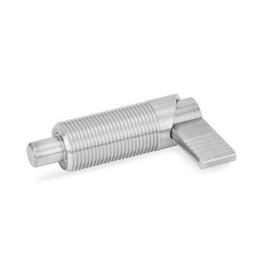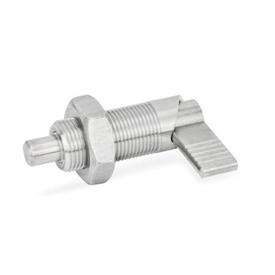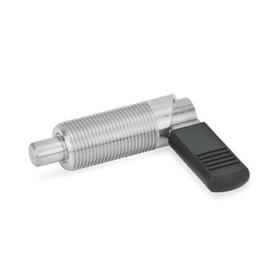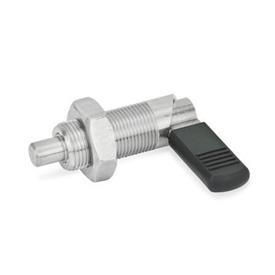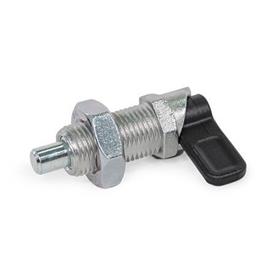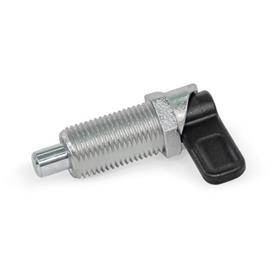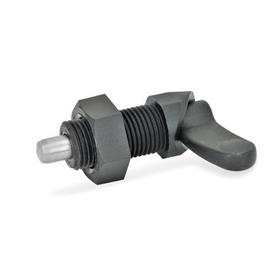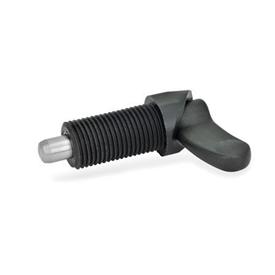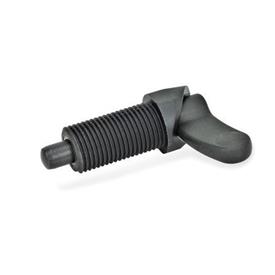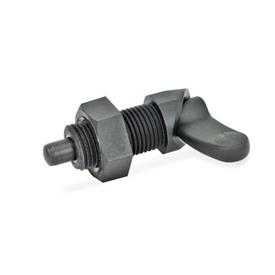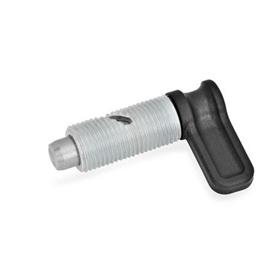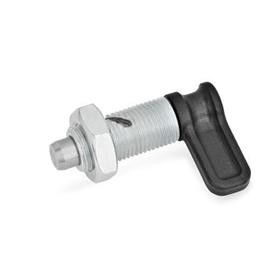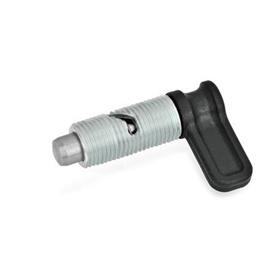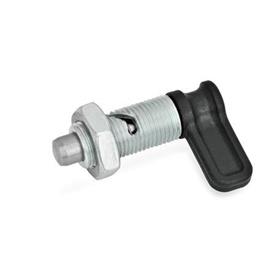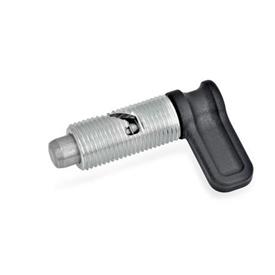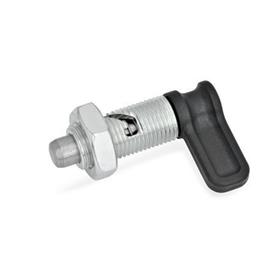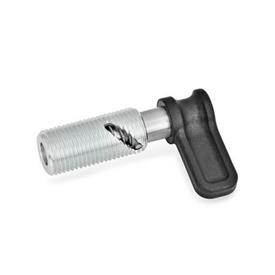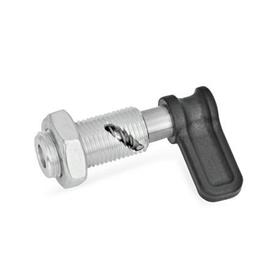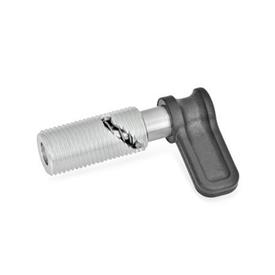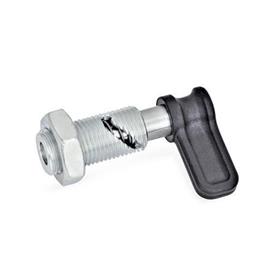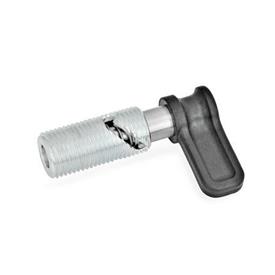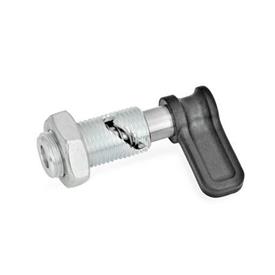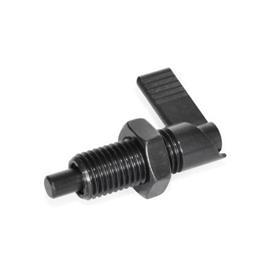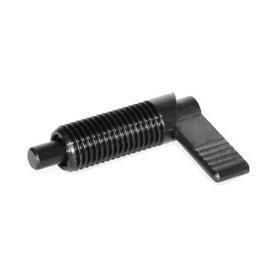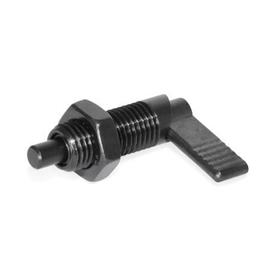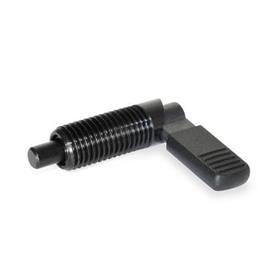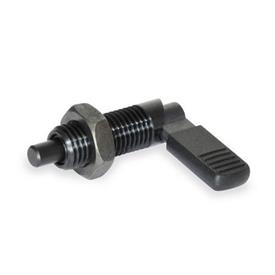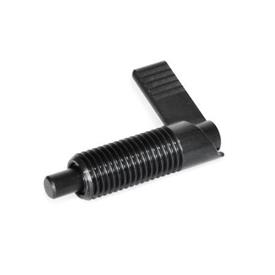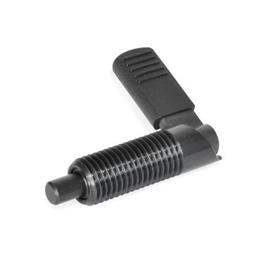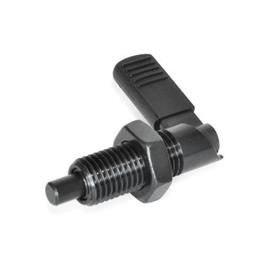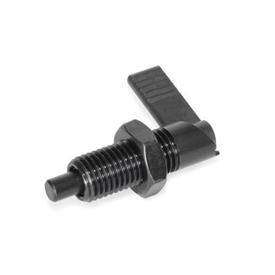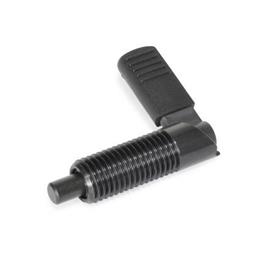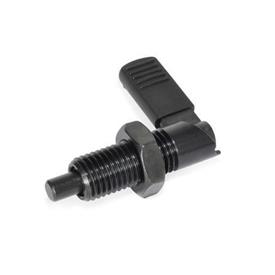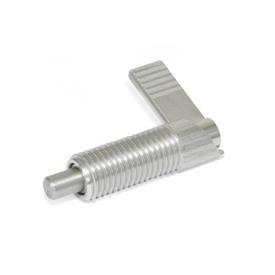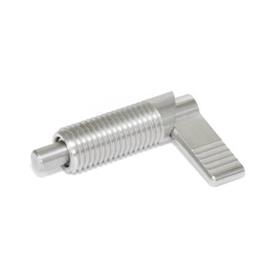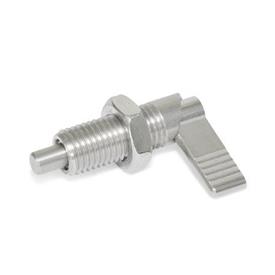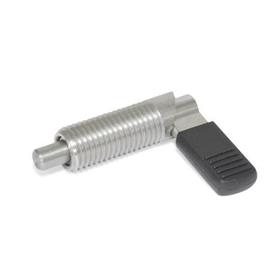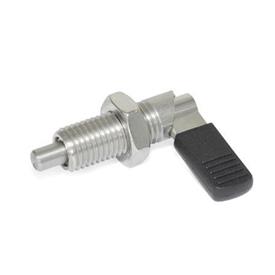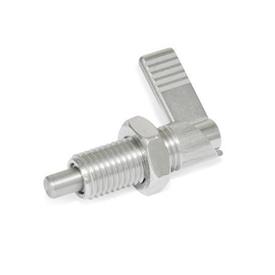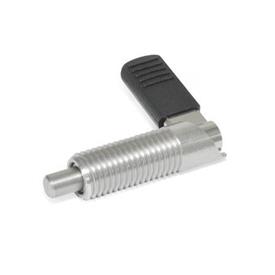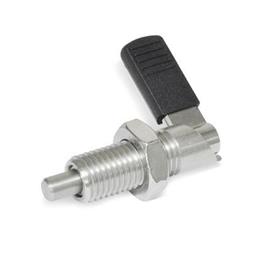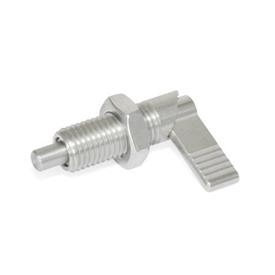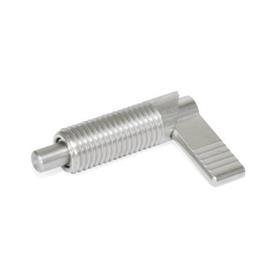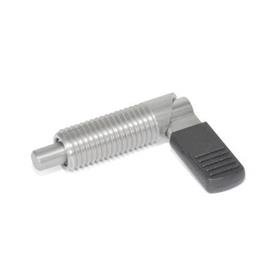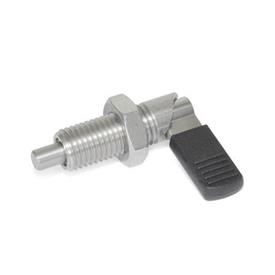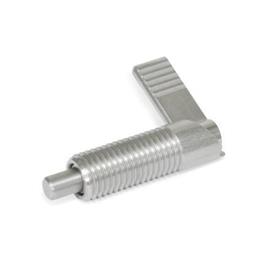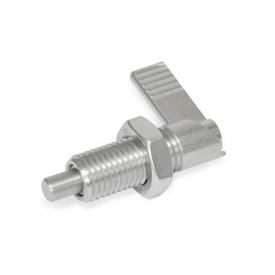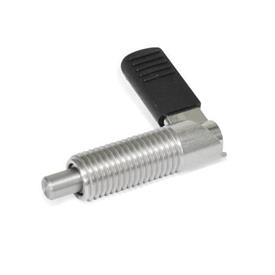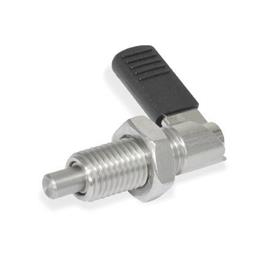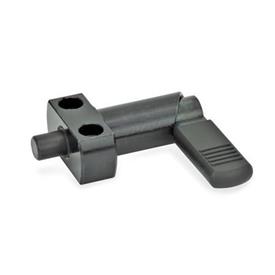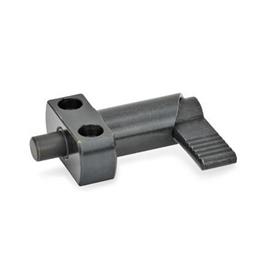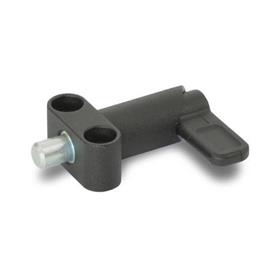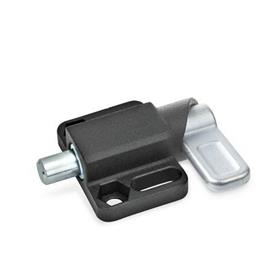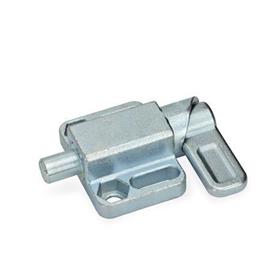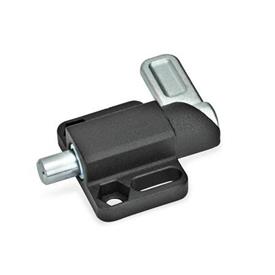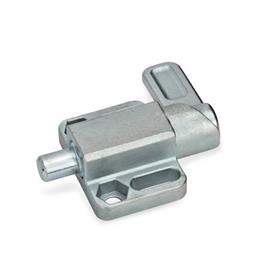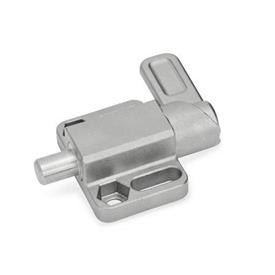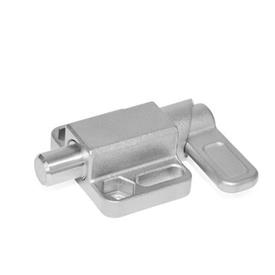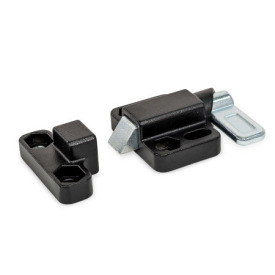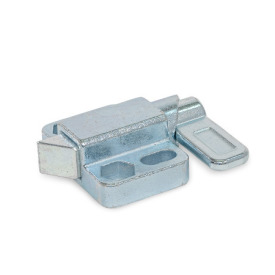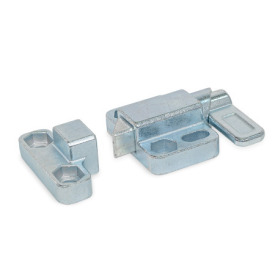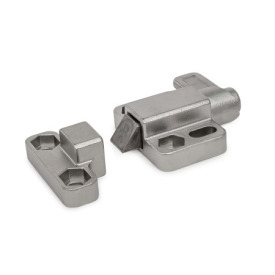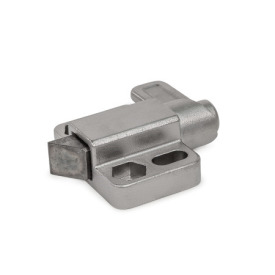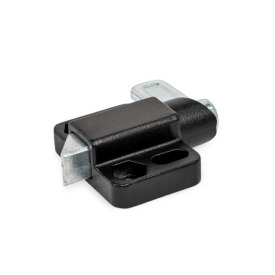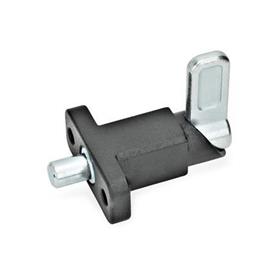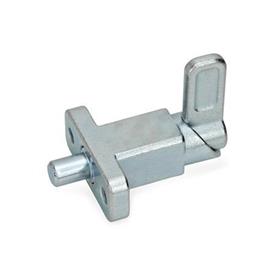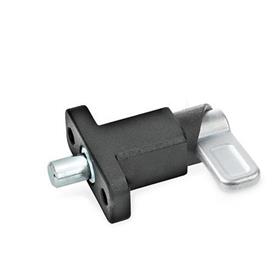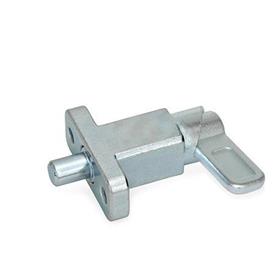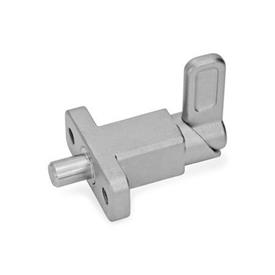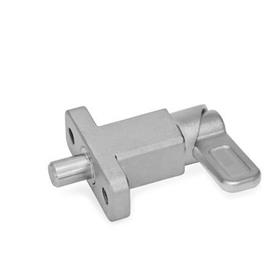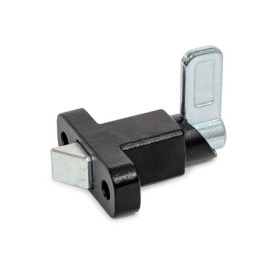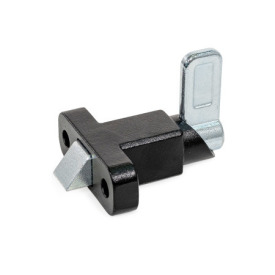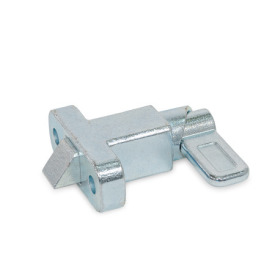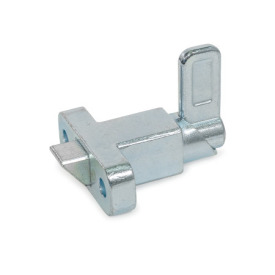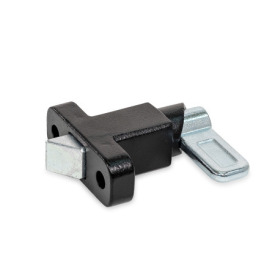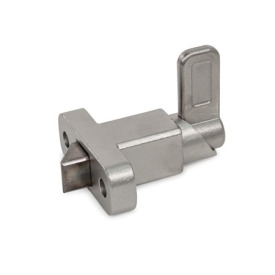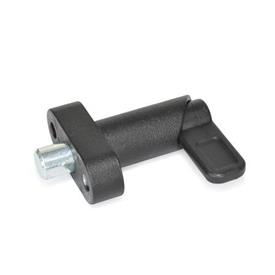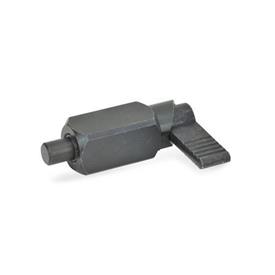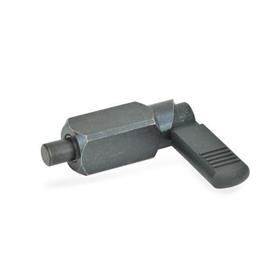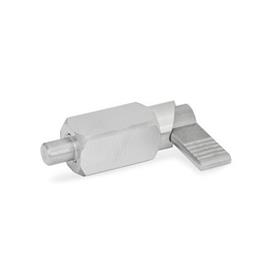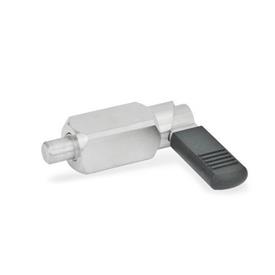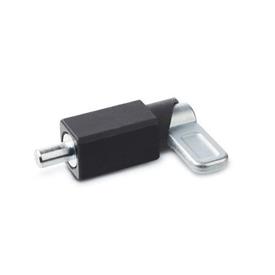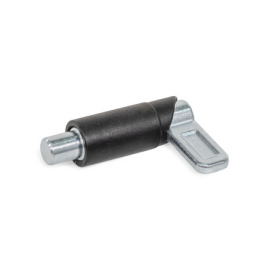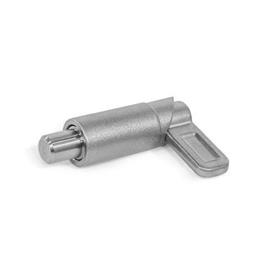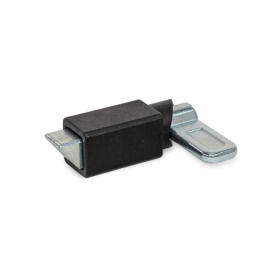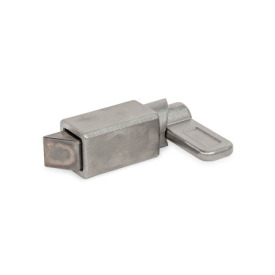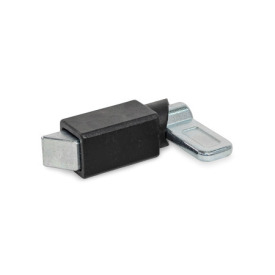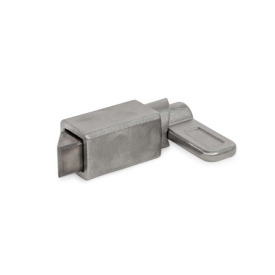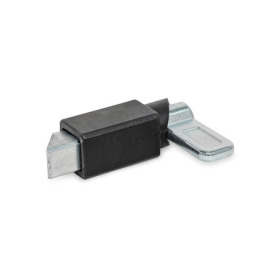
Le loquet à ressort se compose d'une broche avec poignée, d'un ressort hélicoïdal et d'un guide spécialement conçu. Le guide est incurvé du côté de la poignée et comporte une encoche de verrouillage à son extrémité.
Lorsqu'on lui fait subir une rotation avec le pouce et l'index, la poignée glisse le long de la courbe, en faisant automatiquement sortir la broche de centrage hors du guide. À l'extrémité, la poignée s'enclenche dans l'encoche, où elle est fermement maintenue en place. Le doigt d'indexage à came est particulièrement facile à déverrouiller : Une fois sortie de la rainure, la poignée glisse automatiquement dans sa position le long de la courbe, entraînée par le ressort. La pièce revient ainsi à sa position verrouillée.
Ganter propose une large gamme de cames de verrouillage. La gamme s'étend des loquets à ressort peu coûteux en plastique aux cames de verrouillage à usage intensif avec un guide micro-moulé. Outre un large choix de pièces standard en acier et en inox, Ganter peut également fabriquer des loquets à ressort en fonction des spécifications du client.
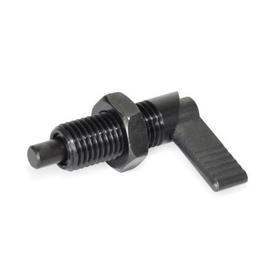
Cam action indexing plungers enable reliable locking and releasing of movable or adjustable machine parts with a simple twist of the lever. The spring-loaded mechanism ensures that the plunger pin automatically returns to the locking position after being released. This allows you to quickly and securely fasten or loosen components, which saves a significant amount of time, especially when frequent adjustments are required.
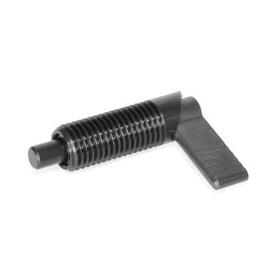
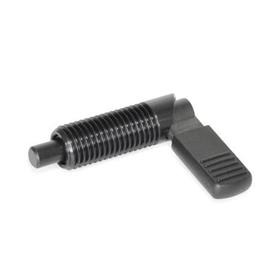
This allows maintenance work or readjustments during operation to be carried out conveniently and without tools.
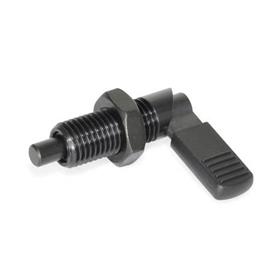
This allows you to organize your operational processes efficiently and respond flexibly to changing requirements.
In practice, cam action indexing plungers such as GN 612 (steel or stainless steel), GN 612.3 (for welding), GN 612.2/GN 612.10 (with fastening flange), or GN 672 (with plastic guide) are used wherever fast, repetitive locking is required under industrial conditions.
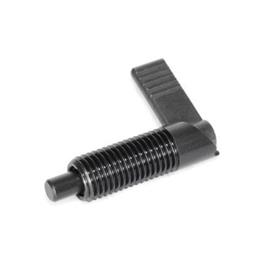
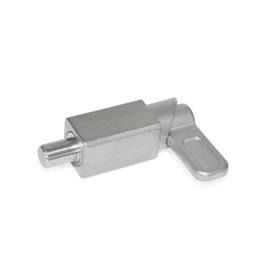
Cam action indexing plungers lock components in place by using a lever to rotate a plunger pin into a locking or release position. An integrated spring independently holds the plunger pin in the selected position or automatically returns it to the desired locking position when released. This ensures that the plunger pin is reliably engaged or disengaged without the need to apply constant force.
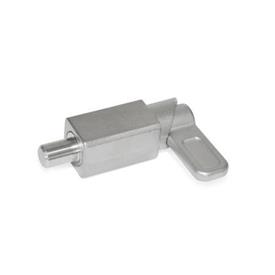
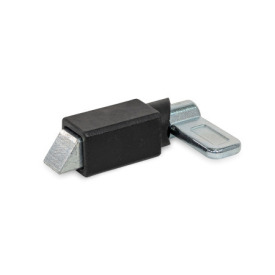
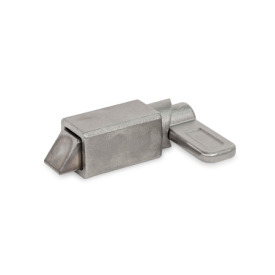
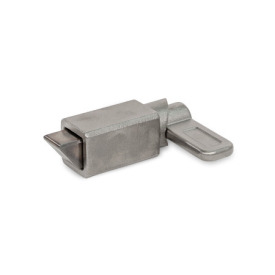
Locking or releasing can be performed quickly and without tools by briefly pressing the lever. In practice, this means that you can quickly engage, position, or secure components in machines or systems – ideal when frequent alterations or new setups are required.
A cam action indexing plunger works as a mechanical lever with a locking function: A plunger pin is extended or retracted by turning, with an integrated spring automatically returning the pin to the locked position. Conventional indexing plungers, on the other hand, are usually operated by pulling or pressing the knob. The operating lever and the rotating motion are typical features of the cam action indexing plunger.
Technical functionality of cam action indexing plungers in comparison with indexing plungers
Cam action indexing plungers and spring latches are available in various materials to enable flexible adaptation to different environmental conditions. Common materials include steel, stainless steel, zinc die casting, and plastic.
Cam action indexing plungers and spring latches are available in numerous sizes and designs. The range includes various lengths and diameters for plunger pins and housings, allowing you to select the dimensions that are right for your application. The selection ranges from compact variants for confined installation spaces to robust versions for large components. This makes it easy to determine the right size for different design requirements.
This wide range of sizes and designs allows you to tailor cam action indexing plungers precisely to the requirements of your machines and systems. The flexible choice of mounting options and materials enables safe and convenient integration – even in confined spaces or special environmental conditions. This allows you to quickly, precisely, and permanently fasten or lock components in place, making plant operation safer and more efficient.
There are various types of guides available for cam action indexing plungers. The most common variants include metal guides (e.g. precision cast) in various versions. Plastic guides, such as in the model GN 672, allow the plunger pin to move smoothly and reduce friction. This is a big advantage if you need low-maintenance, quiet locking devices, such as those often used in machine covers or protective devices. Metal guides, often made of steel or stainless steel, are especially well suited to high loads and demanding environments. They increase stability and enable use in areas with heightened mechanical stress or in aggressive media.
With the right type of guide, cam action indexing plungers can be specifically adapted to the application environment at hand. This allows you to conveniently and permanently ensure functions such as quick locking or secure fixation. Plastic guides reduce maintenance requirements, while metal guides maximize durability and load capacity.
Cam action indexing plungers are usually operated manually. The plunger pin is engaged or disengaged by turning or pulling an actuating lever by hand. An integrated spring automatically returns the pin to the locked position after release. This allows components to be locked or fixed quickly and securely. The lever position always clearly indicates whether the cam action indexing plunger is engaged.
This allows you to respond flexibly in mechanical and plant engineering: Components or protective covers can be securely locked and unlocked without tools or time-consuming additional assembly work. This is ideal for frequent changes in adjustment or maintenance tasks. This way, cam action indexing plungers can be integrated flexibly and reliably into a wide variety of applications.
Cam action indexing plungers from the Ganter range are available in many different variants and sizes. For special requirements, it is generally possible to customize the product to individual preferences, such as pin length, handle, surface treatment, or for special installation situations. Technical clarifications and feasibility assessments are carried out in close consultation with Ganter. You can therefore perfectly tailor cam action indexing plungers to your application. This allows you to implement design specifications that would not be possible with standard cam action indexing plungers.