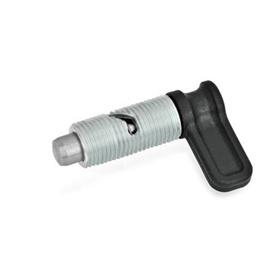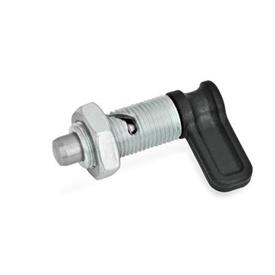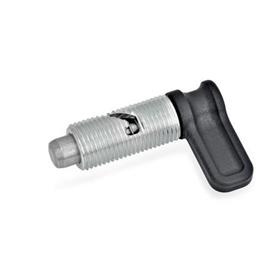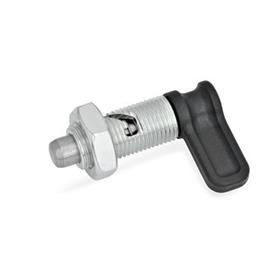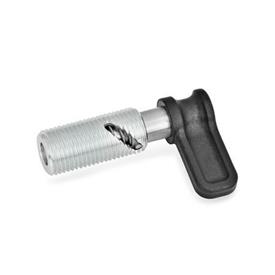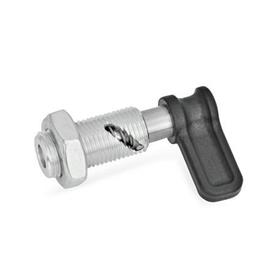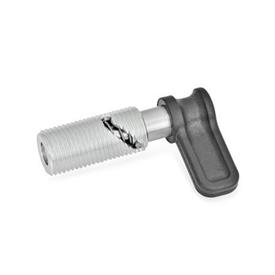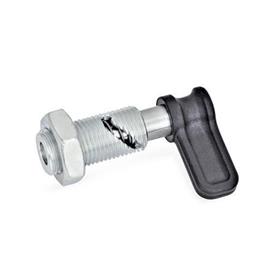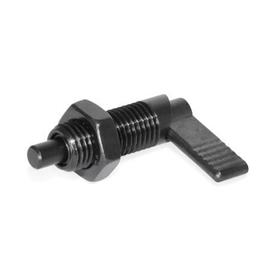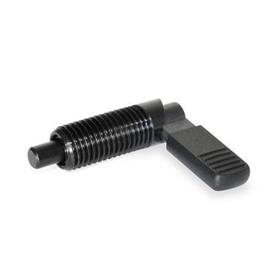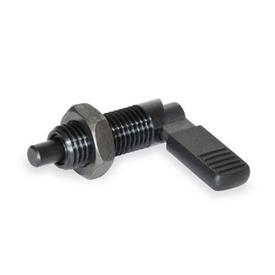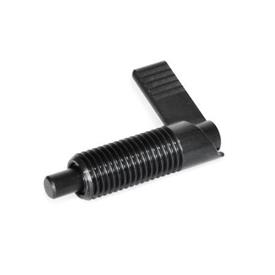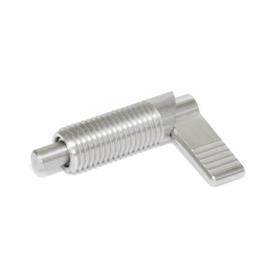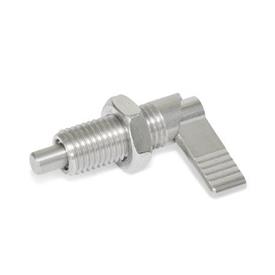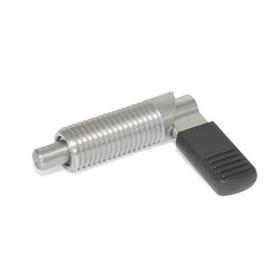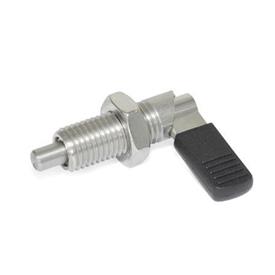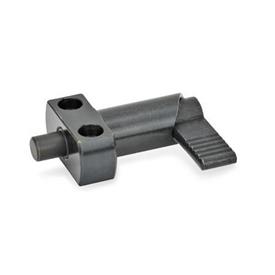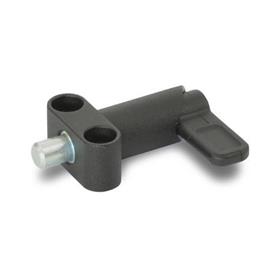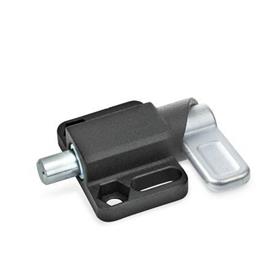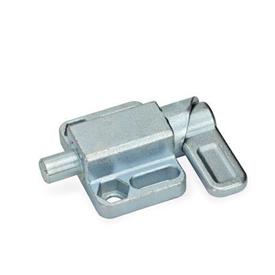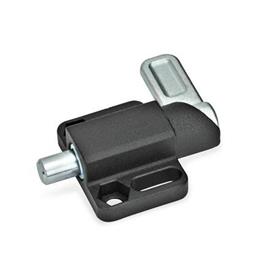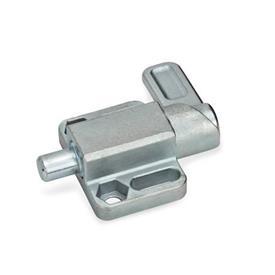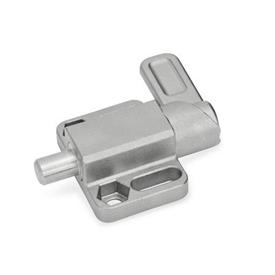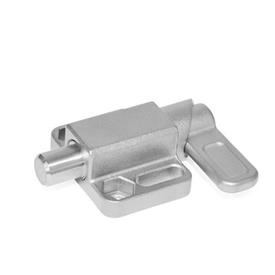
Fast locking with the spring latch

How a spring latch | cam action indexing plunger works

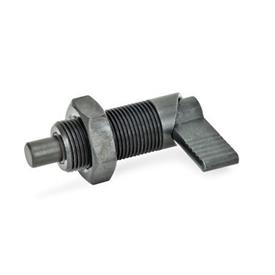
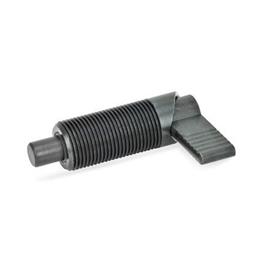
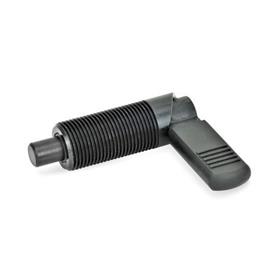
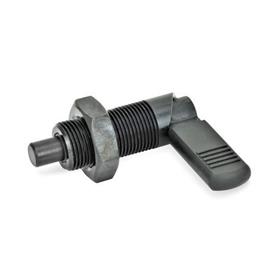
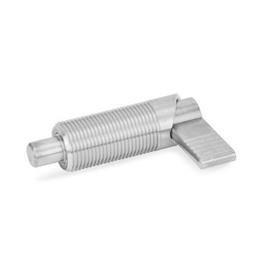
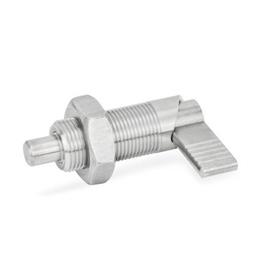
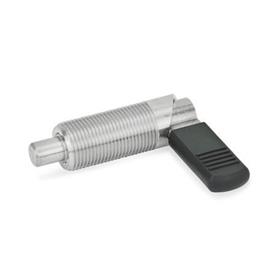
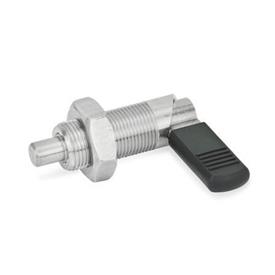
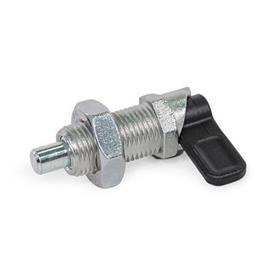
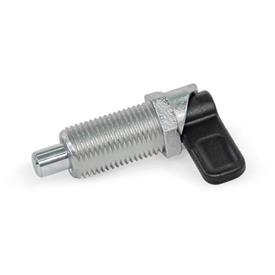
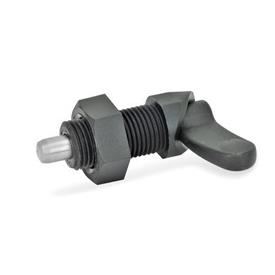
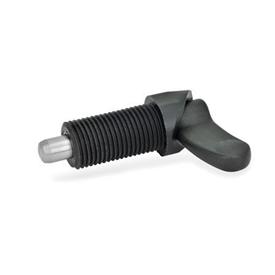
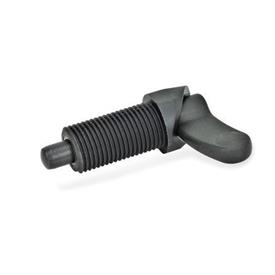
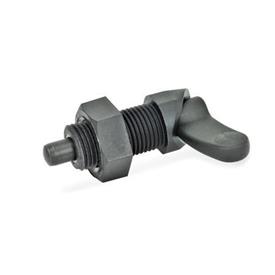
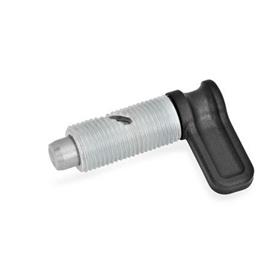
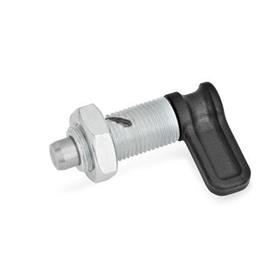
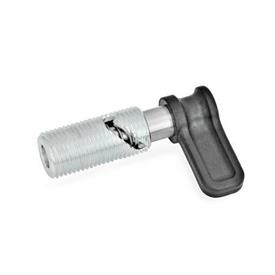
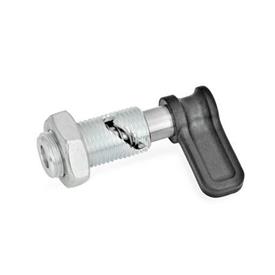
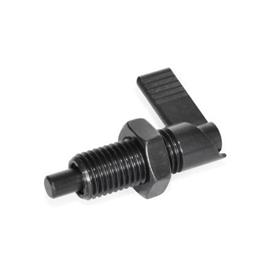
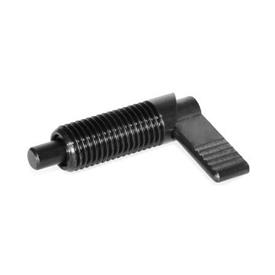
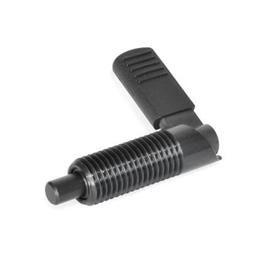
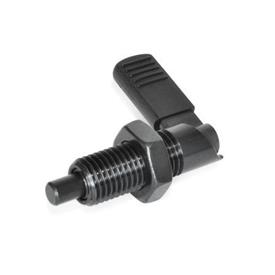
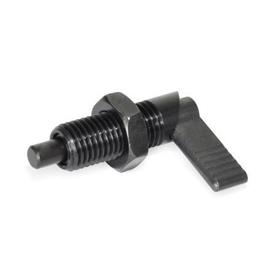
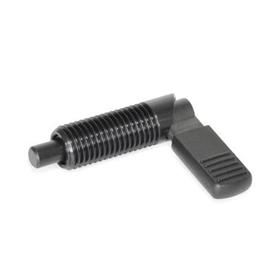
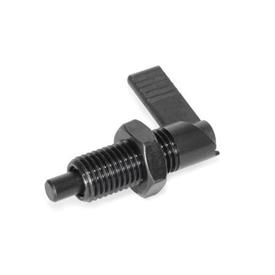
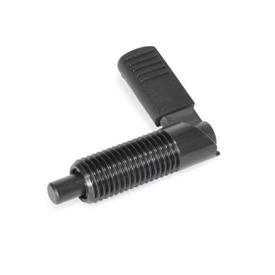
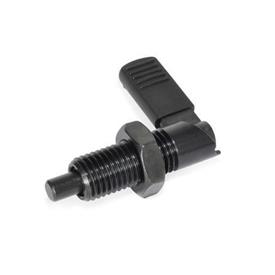
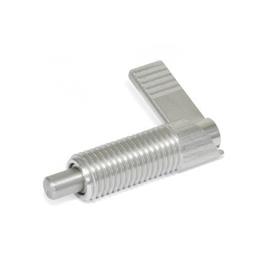
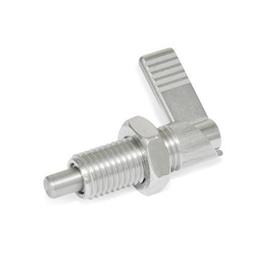
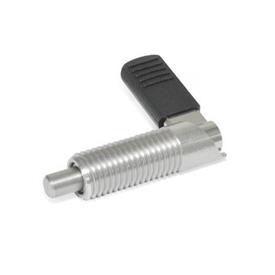
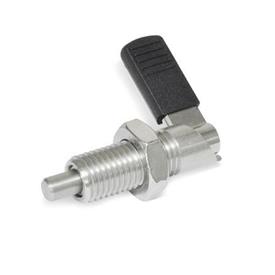
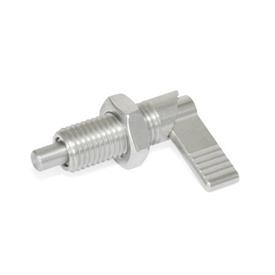
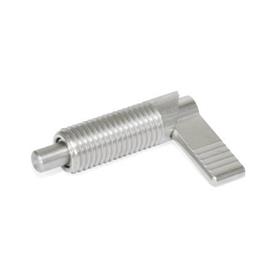
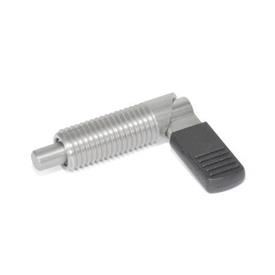
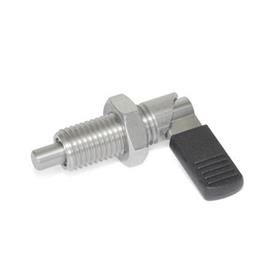
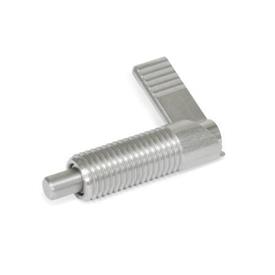
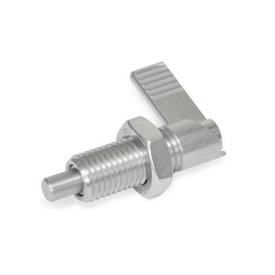
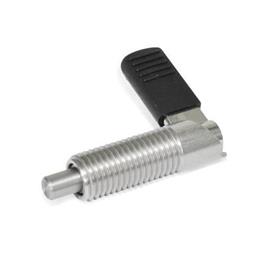
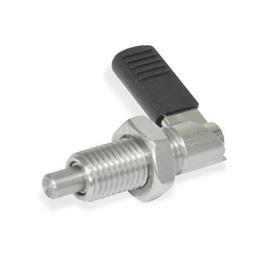
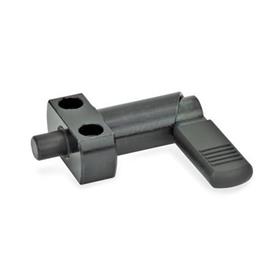
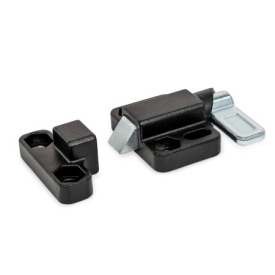
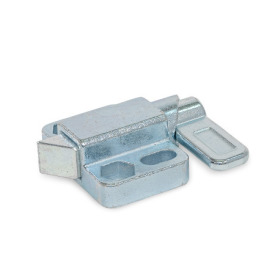
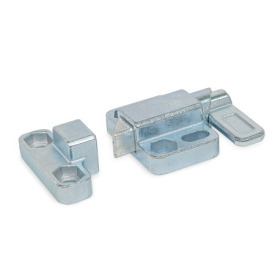
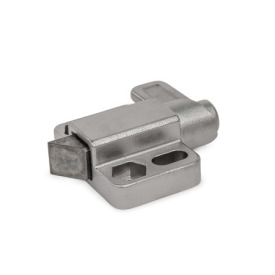
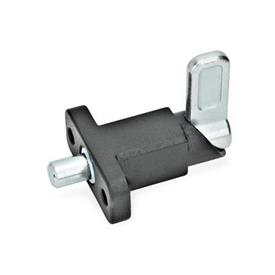
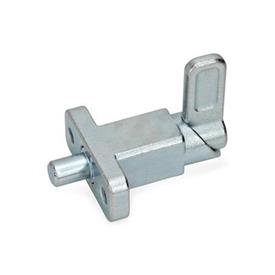
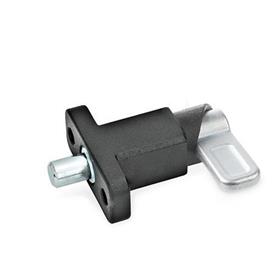
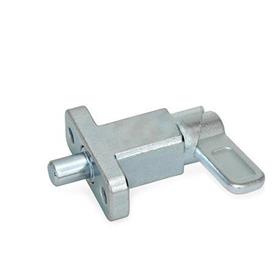
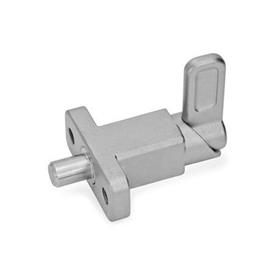
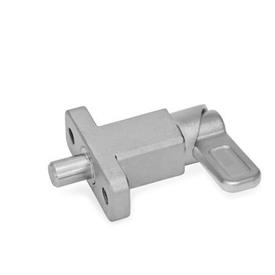
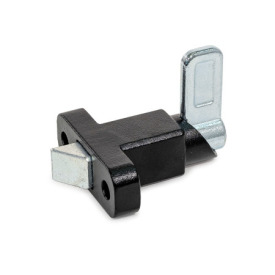
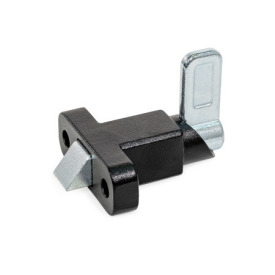
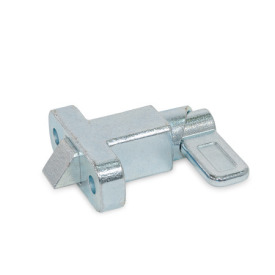
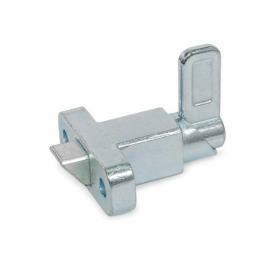
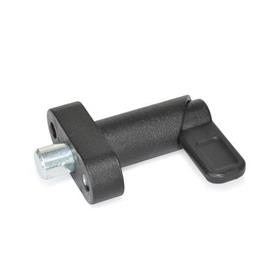
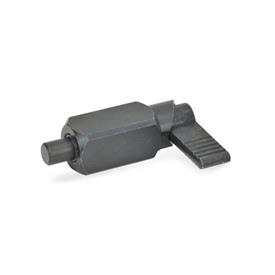
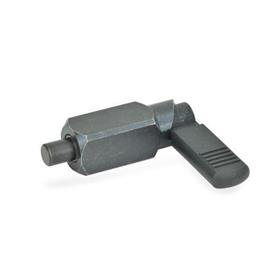
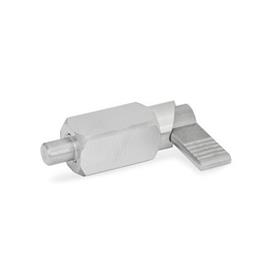
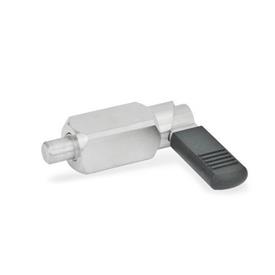
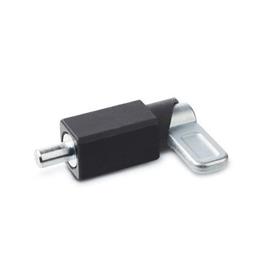
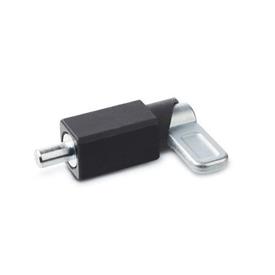
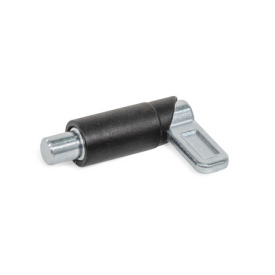
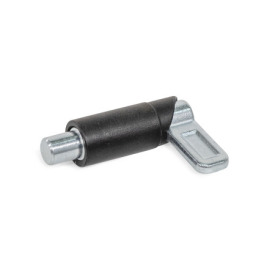
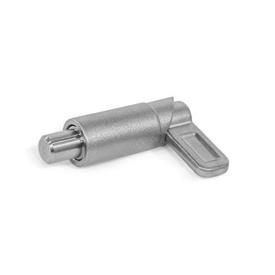
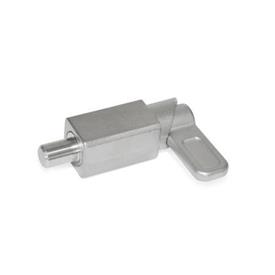
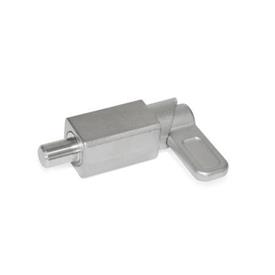
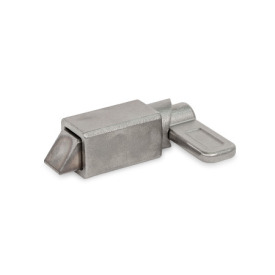
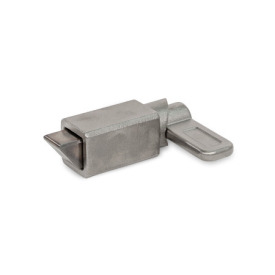
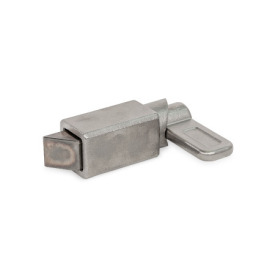
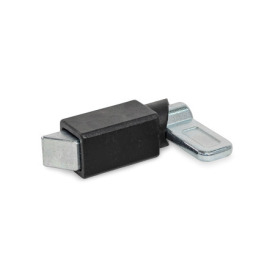
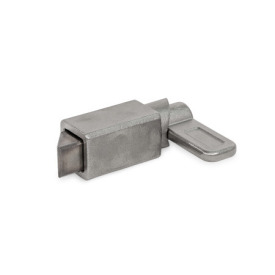
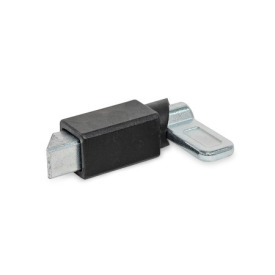
The spring latch consists of a pin with handle, a helical spring and a specially designed guide. The guide features a curve on the handle side and has a latching notch on its tip.

When turned with thumb and index finger, the handle glides up the curve, automatically pulling the locking pin out of the guide. At the tip, the handle latches into the notch, where it is firmly secured in place. The cam action indexing plunger is particularly easy to unlock: Once pulled out of the groove, the handle glides automatically back along the curve, driven by the spring. This returns the part to its locked position.

Wide selection for many applications

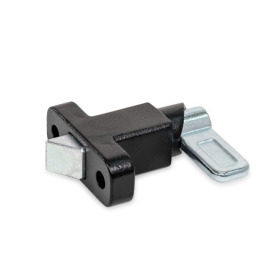
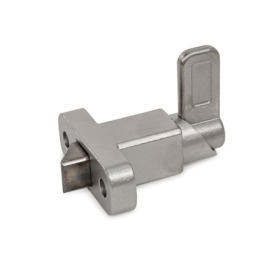
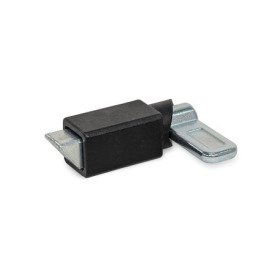
Ganter offers a wide selection of stop locks. The spectrum ranges from inexpensive spring latches of plastic to especially heavy-duty stop locks with a precision-cast guide. Alongside a wide selection of standard parts in steel and stainless steel, Ganter can also produce spring latches to customer specifications.

FAQ - Frequently Asked Questions

Filter products
Material
Bolt diameter (from - to) Bolt diameter
Thread (from - to) Thread
Fixing method
Version
Product Family

Nothing found? Special requests

FAQ - Frequently Asked Questions

Which applications are cam action indexing plungers especially well suited for?

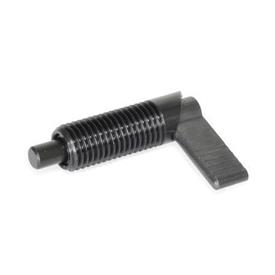
Cam action indexing plungers enable reliable locking and releasing of movable or adjustable machine parts with a simple twist of the lever. The spring-loaded mechanism ensures that the plunger pin automatically returns to the locking position after being released. This allows you to quickly and securely fasten or loosen components, which saves a significant amount of time, especially when frequent adjustments are required.
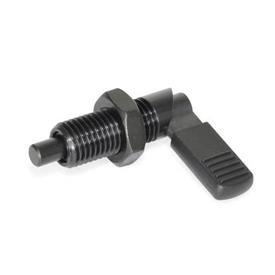
Typical applications in mechanical and plant engineering
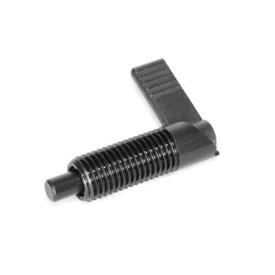
  • Locking protective devices into place
  • Securing and positioning adjustment components
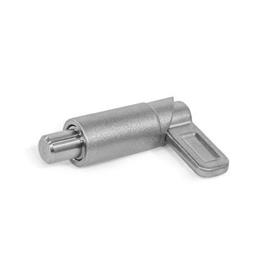
  • Fastening covers, flaps or guide rails
  • Quick changing or removal of components
  • Use in conveyor systems to secure transport elements
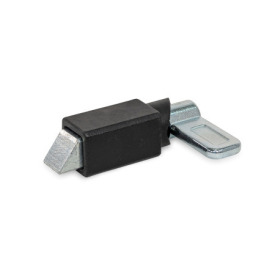
This allows maintenance work or readjustments during operation to be carried out conveniently and without tools.

Benefits for the user

  • Quick and secure locking and releasing of components
  • Flexible mounting on various types of structures – by screwing or welding
  • Easy to use thanks to clearly recognizable detent position

This allows you to organize your operational processes efficiently and respond flexibly to changing requirements.

Distinguishing features of the cam action indexing plunger

  • Material: Models made of steel, zinc die casting, or stainless steel, also suitable for aggressive environments
  • Installation type: Variants with fastening flange or for welding enable integration for the specific application at hand
  • Design: Simple mechanical design for reliable operation in industrial systems

In practice, cam action indexing plungers such as GN 612 (steel or stainless steel), GN 612.3 (for welding), GN 612.2/GN 612.10 (with fastening flange), or GN 672 (with plastic guide) are used wherever fast, repetitive locking is required under industrial conditions.

How does the locking mechanism of a cam action indexing plunger work?

Cam action indexing plungers lock components in place by using a lever to rotate a plunger pin into a locking or release position. An integrated spring independently holds the plunger pin in the selected position or automatically returns it to the desired locking position when released. This ensures that the plunger pin is reliably engaged or disengaged without the need to apply constant force.

Practical benefits of the locking mechanism

Locking or releasing can be performed quickly and without tools by briefly pressing the lever. In practice, this means that you can quickly engage, position, or secure components in machines or systems – ideal when frequent alterations or new setups are required.

How does a cam action indexing plunger differ from a conventional indexing plunger?

A cam action indexing plunger works as a mechanical lever with a locking function: A plunger pin is extended or retracted by turning, with an integrated spring automatically returning the pin to the locked position. Conventional indexing plungers, on the other hand, are usually operated by pulling or pressing the knob. The operating lever and the rotating motion are typical features of the cam action indexing plunger.

Technical functionality of cam action indexing plungers in comparison with indexing plungers

  • With a cam action indexing plunger, locking and unlocking is done by moving a lever and turning it.
  • The spring ensures that the pin automatically snaps back into place after being retracted.
  • An indexing plunger usually requires axial movement (pulling/pushing), which can be provided by a spring mechanism.

What materials are available for cam action indexing plungers?

Cam action indexing plungers and spring latches are available in various materials to enable flexible adaptation to different environmental conditions. Common materials include steel, stainless steel, zinc die casting, and plastic.

Materials for cam action indexing plungers and their benefits

  • Steel: Suitable for standard applications in mechanical and plant engineering. Steel offers high strength and is suitable for normal environmental conditions. This allows you to use robust latches in a wide variety of designs.
  • Stainless steel: Used where corrosion resistance is required, such as in damp or aggressive environments. Ideal for applications where hygiene or weather resistance are important. For instance, you can also safely use cam action indexing plungers in the food industry or outdoor areas.
  • Zinc die casting: For applications which call for a light yet sturdy design. This version is easy to install and is practical for use in lightweight constructions.
  • Plastic (guide): Individual components such as the guide can be made of plastic – ideal for applications with low mechanical stress or where it is especially important to have electrical insulation.

Relevant product variants

What sizes and designs do cam action indexing plungers come in?

Cam action indexing plungers and spring latches are available in numerous sizes and designs. The range includes various lengths and diameters for plunger pins and housings, allowing you to select the dimensions that are right for your application. The selection ranges from compact variants for confined installation spaces to robust versions for large components. This makes it easy to determine the right size for different design requirements.

Designs and technical variants of cam action indexing plungers

  • Classic cam action indexing plungers, such as GN 612, are available as standard versions and as curved cam action indexing plungers (GN 712 / GN 712.1) with various pin positions.
  • Models with fastening flanges such as GN 612.2, GN 612.9, GN 612.10, GN 722.2,GN 722.3 as well as the new GN 724.2 and GN 724.3 offer flexible mounting on flat surfaces.
  • Weldable versions (e.g. GN 612.3, GN 722.1, GN 724.1) are suitable for permanent and vibration-proof mounting on load-bearing structures.
  • Designs with special guides (such as GN 672 plastic guides) optimize sliding behavior and reduce wear.
  • Models without a locking function (such as GN 721 and GN 721.5) and with a locking function (such as GN 721.1 and GN 721.6) expand the range of applications.

This wide range of sizes and designs allows you to tailor cam action indexing plungers precisely to the requirements of your machines and systems. The flexible choice of mounting options and materials enables safe and convenient integration – even in confined spaces or special environmental conditions. This allows you to quickly, precisely, and permanently fasten or lock components in place, making plant operation safer and more efficient.

What types of guides are available for cam action indexing plungers?

There are various types of guides available for cam action indexing plungers. The most common variants include metal guides (e.g. precision cast) in various versions. Plastic guides, such as in the model GN 672, allow the plunger pin to move smoothly and reduce friction. This is a big advantage if you need low-maintenance, quiet locking devices, such as those often used in machine covers or protective devices. Metal guides, often made of steel or stainless steel, are especially well suited to high loads and demanding environments. They increase stability and enable use in areas with heightened mechanical stress or in aggressive media.

Practical benefits for users

With the right type of guide, cam action indexing plungers can be specifically adapted to the application environment at hand. This allows you to conveniently and permanently ensure functions such as quick locking or secure fixation. Plastic guides reduce maintenance requirements, while metal guides maximize durability and load capacity.

How is the cam action indexing plunger operated – manually or automatically?

Cam action indexing plungers are usually operated manually. The plunger pin is engaged or disengaged by turning or pulling an actuating lever by hand. An integrated spring automatically returns the pin to the locked position after release. This allows components to be locked or fixed quickly and securely. The lever position always clearly indicates whether the cam action indexing plunger is engaged.

Operating concept for cam action indexing plungers

  • Manual operation via lever or knob
  • Automatic return to the rest position via spring action
  • Secure, controlled locking and quick unlocking directly by the user

What does this mean in practice?

This allows you to respond flexibly in mechanical and plant engineering: Components or protective covers can be securely locked and unlocked without tools or time-consuming additional assembly work. This is ideal for frequent changes in adjustment or maintenance tasks. This way, cam action indexing plungers can be integrated flexibly and reliably into a wide variety of applications.

Can cam action indexing plungers be customized according to customer requirements?

Cam action indexing plungers from the Ganter range are available in many different variants and sizes. For special requirements, it is generally possible to customize the product to individual preferences, such as pin length, handle, surface treatment, or for special installation situations. Technical clarifications and feasibility assessments are carried out in close consultation with Ganter. You can therefore perfectly tailor cam action indexing plungers to your application. This allows you to implement design specifications that would not be possible with standard cam action indexing plungers.

Your contact

You are looking for a Ganter partner near you?

Ganter-Service

Our service team is available from Monday to Friday between 7:30 AM and 5:00 PM:

Request Callback