
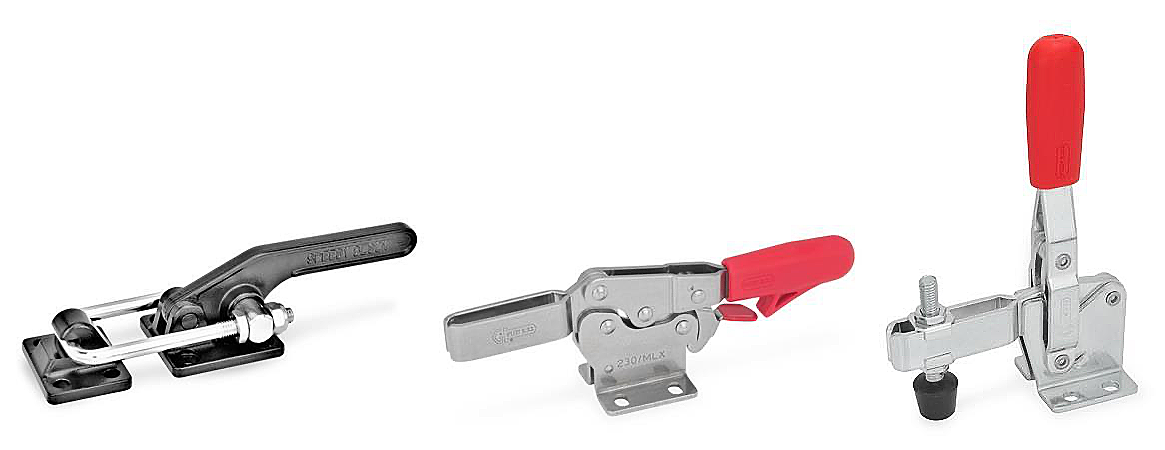
Type overview of knee lever clamps from Ganter
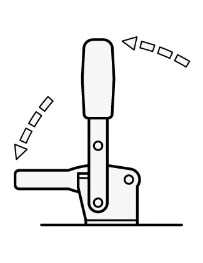
Vertical toggle clamps
Operating lever and clamping bar move in the same direction.
In the clamped position, the operating handle is in a vertical position.
For applications where substantial forces and many tightening cycles occur, “long-life” versions are available.
Show all vertical toggle clamps
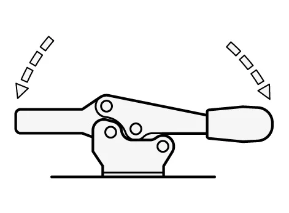
Horizontal toggle clamps
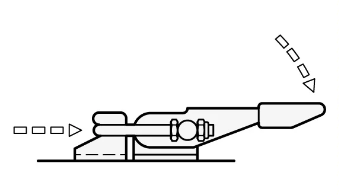
Operating lever and clamping bar move in opposite directions.
In the clamped position, the operating handle is in a horizontal position (flat version).
Show all horizontal toggle clamps
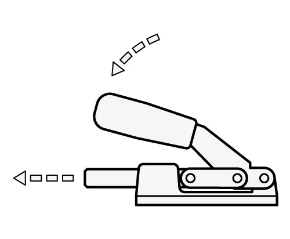
Push-pull type toggle clamp
On these clamps, the swinging movement of the operating handle is converted into an axial movement to push or pull the plunger.
With two exceptions (GN 841), the push-pull type toggle clamps lock in both end positions. This means that they can be used as both pull clamps and thrust clamps.
Show all push-pull type toggle clamps
Latch type toggle clamps
On these clamps, the swinging movement of the operating handle is converted into an axial movement to pull the hook.
Latch type toggle clamps are available with and without locking mechanism.
Show all latch type toggle clamps
Pneumatically operated toggle clamps
These toggle clamps combine the advantages of clamping by the toggle principle (clamp remains in the clamping position even in the event of air pressure loss!) with the advantages offered by pneumatics, i.e.:
- Constant clamping force FS independent of the operator.
- Several clamps can be operated simultaneously via a control valve.
- Pneumatic toggle clamps can be energized from various operating points (remote control, co-ordinated and controlled by other machines).
- Some versions are available with an air cylinder which allows control via a proximity switch, to give an electrical impulse when the clamp has reached a specific position within its clamping cycle.
Pneumatic toggle clamps are available as vertical and push-pull versions.
Show all pneumatic toggle clamps
